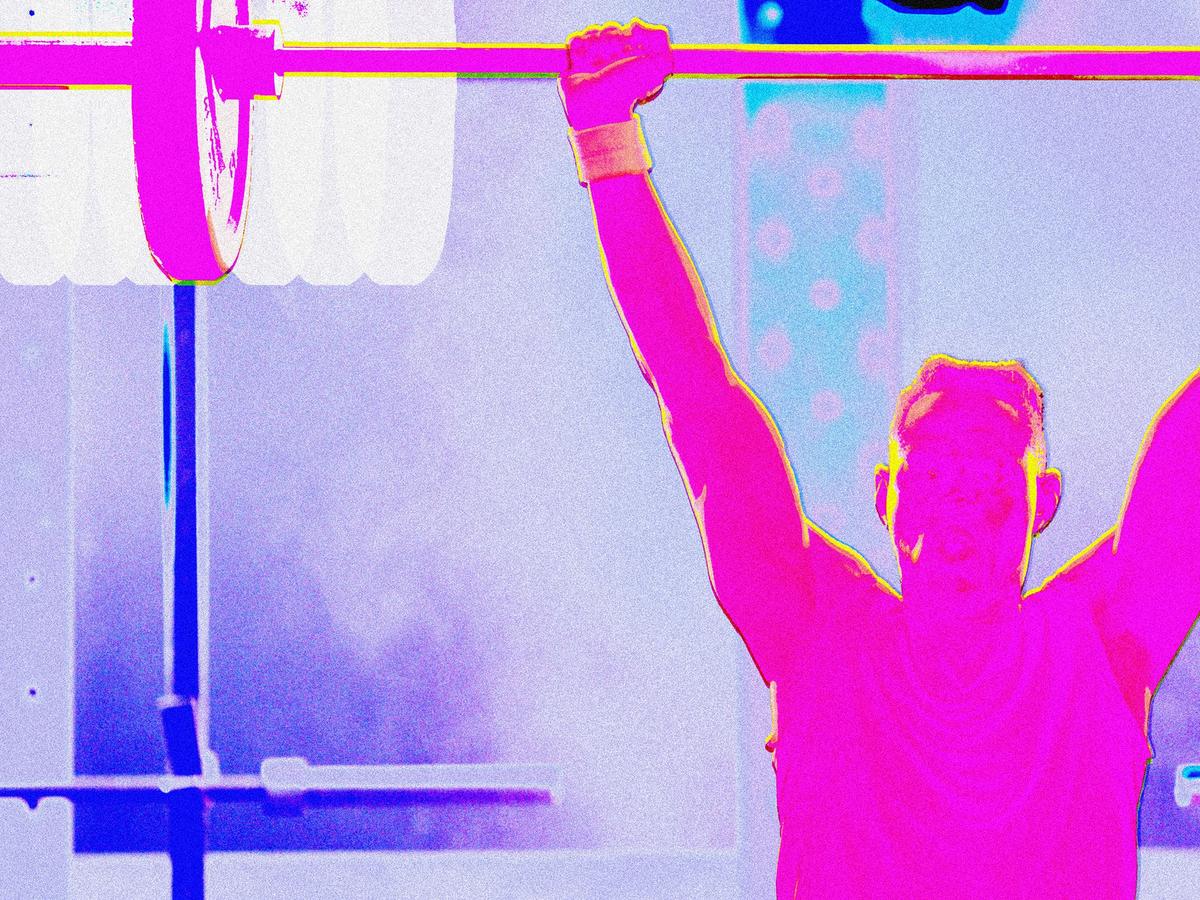
How to Increase Your Overhead Press, According to a 4-Plate Presser
Why It Matters
The overhead press is a cornerstone compound movement that drives functional upper‑body strength and shoulder health; improving it translates to better performance in sports and daily activities while reducing injury risk.
Key Takeaways
- •Use a three‑day undulating split: heavy, light, medium reps.
- •Increase press frequency to twice or three times weekly for gains.
- •Gradual weight gain supports stronger presses without excessive body‑mass increase.
- •Incorporate shoulder, triceps, upper‑back, and core accessories for stability.
- •Keep grip narrow, pause reps, and avoid bouncing for safety.
Pulse Analysis
The overhead press, often called the military press, remains a benchmark for raw upper‑body power. Unlike isolated shoulder work, it demands coordinated activation of deltoids, triceps, upper back, and core, making it a reliable predictor of functional strength for athletes and everyday lifters. As gyms prioritize compound lifts for time‑efficient training, the OHP’s ability to improve posture, shoulder stability, and overhead mobility has kept it at the forefront of strength programming.
Shethar’s prescription centers on a daily‑undulating approach that cycles heavy, light, and medium rep ranges across a three‑day week. This structure leverages the principle of frequent skill practice, allowing the nervous system to refine the press movement while still providing sufficient stimulus for hypertrophy. By progressively loading each rep range week over week, lifters can avoid plateaus without immediately resorting to complex periodization. Complementary to this, modest, controlled weight gain—ideally lean muscle rather than excess fat—enhances lever mechanics, giving the press a natural advantage without the drawbacks of a sudden bulk increase.
Beyond the main lift, Shethar stresses the importance of ancillary work: dumbbell presses, lateral raises, rear‑deltoid exercises, and upper‑back rows build the supporting musculature that stabilizes the bar overhead. Core and leg strength further cement a solid base, while optional equipment like wrist wraps or a belt can safeguard joints during heavy attempts. Avoiding common pitfalls—over‑wide grip, bouncing reps, and excessive lean‑back—preserves shoulder health and maximizes force transfer. Together, these tactics form a holistic system that not only boosts the one‑rep max but also cultivates durable, functional strength for the long term.
How to Increase Your Overhead Press, According to a 4-Plate Presser
Comments
Want to join the conversation?
Loading comments...