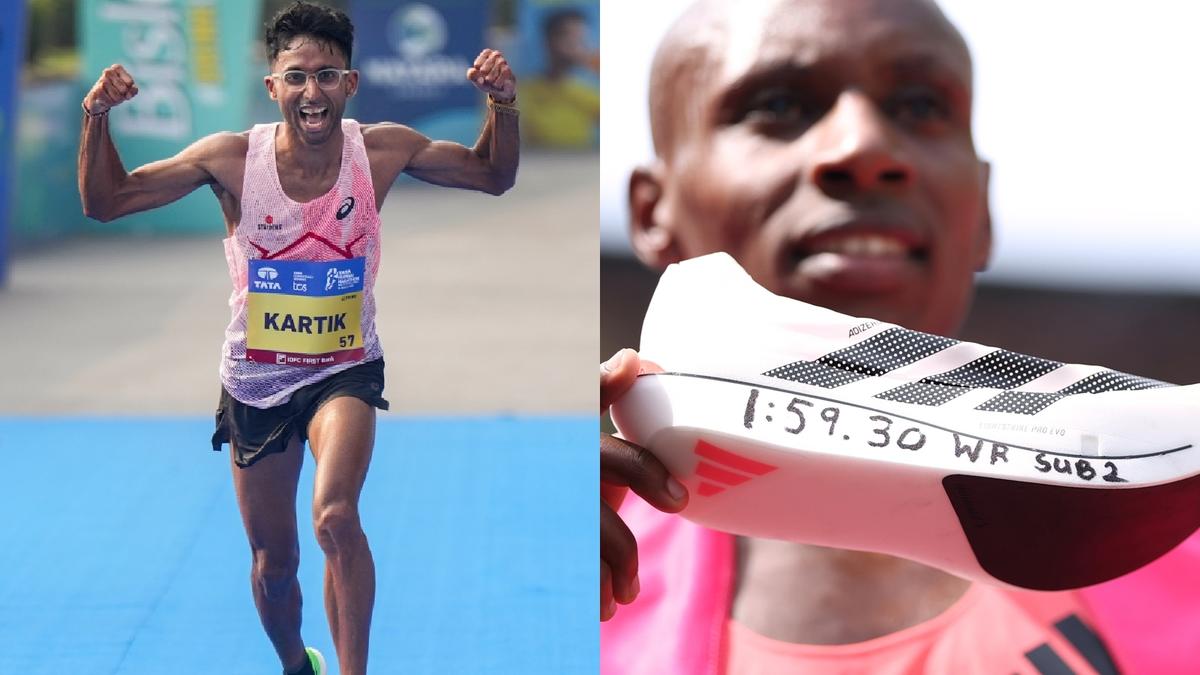
Kartik Karkera, One of India’s Top Marathoners, on the Advantage of a Super Shoe
Why It Matters
Access to elite‑grade footwear can dramatically affect race times and qualification prospects for Indian distance runners, while unchecked adoption raises safety concerns across the growing amateur running community.
Key Takeaways
- •Prototype “Super Shoes” can cut marathon times by several minutes
- •Indian elite runners pay ~₹25,000 (~$300) for retail carbon‑plated shoes
- •Lack of sponsor‑provided prototypes creates performance gap versus global athletes
- •Super Shoes improve half‑marathon pace from 72 to 66 minutes for Karkera
- •Improper use leads to knee and Achilles injuries among amateur runners
Pulse Analysis
The rise of carbon‑plated “Super Shoes” has reshaped elite distance running, delivering measurable gains through a combination of lightweight foam and a stiff carbon plate that improves running economy. Brands such as Nike, Adidas and ASICS market retail versions for roughly ₹25,000 (about $300), but the most advanced prototypes remain in the hands of athletes with deep sponsorship ties. These development shoes are often custom‑fit and fine‑tuned in labs, offering a performance edge that can shave minutes off marathon times—a crucial factor for athletes chasing qualifying standards for events like the Asian Games.
In India, the disparity between globally‑sponsored runners and domestic talent is stark. While world‑class athletes like Sabastian Sawe receive bespoke prototypes, Indian elites such as Karkera must purchase off‑the‑shelf models, limiting their ability to compete at the very highest level. Karkera’s own experience—dropping his half‑marathon time from 72 to 66 minutes after trying a Nike Vaporfly—illustrates the potential upside, yet his best marathon remains 2:13:10, far from the sub‑2:10 window he believes a prototype could unlock. This technology gap influences not only individual performance but also the broader competitive balance in Indian long‑distance running.
The rapid diffusion of Super Shoes among recreational runners has sparked a wave of injury reports, particularly knee strain and Achilles tendon ruptures. Without the conditioning and pacing strategies employed by elite athletes, amateurs push beyond their physiological limits, only to feel the repercussions when they revert to standard footwear. Medical professionals advise a gradual adaptation period, strength training, and professional gait analysis to mitigate risk. As the market expands, regulators and race organizers may need to consider guidelines that balance innovation with athlete safety, ensuring the sport’s growth does not come at the cost of health.
Kartik Karkera, one of India’s top marathoners, on the advantage of a Super Shoe
Comments
Want to join the conversation?
Loading comments...