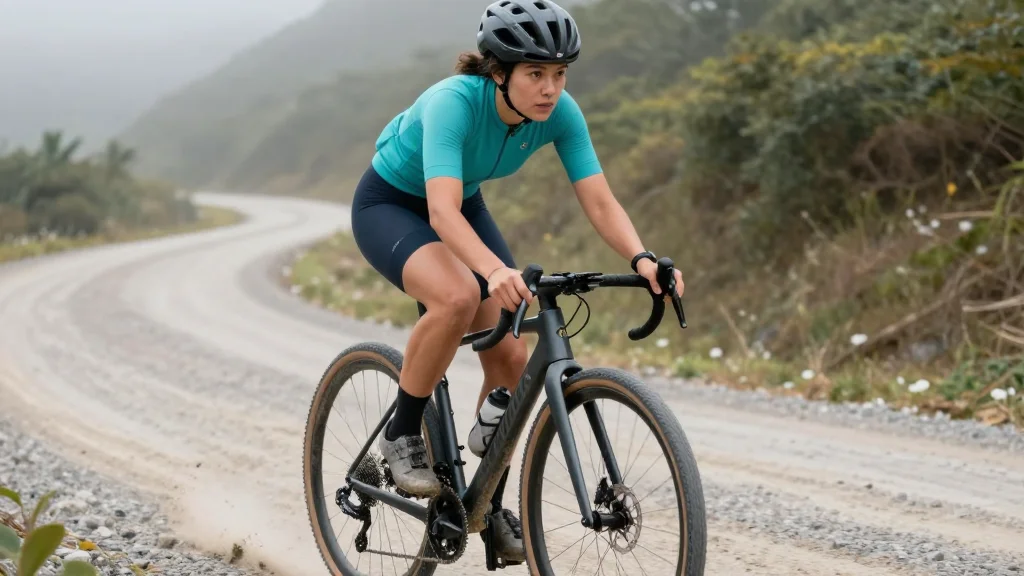
Kylee Hanel Wins Women's Unbound Gravel 100, Overcoming Mud and Train Delay

Why It Matters
Kylee Hanel’s victory illustrates the growing competitiveness and visibility of women’s ultra‑gravel racing, a sub‑segment that has seen rapid participation growth and increased sponsor interest. Her ability to overcome extreme course conditions highlights the importance of adaptability and mental toughness, traits that are increasingly valued in endurance fitness training programs. Moreover, her success reinforces the market shift toward inclusive race promotion, encouraging event organizers to design courses that challenge all athletes while providing equitable media coverage. The win also has implications for talent pipelines in cycling. As Hanel climbs the U23 rankings, her performance may accelerate investment in development teams focused on gravel disciplines, potentially reshaping how professional squads allocate resources between road, cyclocross, and gravel programs. For the broader fitness community, her story underscores the relevance of cross‑training, terrain‑specific preparation, and resilience training for athletes aiming to excel in unpredictable outdoor events.
Key Takeaways
- •Kylee Hanel (Cervelo‑Maxxis) won the women's Unbound Gravel 100 in 5:36:38.
- •She finished 2:31 ahead of runner‑up Samantha Johnson despite deep mud and a two‑minute train delay.
- •Hanel placed 34th overall, securing a commanding lead in the U23 Life Time Grand Prix standings.
- •Women now make up roughly 30% of the Unbound Gravel field, reflecting rapid growth in the discipline.
- •Her victory may attract increased sponsor investment in women's gravel racing and development programs.
Pulse Analysis
Kylee Hanel’s triumph at Unbound Gravel 100 is more than a personal milestone; it signals a turning point for the commercial viability of women’s gravel racing. Historically, gravel events were dominated by male athletes, with limited media exposure for women. Hanel’s win, amplified by vivid race‑day storytelling—mud, a halted train, and a decisive sprint—provides a narrative hook that brands can leverage for authentic storytelling. Sponsors seeking to align with resilience and grit now have a clear ambassador.
From a performance science perspective, Hanel’s ability to maintain a sub‑5:40 pace over 100 miles while navigating non‑ideal conditions suggests a training regimen that blends high‑volume endurance with terrain‑specific strength work. Coaches may increasingly prescribe mud‑run drills and interval sessions that simulate unexpected delays, recognizing that race outcomes often hinge on how athletes manage the unplanned. This could spur a niche market for specialized equipment—mud‑resistant shoe covers, rapid‑cleaning kits, and lightweight bike accessories designed for quick transitions.
Looking forward, the ripple effect of Hanel’s win could reshape the competitive calendar. Event organizers may design courses that intentionally incorporate variable elements—creeks, rail crossings, and steep, muddy climbs—to differentiate their races and attract elite talent seeking to test their limits. As the U23 rankings tighten, we can expect a surge in intra‑team rivalries, driving performance standards higher across the board. In short, Hanel’s victory is a catalyst that could accelerate the professionalization of women’s gravel racing, expand its fan base, and influence training methodologies across endurance sports.
Kylee Hanel Wins Women's Unbound Gravel 100, Overcoming Mud and Train Delay
Comments
Want to join the conversation?
Loading comments...