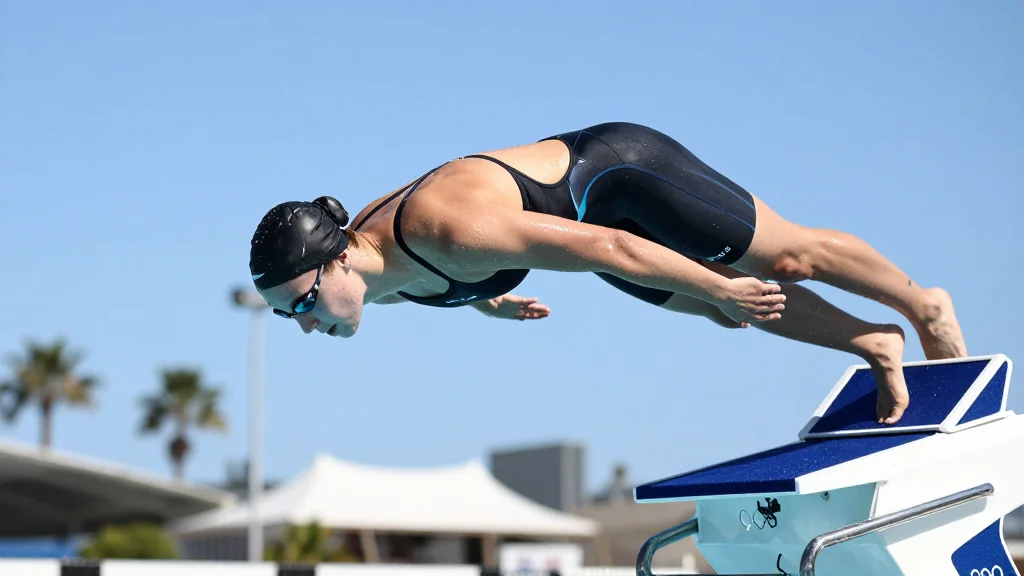
Louise Hansson on Training Stint with Alex Perkins at Sunshine Coast: “I Like Their Mentality”
Why It Matters
The result highlights how cross‑continental training can elevate elite swimmers, prompting national programs to consider international camps as a performance lever. It also showcases Australia’s training culture as a magnet for European talent, potentially reshaping talent pipelines.
Key Takeaways
- •Hansson won 50‑fly in 25.99 seconds, tying teammate Junevik
- •Spent 3‑4 months training at University of Sunshine Coast, Australia
- •Trained alongside Australian star Alexandria Perkins and Olympic champion Kaylee McKeown
- •Credits Australian group’s “mental toughness” for performance boost
Pulse Analysis
Louise Hansson’s victory at the Malmö‑Swim Open Stockholm signals more than a personal triumph; it reflects a growing trend among elite swimmers to seek competitive edges through overseas training blocks. By clocking 25.99 seconds in the 50‑fly, Hansson not only matched her compatriot Sara Junevik but also demonstrated the tangible benefits of a short‑term immersion in a high‑performance environment. The Australian summer, with its year‑round warm climate and world‑class facilities, offers a stark contrast to Sweden’s winter schedule, allowing athletes to maintain peak conditioning year‑round.
During her three‑to‑four‑month stint at the University of the Sunshine Coast, Hansson joined a training group anchored by Alexandria Perkins and multiple‑time Olympic champion Kaylee McKeown. The Australian cohort is renowned for a culture that emphasizes relentless mental discipline, a factor Hansson singled out as a key differentiator. Access to cutting‑edge sports science, altitude‑simulated pools, and a collaborative team dynamic helped her refine race tactics and build resilience under pressure—attributes that translated directly to her Stockholm performance.
The broader implication for the swimming world is clear: national federations may increasingly invest in cross‑border exchanges to accelerate athlete development. Such collaborations boost sports tourism, create new revenue streams for training centers, and foster knowledge transfer among coaches. As more European swimmers look to Australia’s proven training model, we can expect a ripple effect that reshapes talent pipelines, elevates competition standards, and ultimately drives faster times on the global stage.
Louise Hansson on Training Stint with Alex Perkins at Sunshine Coast: “I like their mentality”
Comments
Want to join the conversation?
Loading comments...