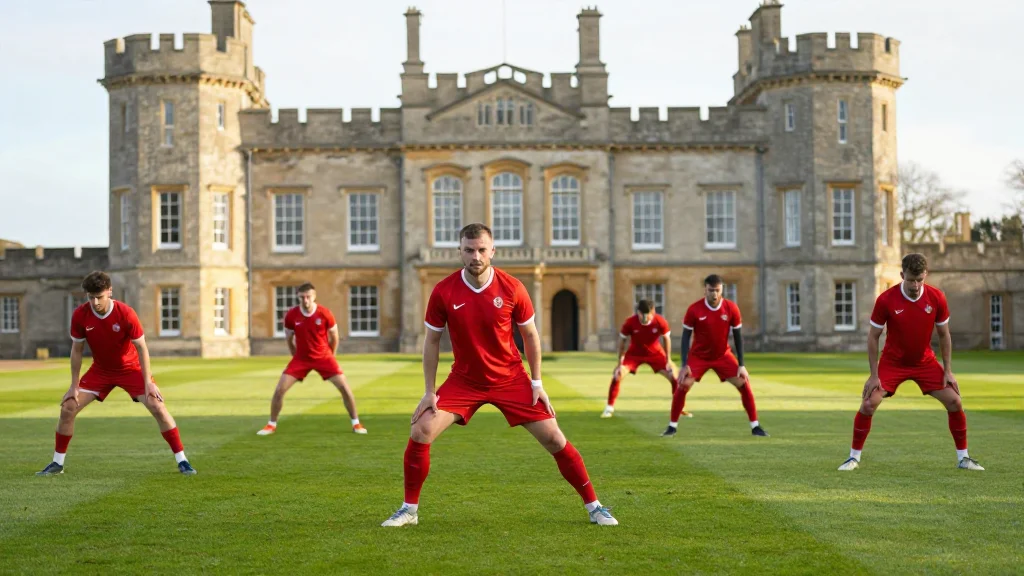
Manchester United’s Dublin Camp Highlights Elite Fitness Prep Ahead of Premier League Run

Companies Mentioned
Why It Matters
The Dublin camp illustrates how top‑flight football clubs are integrating sports‑science driven fitness programs into pre‑season planning, moving beyond traditional training to a holistic approach that includes nutrition, recovery and mental reset. For the broader fitness industry, United’s use of a historic hotel’s elite facilities signals a market for premium, location‑based conditioning experiences that blend luxury with high‑performance outcomes. By publicizing the structure of its regimen—cardio, stretching, two‑hour on‑field sessions and advanced recovery tools—Manchester United sets a benchmark for other clubs and commercial fitness providers seeking to attract elite athletes. The camp’s success could spur increased demand for similar remote training hubs, influencing investment in sports‑science infrastructure and shaping how professional teams prepare for congested competitive calendars.
Key Takeaways
- •Manchester United held a four‑day training camp at Carton House in Co Kildare, Ireland.
- •The program featured three daily on‑pitch sessions over two hours, plus intensive cardio and stretching in a dedicated gym.
- •Assistant coach Steve Holland emphasized a winning‑mindset focus, while Jonny Evans called the camp a "stimulus" for returning internationals.
- •United is six points behind Manchester City and aims to secure a Champions League spot.
- •The camp reflects a growing trend of elite clubs using remote, luxury facilities for integrated fitness and recovery.
Pulse Analysis
Manchester United’s Dublin camp underscores a strategic shift in elite football: conditioning is no longer an ancillary component but a core competitive lever. By concentrating high‑intensity work into a short, controlled environment, United can accelerate physiological adaptations while minimizing external distractions. This mirrors practices in other high‑performance domains, such as Olympic training centers, where periodized load and recovery are meticulously calibrated.
Historically, pre‑season tours were primarily commercial, aimed at expanding fan bases. United’s approach flips that script, prioritizing sports‑science over brand exposure. The choice of Carton House—an estate with historic cachet and modern recovery amenities—signals that clubs are willing to invest in premium venues that offer both privacy and cutting‑edge technology. This could catalyze a niche market for boutique training retreats, prompting hotels and resorts to partner with sports‑performance firms to create turnkey solutions for professional teams.
Looking forward, the real test will be whether the fitness gains translate into sustained performance across a grueling Premier League schedule. If United can maintain lower injury rates and higher work‑rate metrics, other clubs may emulate the model, potentially reshaping pre‑season planning across Europe. The camp also puts Carrick’s managerial future under a microscope: success will hinge not just on tactics but on his ability to deliver a fit, resilient squad capable of challenging for top‑four honors.
Manchester United’s Dublin Camp Highlights Elite Fitness Prep Ahead of Premier League Run
Comments
Want to join the conversation?
Loading comments...