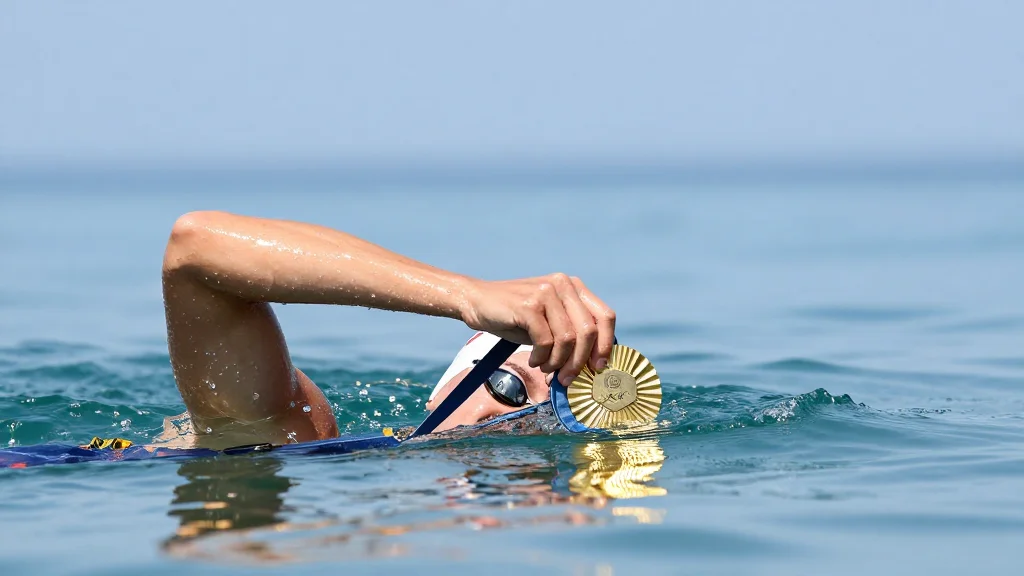
Moesha Johnson Wins World Cup Open Water Gold, Eyes LA28 Olympic Gold

Why It Matters
Johnson's World Cup gold underscores the growing importance of open‑water swimming within national Olympic strategies. As the sport gains visibility, athletes who can transition between pool and open‑water events offer federations a versatile medal pipeline, especially for the marathon 10km, which has historically been dominated by specialists. Her approach also highlights how elite swimmers are using non‑traditional competition schedules to fine‑tune specific physiological and tactical skills ahead of a home‑continent Olympics. The broader Australian public's limited awareness of swimming achievements, noted by Kaylee McKeown, suggests a communication gap that could affect sponsorship, grassroots participation, and media coverage. Johnson's high‑profile victories may help bridge that gap, providing a narrative that celebrates both pool and open‑water success and potentially reshaping how swimming is marketed in Australia and beyond.
Key Takeaways
- •Moesha Johnson won gold at the latest World Aquatics Open Water Swimming World Cup stop.
- •She is the reigning world champion in both the 5km and 10km open‑water events.
- •Johnson earned a silver medal in the marathon 10km at the Paris 2024 Olympics.
- •Her season is structured around a "work backwards" plan targeting LA28 Olympic gold.
- •Teammate Kaylee McKeown highlighted the lack of media coverage for swimming achievements.
Pulse Analysis
Johnson's victory signals a strategic evolution in elite swimming, where athletes are no longer siloed into pool or open‑water specialties. By deliberately interleaving high‑stakes open‑water World Cup races with selective pool meets, she is building a hybrid skill set that maximizes endurance without sacrificing speed. This model could become a template for other nations seeking to diversify their medal prospects, especially as the marathon 10km gains prominence in the Olympic program.
Historically, Australian swimming success has been measured by pool medals, but the last decade has seen a surge in open‑water talent, driven by athletes like Chloe Sutton and Gregorio Paltrinieri globally. Johnson's approach leverages this trend, using varied water conditions—from the Red Sea's heat to the Mediterranean's chill—to simulate the unpredictable environments of Olympic open‑water venues. The data suggests that athletes who train across a spectrum of temperatures and currents develop superior thermoregulation and pacing strategies, which are decisive in marathon swims.
Looking forward, the key question for Australian officials will be how to allocate resources between traditional pool programs and the expanding open‑water pipeline. If Johnson translates her World Cup form into Commonwealth Games and ultimately LA28 podium finishes, it could justify increased funding for open‑water coaching, wetsuit technology, and international race exposure. Conversely, a failure to medal at the Olympics might prompt a re‑evaluation of the dual‑discipline model. Either outcome will shape the next five years of Australian swimming development and influence how the sport markets itself to a public that, as McKeown observed, often overlooks swimming achievements.
Moesha Johnson Wins World Cup Open Water Gold, Eyes LA28 Olympic Gold
Comments
Want to join the conversation?
Loading comments...