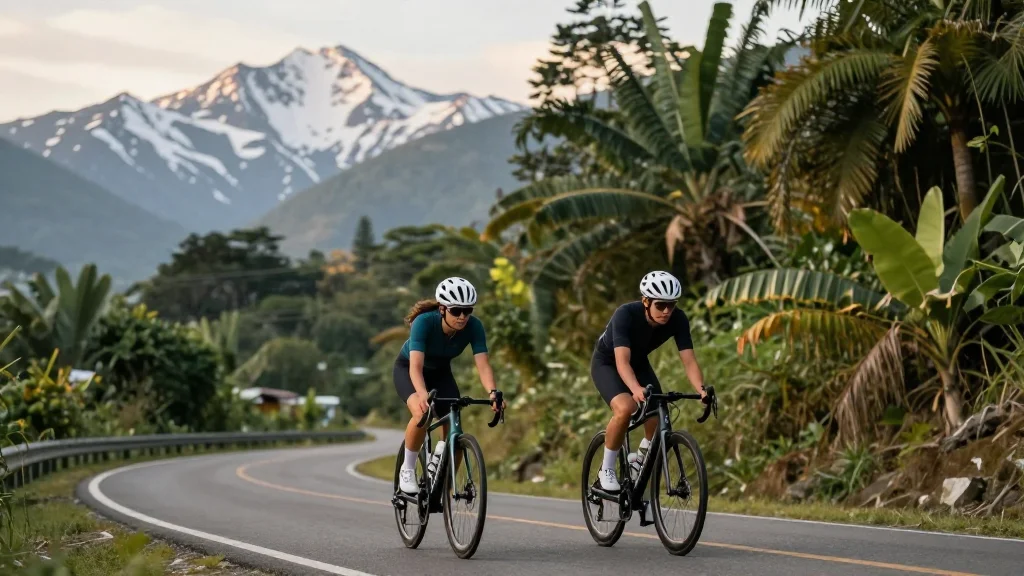
Somerset Couple Leaves Jobs for 20,500‑Mile, Two‑Year Charity Cycle

Why It Matters
The Somerset couple’s expedition spotlights the growing intersection of ultra‑endurance sports and philanthropy, a trend that has seen cyclists, runners, and swimmers leverage personal challenges to raise funds for diverse causes. Their focus on hospice care brings attention to a sector that typically receives limited public fundraising, potentially encouraging similar campaigns. Moreover, the duo’s emphasis on communication and teamwork offers a real‑world case study for relationship coaching and corporate team‑building programs, illustrating how shared physical challenges can strengthen interpersonal dynamics. By undertaking a two‑year, cross‑continental ride, Pollard and Dumas also contribute to the broader narrative of sustainable, low‑carbon travel. Their reliance on human power over motorized transport aligns with increasing consumer interest in environmentally conscious adventure travel, potentially influencing future tourism and fitness event planning.
Key Takeaways
- •Jonas Pollard and Margaux Dumas quit their jobs to start a 20,500‑mile bike tour from Alaska to Argentina.
- •The two‑year journey will pass through 15 countries and aims to raise £33,000 (~$42,000) for World Bicycle Relief and Sue Ryder hospice.
- •Pollard and Dumas spent a year training together, focusing on endurance and communication skills.
- •The route includes high‑altitude segments in Peru and Bolivia, with bear spray packed for the North American leg.
- •Their story highlights the rise of endurance‑based charity challenges and brings attention to hospice care fundraising.
Pulse Analysis
The Pollard‑Dumas expedition arrives at a moment when ultra‑endurance events are increasingly leveraged as platforms for social impact. Historically, long‑distance cycling feats—such as the 1976 "Bike Across America" or the 2015 "Ride Across America"—were primarily personal quests. In the past decade, however, athletes have fused these endeavors with fundraising, creating a hybrid model that amplifies both visibility and donations. This model benefits charities by tapping into the narrative power of personal sacrifice, while participants gain a compelling purpose beyond personal achievement.
From a market perspective, the couple’s emphasis on partnership training could inspire a new niche of joint‑endurance programs. Fitness brands may develop curricula that blend physical conditioning with communication workshops, targeting couples, friends, or corporate teams seeking experiential bonding. Additionally, the environmental angle—traveling solely by pedal power—aligns with the growing consumer demand for eco‑friendly adventure tourism, suggesting potential sponsorship opportunities from outdoor gear manufacturers and sustainable travel platforms.
Looking ahead, the success of this venture will hinge on sustained donor engagement and media coverage across the two‑year timeline. If Pollard and Dumas can maintain a steady stream of updates and deliver on fundraising milestones, they could set a benchmark for future endurance‑charity projects. Their journey may also prompt charities to explore more creative fundraising mechanisms, moving beyond traditional events toward narrative‑driven, athlete‑led campaigns that capture public imagination.
Somerset Couple Leaves Jobs for 20,500‑Mile, Two‑Year Charity Cycle
Comments
Want to join the conversation?
Loading comments...