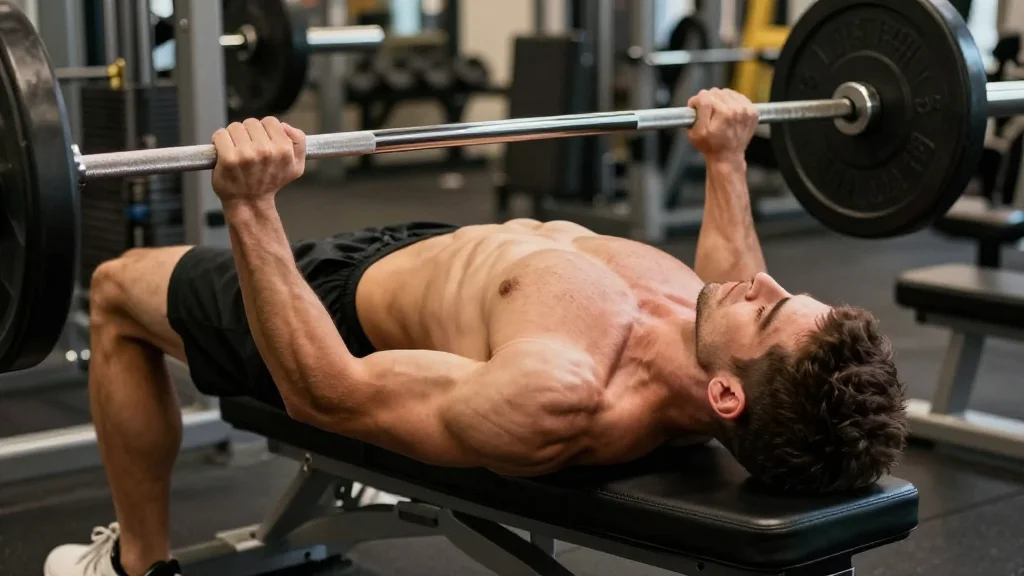
Stop Squeezing Your Shoulder Blades: Why Your Bench Press Setup Is Holding You Back
Why It Matters
Correcting the bench setup directly boosts lift efficiency and reduces shoulder injury risk, delivering measurable performance gains for lifters and competitive athletes.
Key Takeaways
- •Wide collarbone cue creates a stable, wide base for bench press.
- •Depressed shoulders and a “long neck” reduce shoulder stress.
- •Excessive arch can sacrifice bench contact and weaken the lift.
- •Flat‑foot anchor offers maximal stability; tiptoe anchor suits flexible lifters.
- •Leg drive should be rhythmic, pushing horizontally for optimal power transfer.
Pulse Analysis
The bench press is fundamentally a force‑transfer exercise, and its efficiency hinges on a solid, three‑dimensional base. Recent biomechanical analyses show that scapular positioning—specifically a wide, depressed shoulder girdle—creates a larger contact patch and reduces shear forces on the glenohumeral joint. By moving away from the traditional cue of “pinching the blades together,” lifters can engage the lats and upper back as active stabilizers, turning the upper back into a sturdy platform that channels power from the legs through the torso to the bar.
Arching has long been a staple of powerlifting technique, but the article warns against excessive curvature that eliminates shoulder‑blade contact. A moderate arch shortens the range of motion while preserving a continuous bench‑to‑shoulder interface, ensuring the load remains anchored. Meanwhile, leg drive is reframed as a rhythmic, horizontal thrust rather than a static push. Whether using a flat‑foot anchor—ideal for shorter torsos and limited flexibility—or a tiptoe stance for highly mobile athletes, the key is to synchronize hip and knee extension with the bar’s ascent, creating a kinetic chain that maximizes bar velocity.
For coaches and athletes, these insights translate into tangible performance and longevity benefits. Adjusting the setup can add several kilograms to a one‑rep max without additional hypertrophy work, while also mitigating common shoulder pathologies such as impingement and labral tears. The recommended equipment—stable benches, shoulder‑saving pads, and activation bands—supports the biomechanical principles outlined, making the transition from a comfort‑focused posture to a power‑optimized wedge both practical and sustainable.
Stop Squeezing Your Shoulder Blades: Why Your Bench Press Setup Is Holding You Back
Comments
Want to join the conversation?
Loading comments...