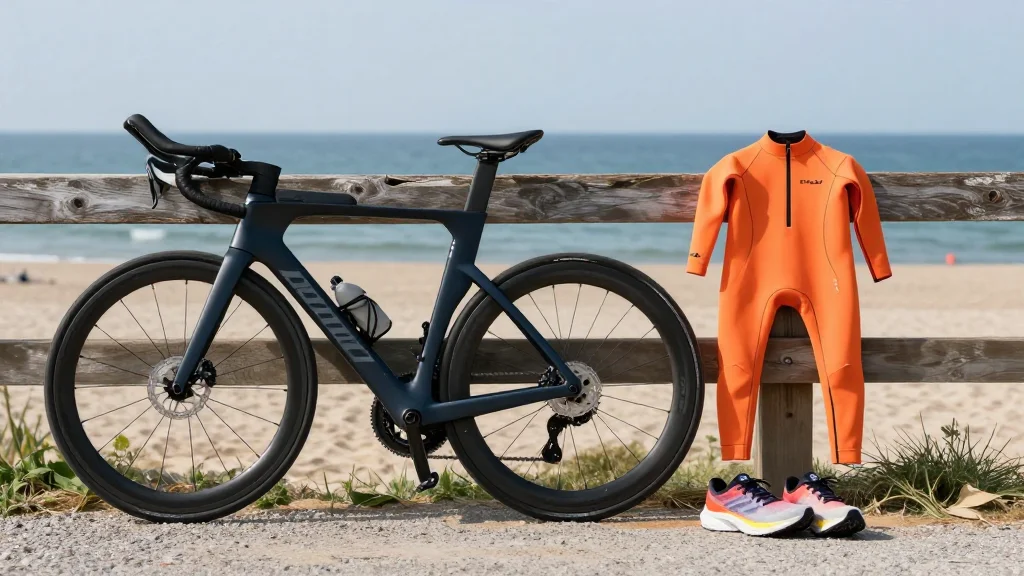
Study Finds Elite Ultra‑Triathletes Favor Steady Pace with Occasional Deep Slowdowns

Why It Matters
The research provides the first empirical benchmark for pacing across all three disciplines of an ultra‑triathlon, a format that has previously been studied in fragments. By showing that elite athletes succeed with a stable baseline punctuated by rare, large slowdowns, the study gives coaches a concrete target for training periodization and race‑day strategy. It also informs the development of wearable analytics that can alert athletes to detrimental pace variability, potentially reducing injury risk and improving finish times. Beyond ultra‑triathlon, the insights may translate to other endurance domains—marathons, ultra‑marathons, long‑distance cycling—where pacing remains a debated art. Understanding that occasional, significant slowdowns are not inherently harmful could shift how athletes approach nutrition, hydration and mental fatigue management during extreme events.
Key Takeaways
- •Study analyzed 13 finishers (9 men, 4 women) of the 2023 Double Deca Iron ultra‑triathlon in Switzerland.
- •Top performers kept a steady baseline speed across swimming, cycling and running.
- •Faster swimmers had fewer relative slowdowns; faster cyclists had fewer moderate but deeper slowdowns.
- •In running, elite athletes logged more checkpoints with speed ≤75 % of their mean pace.
- •Findings suggest training should prioritize baseline pace stability and monitor for occasional large slowdowns.
Pulse Analysis
The Double Deca Iron pacing study arrives at a moment when endurance sports are increasingly data‑driven. Historically, ultra‑endurance coaching has emphasized gradual pacing curves—starting conservatively and tapering off to avoid the dreaded “bonk.” This new evidence flips that script, indicating that the most successful athletes actually tolerate sharp, infrequent drops in speed while preserving an overall high tempo. The implication is twofold: first, athletes may need to train for resilience to sudden physiological stressors, such as abrupt changes in terrain or weather, rather than solely focusing on smooth energy expenditure. Second, the role of mental toughness—accepting a brief, steep slowdown without losing confidence—becomes a measurable performance factor.
From a market perspective, the findings could accelerate adoption of advanced telemetry platforms that flag real‑time deviations beyond a set threshold. Companies offering ultra‑endurance wearables stand to benefit by marketing features that differentiate between strategic rest and harmful fatigue‑induced slowdowns. Moreover, the research may spur a niche of coaching services that specialize in “steady‑baseline” training protocols, blending high‑intensity interval work with long, steady‑state sessions to mimic the pacing profile identified here.
Looking ahead, the authors’ plan to integrate physiological data promises a richer, multimodal view of ultra‑triathlon performance. If future studies confirm that baseline stability predicts success across other ultra‑endurance events, we could see a paradigm shift in how training plans are scripted, how race‑day pacing is communicated, and how athletes mentally prepare for the inevitable slowdowns that come with pushing human limits.
Study Finds Elite Ultra‑Triathletes Favor Steady Pace with Occasional Deep Slowdowns
Comments
Want to join the conversation?
Loading comments...