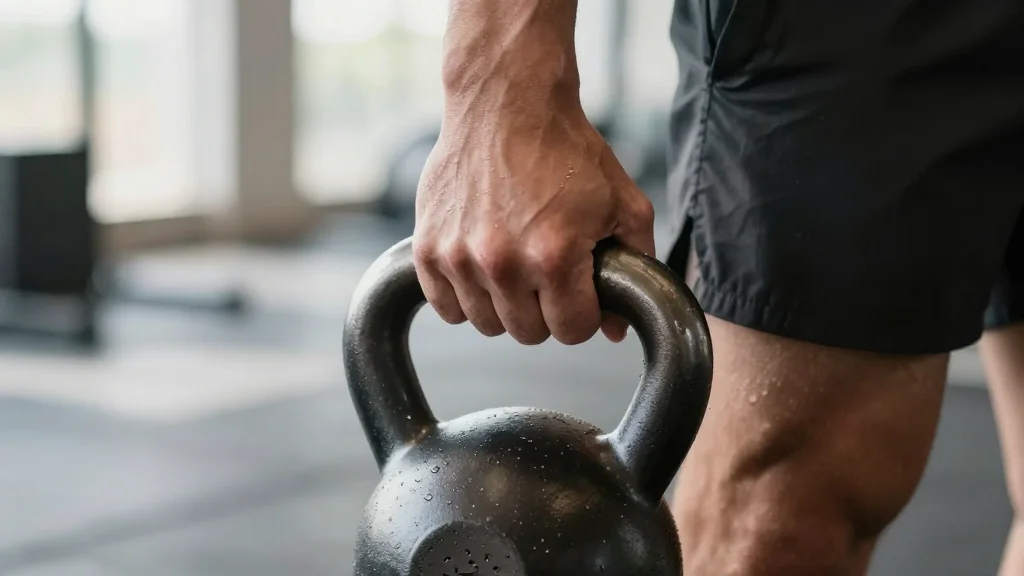
The Commercial Gym Strongman: A Training Philosophy for Posterior Chain Dominance
Companies Mentioned
Why It Matters
The approach democratizes strongman preparation, letting athletes train effectively despite limited access to heavy implements, expanding the talent pool and market for strength sports.
Key Takeaways
- •Squats form core of posterior chain development.
- •Zercher squats simulate Atlas stone loading mechanics.
- •Wool rows build explosive hip-driven pulling power.
- •Weighted pull‑ups exhaust upper back for hypertrophy.
- •Program enables strongman training in standard commercial gyms.
Pulse Analysis
Strongman training has traditionally been tied to niche equipment—Atlas stones, yokes, and massive logs—that most gyms simply cannot accommodate. Hamilton’s framework reframes the discipline by isolating the biomechanical essence of each event and reproducing it with universally available tools. By anchoring the routine in heavy squats, the program ensures progressive overload of the hips, glutes, and spinal erectors, the engine that powers every strongman lift. This foundational emphasis aligns with contemporary strength‑conditioning research, which highlights posterior‑chain dominance as a predictor of performance across power‑based sports.
The second pillar—movement simulation—leverages the Zercher squat to replicate the awkward, front‑loaded lift pattern of an Atlas stone. Positioning the bar in the crooks of the elbows forces the lifter to maintain an upright torso while driving through the hips, mirroring the real‑world demand of lifting a heavy, irregular object from the ground. Complementary to this, the Wool Row introduces an explosive hip thrust into a rowing motion, training athletes to break inertia and transition loads efficiently. These exercises translate directly into competition gains without the logistical burden of transporting massive implements.
Finally, the finisher of weighted pull‑ups targets the upper back and lats, muscles that stabilize and control implements during carries and presses. By driving these fibers to failure, the protocol maximizes metabolic stress and stimulates hypertrophy, ensuring that strength gains are not limited to the lower body. For gym owners and coaches, this modular system offers a scalable product that can be marketed to a broader clientele, from recreational lifters to aspiring strongmen, thereby opening new revenue streams while fostering a more inclusive strength‑sport culture.
The Commercial Gym Strongman: A Training Philosophy for Posterior Chain Dominance
Comments
Want to join the conversation?
Loading comments...