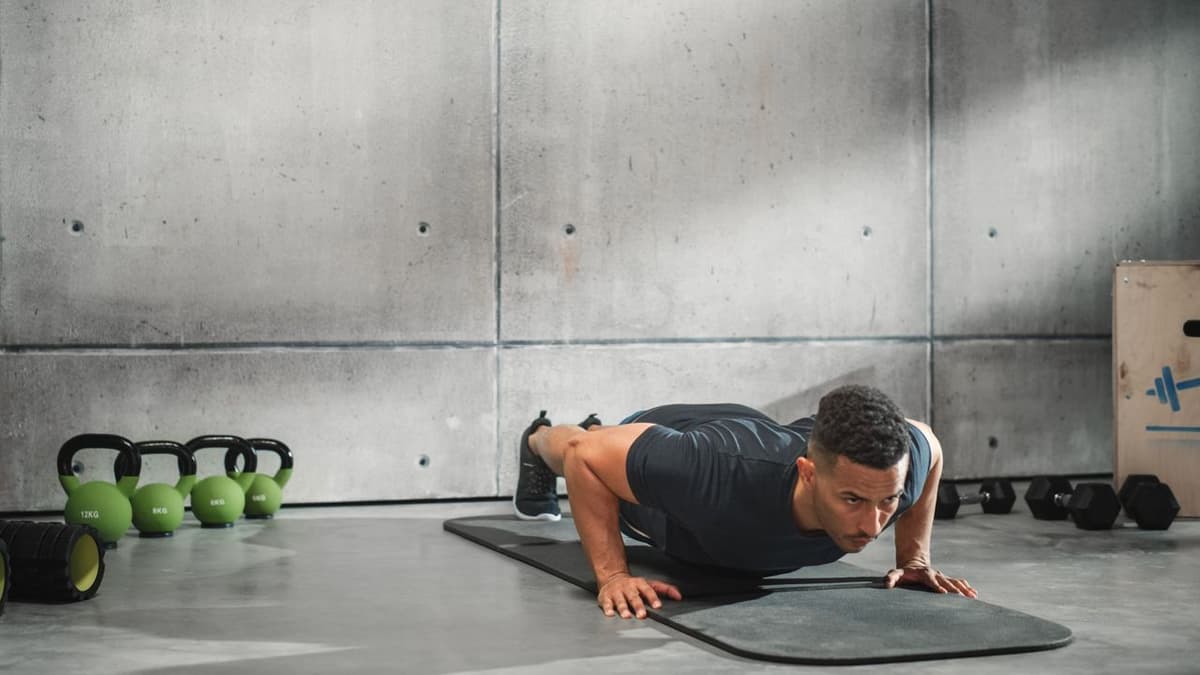
What Is a Tiger Push-Up? Benefits, Muscles Worked and Proper Form
Why It Matters
Tiger push‑ups provide a progressive overload for upper‑body training without weights, helping athletes and gym‑goers break plateaus and improve functional strength. Their multi‑joint demand also enhances shoulder stability and core control, reducing injury risk in other lifts.
Key Takeaways
- •Tiger push‑up targets triceps more than standard push‑up
- •Core must stay rigid during forearm‑to‑hand transition
- •Improves shoulder stability through multiple pressing angles
- •No equipment needed; suitable for home or gym
- •Enhances coordination and time‑under‑tension for strength gains
Pulse Analysis
Bodyweight training has surged as gyms look for space‑efficient, equipment‑free solutions, but progression can stall with basic movements. The tiger push‑up answers that gap by introducing a dynamic shift from hands to forearms, effectively creating two distinct pressing phases in a single rep. This built‑in overload mimics the tension of weighted triceps extensions while preserving the convenience of a floor exercise, making it a favorite among calisthenics enthusiasts and strength coaches seeking to keep athletes challenged without adding plates.
From a biomechanical standpoint, the tiger push‑up recruits the lateral head of the triceps more aggressively than a conventional push‑up, while the core works isometrically to maintain a straight line during the transition. Shoulder girdle stability is also tested as the scapula must control both the hand‑down and hand‑up phases, reducing the risk of impingement that can arise from static pressing angles. Research on bodyweight variations shows increased muscle activation when multiple joints move through varied planes, and the tiger push‑up’s coordinated movement aligns with those findings, delivering superior neuromuscular engagement.
Integrating tiger push‑ups into a program requires careful scaling. Beginners can start on the knees or begin from the forearm position to build confidence, progressing to full‑range reps as strength improves. Pairing them with standard push‑ups, dips, or banded triceps work creates balanced volume and mitigates over‑training the elbows. For athletes focused on functional performance, the added coordination and time‑under‑tension translate to better control in sports movements, while the zero‑equipment nature supports consistent training whether at home, in a park, or on a travel schedule.
What is a tiger push-up? Benefits, muscles worked and proper form
Comments
Want to join the conversation?
Loading comments...