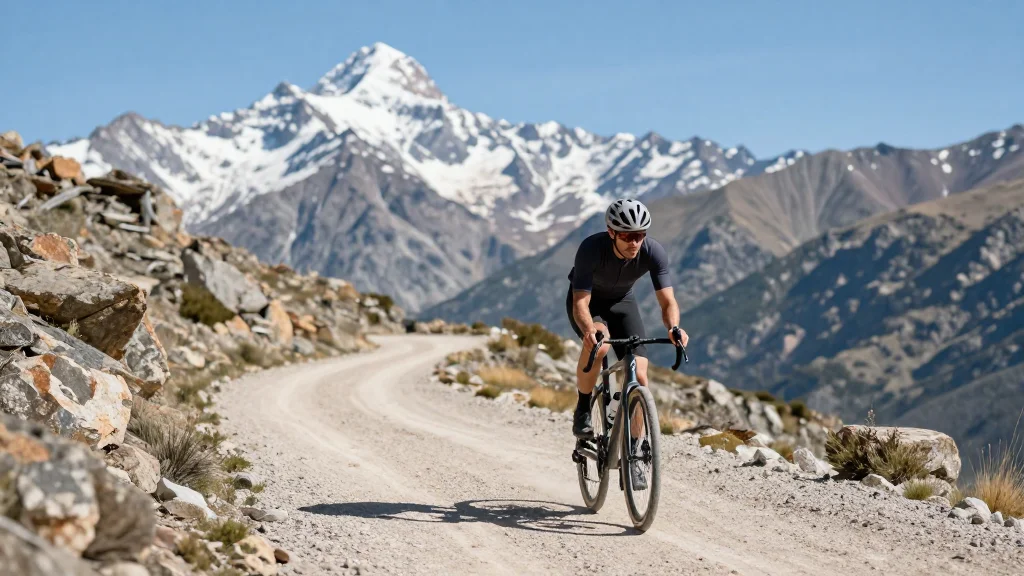
Wout Van Aert Completes 181km Gravel Ride, Touts Immunity Boost Ahead of Tour

Why It Matters
The episode highlights how elite athletes are redefining training boundaries, merging performance with health‑centric goals. By framing a grueling gravel ride as an immunity strategy, van Aert taps into a growing consumer appetite for fitness routines that promise both competitive edge and disease resistance, a narrative that could reshape coaching philosophies across endurance disciplines. If van Aert’s approach proves successful, sponsors, equipment manufacturers and sports‑medicine providers may invest more heavily in gravel‑specific gear, altitude‑simulation technology and recovery protocols tailored to mixed‑terrain stress. The ripple effect could accelerate product innovation and broaden the market for athletes seeking versatile, health‑focused training solutions.
Key Takeaways
- •Wout van Aert rode 181 km of Sierra Nevada gravel, climbing 4,022 m
- •Average speed recorded at 29 kph (18 mph)
- •Van Aert called the effort "a proper immunity booster"
- •Ride serves as altitude and technical preparation for the Tour Auvergne‑Rhône Alpes
- •Highlights a rising trend of gravel riding in elite endurance training
Pulse Analysis
Van Aert’s 181‑km gravel sortie arrives at a moment when the fitness industry is capitalising on the convergence of performance and wellness. Historically, elite cyclists have relied on long road miles and controlled lab sessions to fine‑tune VO2 max and lactate thresholds. The shift toward gravel reflects a broader diversification strategy: athletes are seeking stimuli that challenge not just the cardiovascular system but also proprioception, core stability and mental fortitude. This mirrors the rise of cross‑training in other sports, where varied movement patterns are used to prevent overuse injuries and stimulate novel adaptations.
From a market perspective, van Aert’s public endorsement of gravel as an "immunity booster" could accelerate demand for gravel‑specific components—wider tyres, robust frames, and advanced suspension systems—while also prompting sports‑nutrition brands to market immune‑support formulas tied to high‑stress training. Teams may begin to allocate budget for dedicated gravel training camps, similar to altitude‑training blocks that have become standard. The potential competitive advantage lies in the ability to develop riders who are comfortable on any surface, a valuable asset as race organisers increasingly incorporate mixed‑terrain stages.
Looking ahead, the key question is whether the physiological benefits van Aert touts will translate into measurable performance gains. If his Tour results validate the gravel approach, we could see a paradigm shift where gravel becomes a staple in periodisation plans, not just a novelty. Conversely, if the data shows negligible impact or heightened injury rates, the experiment may be relegated to a niche training footnote. Either outcome will inform how coaches balance traditional road work with emerging modalities, shaping the next evolution of elite endurance preparation.
Wout van Aert Completes 181km Gravel Ride, Touts Immunity Boost Ahead of Tour
Comments
Want to join the conversation?
Loading comments...