Key Takeaways
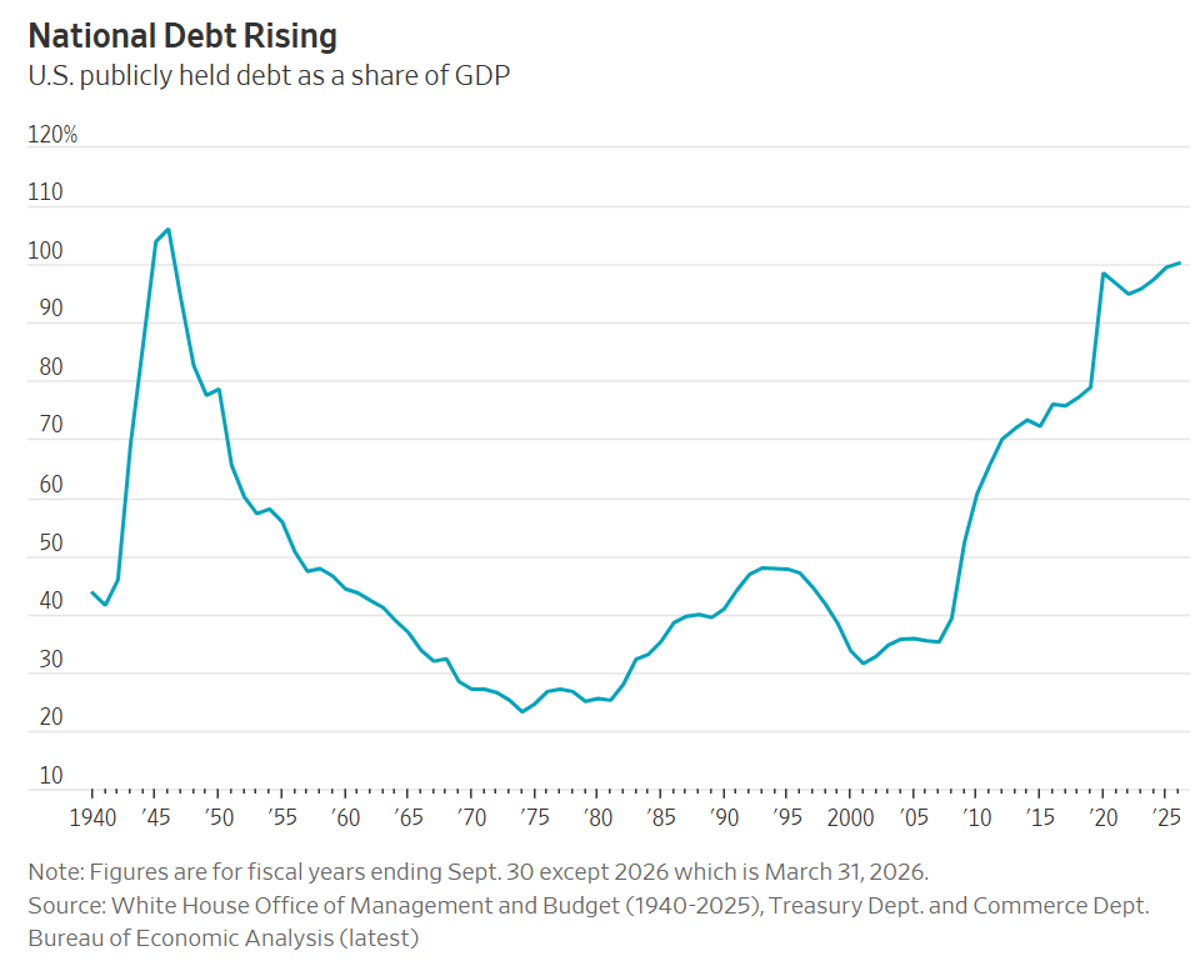
- •Publicly held debt now ~100% of GDP, first since WWII.
- •Debt growth outpaces predictions of imminent fiscal crisis.
- •Inflation and rising interest costs are primary debt risks.
- •Interest payments now exceed defense budget, pressuring fiscal space.
- •Treasury bonds remain safe assets for pensions and insurers.
Pulse Analysis
Since the 1940s, U.S. government debt has evolved from a modest $50 billion to an almost $40 trillion liability, a trajectory that mirrors the nation’s expanding fiscal role. The debt‑to‑GDP ratio, now hovering around 100 %, marks a post‑World War II high, yet the economy has continued to grow, diluting the immediate impact of the raw dollar figure. This historical perspective underscores why simple headline numbers can be misleading; the real story lies in how debt interacts with growth, monetary policy, and the dollar’s status as the world’s reserve currency.
The primary concerns surrounding the debt surge are not default risk but inflationary pressure and rising borrowing costs. The pandemic stimulus lifted publicly held debt from $22 trillion in 2019 to over $39 trillion, while inflation peaked at 9.1 % before easing to roughly 3.3 %. As rates climb, interest payments have surged to $1.04 trillion—now larger than the defense budget—pressuring the federal budget and limiting discretionary spending. Although interest as a share of GDP remains comparable to the 1980s, the rapid rise in absolute terms signals a tightening fiscal environment that could force policymakers to balance stimulus with price stability.
Looking ahead, the debt’s sustainability hinges on the interplay between economic growth, monetary policy, and fiscal discipline. The U.S. Treasury market remains the world’s safest haven, absorbing massive inflows from pension funds, insurers, and foreign investors, which mitigates immediate panic. However, persistent high deficits could eventually erode confidence, prompting higher yields and tighter credit conditions. Stakeholders should monitor inflation trends, the trajectory of the yield curve, and any legislative moves to curb spending, as these factors will shape the debt’s long‑term trajectory and its impact on the broader economy.
A Government Debt Crisis?
Comments
Want to join the conversation?