Global Economy Blogs and Articles
  • All Technology
  • AI
  • Autonomy
  • B2B Growth
  • Big Data
  • BioTech
  • ClimateTech
  • Consumer Tech
  • Crypto
  • Cybersecurity
  • DevOps
  • Digital Marketing
  • Ecommerce
  • EdTech
  • Enterprise
  • FinTech
  • GovTech
  • Hardware
  • HealthTech
  • HRTech
  • LegalTech
  • Nanotech
  • PropTech
  • Quantum
  • Robotics
  • SaaS
  • SpaceTech
AllNewsDealsSocialBlogsVideosPodcastsDigests

Global Economy Pulse

EMAIL DIGESTS

Daily

Every morning

Weekly

Sunday recap

NewsDealsSocialBlogsVideosPodcasts
Global EconomyBlogsChina Unveils New Year Measures as Consumption Data Dips
China Unveils New Year Measures as Consumption Data Dips
Asia StocksGlobal EconomyEmerging Markets

China Unveils New Year Measures as Consumption Data Dips

•February 11, 2026
0
Asia Financial
Asia Financial•Feb 11, 2026

Why It Matters

The initiatives signal Beijing’s urgency to revive household spending, a key driver for sustainable growth as export‑led momentum wanes. Their effectiveness will shape policy direction and market confidence in China’s post‑pandemic recovery.

Key Takeaways

  • •9‑day Lunar New Year holiday aims to spur spending
  • •2.05 bn yuan vouchers allocated for direct consumer benefits
  • •January CPI fell to 0.2% YoY, below forecasts
  • •Restaurant chain closed 10 Shanghai outlets due to weak demand
  • •PPI deflation eased to 1.4% YoY, smallest since July 2024

Pulse Analysis

The nine‑day Lunar New Year holiday, announced by Beijing, is the longest on record and is being leveraged as a catalyst for retail and services activity. By coupling the extended break with a 2.05 billion‑yuan package of vouchers, cash red envelopes and targeted subsidies, authorities hope to convert leisure time into measurable consumption. This approach mirrors past stimulus tactics but adds a direct cash component intended to bypass lingering consumer hesitancy after years of pandemic‑induced austerity.

Data released by the National Bureau of Statistics paints a mixed picture. The consumer price index decelerated to a modest 0.2% annual rise in January, far missing analysts’ forecasts and indicating that price‑driven demand is still fragile. At the same time, the producer price index showed the slowest deflationary slide since mid‑2024, suggesting some easing of excess supply in manufacturing. Yet the closure of ten Shanghai Min restaurant locations underscores how weak household spending is already translating into profitability challenges for service‑sector firms, reinforcing concerns that stimulus alone may not be sufficient.

Financial markets responded with cautious optimism. Asian equities edged higher as the dollar slipped, reflecting hopes that the holiday‑driven boost could lift consumer sentiment. However, investors remain wary of structural imbalances, such as lingering deflationary pressures and the uncertain impact of AI‑heavy capital allocations on broader economic stability. The success of the New Year measures will likely influence the tone of upcoming policy announcements and could determine whether China can sustain its 5% growth target without reverting to export‑centric growth models.

China Unveils New Year Measures as Consumption Data Dips

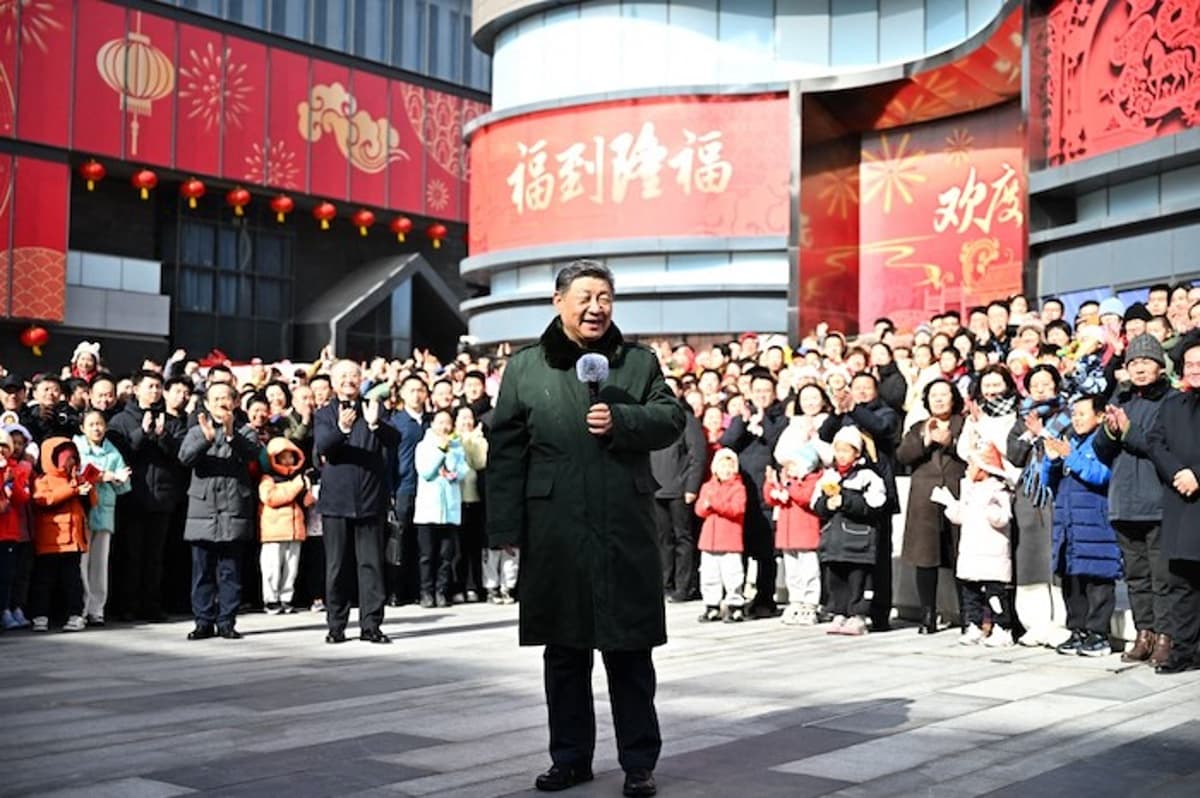
Local authorities in China have been unveiling a batch of measures recently to boost weak spending during the upcoming Lunar New Year break.

This year, citizens will get a nine-day public holiday – the longest ever – which starts on Sunday and has been touted by officials as a chance to kickstart consumption.

Official data announced on Wednesday revealed that growth in consumer prices slowed in January and missed forecasts. The world’s second-largest economy has been plagued by sluggish consumption since the end of the Covid-19 pandemic, which has made the country reliant on manufacturing and exports.

ALSO SEE: Focus on Economic Growth is Killing Nature, 150 States Warn

Local authorities across China have allocated 2.05 billion yuan ($297 million) to “directly benefit consumers” during the upcoming holiday, Vice Minister of Commerce Sheng Qiuping said.

The “New Year’s gifts” will be distributed through vouchers, subsidies and traditional red envelopes containing money, state broadcaster CCTV said.

Figures from the National Bureau of Statistics (NBS) on Wednesday showed the consumer price index, a key measure of inflation, slowed to 0.2% on-year last month. That was well down from December’s 0.8%, which was the quickest in almost three years.

China’s vast economy has stagnated in recent years, despite a historic boom in exports. Authorities have adopted measures to boost consumption, including a subsidy scheme for household goods, but results have been muted.

Consumer inflation is “likely to bounce back in February”, Zichun Huang of Capital Economics said. But she added that “with the imbalances between supply and demand set to persist, we doubt China’s deflationary pressures will fade any time soon”.

Officials vowed at a news conference in Beijing on Wednesday to enact further measures to encourage domestic spending.

Restaurant chain shuts 10 outlets

In a stark sign that the spending slump has hurt businesses, the operator of a popular restaurant chain specialising in Shanghai cuisine announced Tuesday the sudden closure of 10 locations in the eastern Chinese metropolis.

The shutting of the Shanghai Min outlets is temporary, Shanghai XNG Holdings said in a statement on the Hong Kong Stock Exchange. But it added that the decision was made because of a “sustained lack of profitability” in a “challenging business environment”.

Other government data released Wednesday suggested a recent easing of persistent deflation in the manufacturing sector.

Prices at the factory gate – stuck in negative territory since October 2022 – fell at a slower rate last month, NBS data showed.

The producer price index’s 1.4% year-on-year decrease was the slowest pace of deflation since July 2024.

Improvements were “concentrated in non-ferrous metals, likely reflecting recent volatility in global commodity markets,” wrote Huang.

PPI expanded 0.4% month-on-month. That growth “suggests the deflationary pressure in the manufacturing sector may have become less severe”, wrote Zhang Zhiwei, president and chief economist of Pinpoint Asset Management.

Official data released last month showed China’s economy grew 5% in 2025, meeting the government target but among the slowest rates in decades.

Experts expect leaders to announce the same or a slightly lower goal for this year at a key political gathering in early March.

Asian markets edge up, dollar dips

Asian and European stock markets rose on Wednesday, while the dollar slipped as investors weighed weak US consumer data that boosted the case for more interest rate cuts ahead of key jobs figures due later in the day.

The gains followed a mixed day on Wall Street, where tech firms pared recent gains amid lingering worries about extended valuations and the vast sums pumped into artificial intelligence.

Markets in Hong Kong, Shanghai, Sydney, Singapore, Seoul, Taipei, Bangkok, Jakarta and Manila all advanced, though Mumbai and Wellington dipped. Tokyo was closed for a holiday.

There was little major reaction to data showing Chinese consumer inflation eased last month.

Hong Kong’s Hang Seng Index was up by 0.3% at 27,266.38 at the close of trading, while the Shanghai Composite edged up by 0.1% to 4,131.98 at the end of formal trading.

And in Europe, London and Paris opened higher but Frankfurt fell.

The prospect of another Fed rate cut also pushed the dollar down against its major peers. It slipped to 153.10 yen from 154.31 yen on Tuesday.

Traders remain on guard about developments in the tech space as they worry that the hundreds of billions firms have pumped into AI may not see any returns for some time.

That was compounded Tuesday after Google parent Alphabet raised more than $30 billion in debt in less than 24 hours as it looks to ramp up its capabilities.

News that startup Altruist Corp had rolled out a tax-strategy tool added to the sense of unease on trading floors as it fanned concerns that the software will take business from mainstream firms.

Meanwhile, oil prices edged up on fresh concerns over US-Iran tensions as Israeli Prime Minister Benjamin Netanyahu headed for Washington to hold hastily arranged talks as nuclear talks between Washington and Tehran continue.

Trump said on the eve of the White House meeting that he was weighing sending a second US “armada” to the Middle East to pressure Tehran to reach a deal, though Netanyahu is expected to push him to take a harder line with Israel’s foe.

  • Jim Pollard with AFP

ALSO SEE:

Chinese Solar Panel Makers Get a Rise After Musk Team Visits

China Slams Panama Ports Verdict, Hutchison Files New Case

Nvidia AI Chip Sales to China Delayed Again on Security Review

Calls For Reform Grow as Chinese Economy Slows in November

Mexico Approves Big Tariff Hikes on Chinese, Other Asian Imports

IMF Tells China: Cut Exports, Lift Consumption, ‘Let Zombies Go’

Foreign Firms Struggling Amid China’s Economic Slump, Trade War

Chinese Firms May Soon Need To Transfer Tech To Invest In Europe

Chinese EV Firms Invest More Abroad Than At Home For First Time

The post China Unveils New Year Measures as Consumption Data Dips appeared first on Asia Financial.

Read Original Article
0

Comments

Want to join the conversation?

Loading comments...