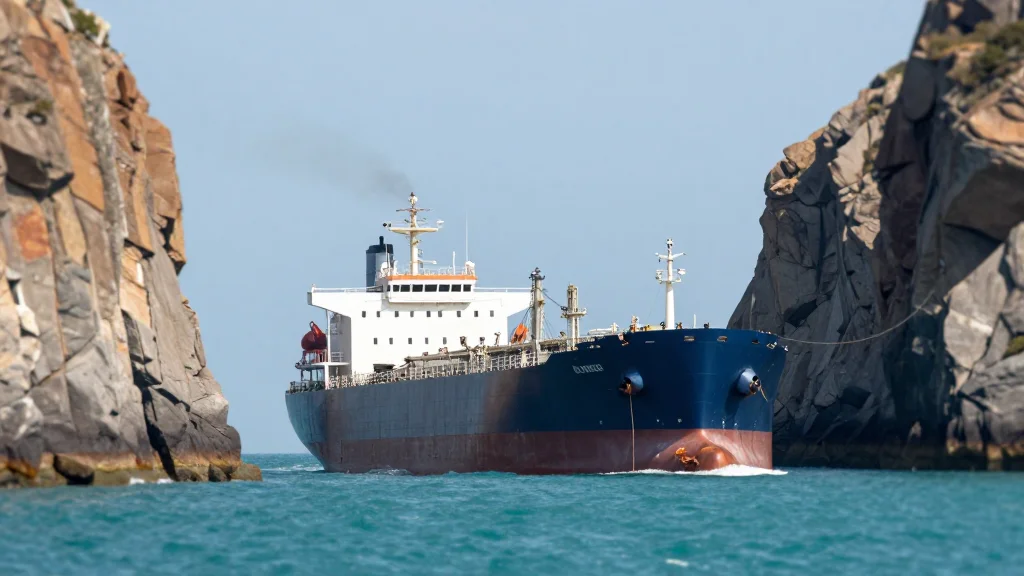
How Traffic Through the Strait of Hormuz Shrank to a Trickle – a Visual Deep Dive
Key Takeaways
- •April saw only 191 vessels cross Strait, down from ~3,000.
- •Oil tanker flow fell from 15 million barrels/day to near zero.
- •Freight rates expected to plunge as cargo volumes disappear.
- •Prolonged conflict could cause irreversible loss of export capacity.
- •Fertilizer and gas markets face tightening supply from Gulf disruption.
Pulse Analysis
The tenth week of the Iran‑Israel‑U.S. confrontation has turned the Persian Gulf into a maritime no‑man’s land. Lloyd’s List Intelligence notes that a typical month sees roughly 3,000 vessels threading the Strait of Hormuz, carrying about 15 million barrels of crude and refined products daily. Kpler’s April data, however, recorded only 191 ship transits – a 94 percent drop. That contraction not only throttles the flow of oil, natural gas and fertilizer feedstocks but also signals a broader re‑routing of global shipping patterns as insurers and operators scramble to avoid the emerging combat zone.
The immediate market reaction is already evident. With tanker volumes evaporating, spot freight rates have slumped, while forward curves reflect heightened risk premiums. Analysts at Vortexa warn that lost barrels cannot be replaced elsewhere, tightening the already fragile balance between supply and demand. Downstream sectors – from petrochemicals to agricultural fertilizers – are feeling price pressure as raw material imports stall. Energy traders are revising inventories, and the sudden scarcity is feeding into crude price volatility, reinforcing the view that geopolitical shock in the Hormuz corridor can ripple through the entire global energy value chain.
Looking ahead, the duration of the conflict will dictate whether the disruption remains a temporary bottleneck or evolves into a structural shift. Shipping firms are evaluating alternative routes such as the Cape of Good Hope, but the added distance inflates fuel consumption and carbon footprints, challenging sustainability goals. Policymakers in the United States and Europe are likely to intensify diplomatic efforts to reopen the strait, while insurers may raise premiums for Gulf voyages, further eroding profit margins. Companies that diversify supply chains and hedge freight exposure will be better positioned to weather prolonged Hormuz turbulence.
How traffic through the Strait of Hormuz shrank to a trickle – a visual deep dive
Comments
Want to join the conversation?