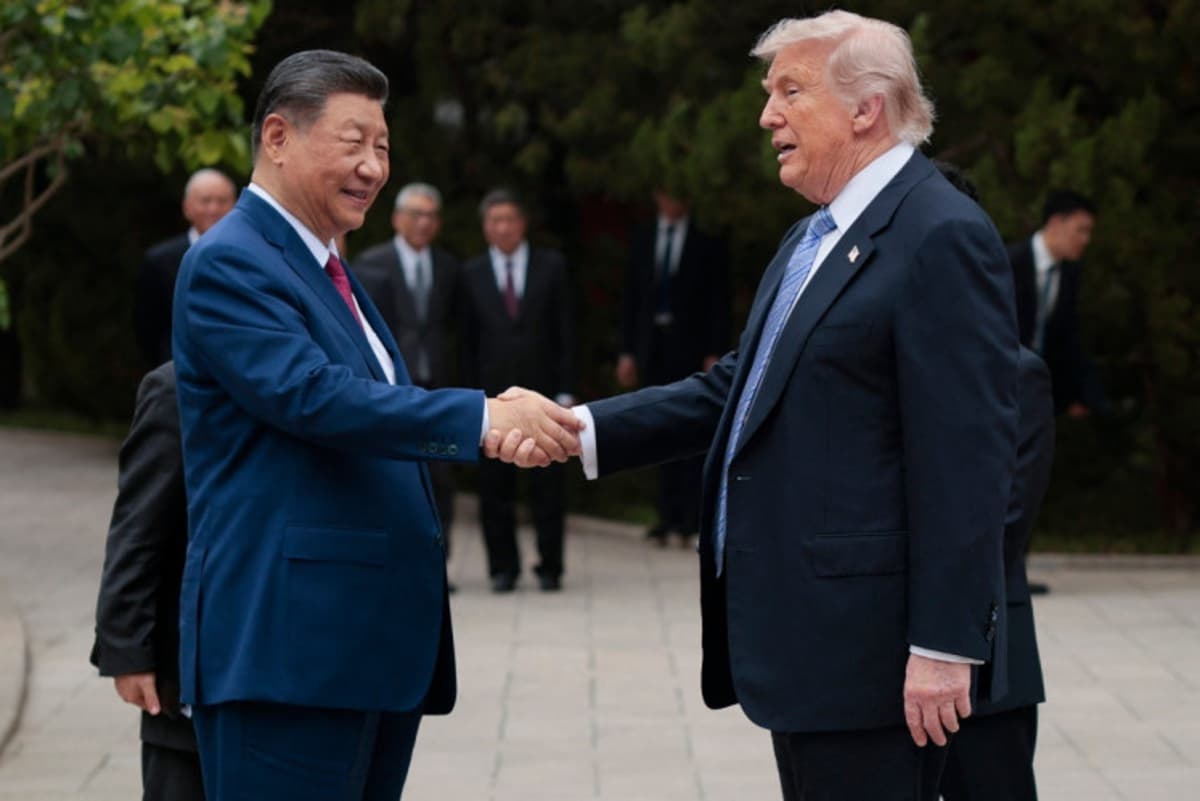
Analysis: Indonesia Finds Little Comfort From Xi-Trump Summit
Companies Mentioned
Why It Matters
Indonesia’s economy hinges on a swift resolution to the Iran conflict; the summit’s lack of progress threatens fiscal stability and regional trade security, amplifying investor risk across Southeast Asia.
Key Takeaways
- •Xi‑Trump summit paused US‑China rivalry but yielded no Iran solution
- •Indonesia's rupiah hits historic lows amid market anxiety
- •President Prabowo's fiscal deficit nears 3% legal cap
- •Summit ignored South China Sea tensions affecting ASEAN trade routes
- •Prolonged Iran conflict could force unpopular fiscal measures in Indonesia
Pulse Analysis
The recent meeting between President Xi Jinping and former President Donald Trump was marketed as a diplomatic breakthrough, yet the agenda remained narrowly focused on bilateral trade and rhetoric. While both sides signaled a willingness to talk, the summit produced no actionable framework for the Iran nuclear issue, the war in Ukraine, or the simmering conflicts in the Middle East. Analysts view this as a tactical pause rather than a strategic reset, leaving global supply chains and commodity markets in a state of uncertainty as geopolitical risk premiums stay elevated.
For Indonesia, the summit’s outcomes—or lack thereof—have immediate fiscal repercussions. President Prabowo Subianto has kept gasoline prices stable and expanded social programs, relying on the assumption that a quick end to the Iran confrontation would safeguard oil imports through the Strait of Hormuz. With the rupiah plunging to historic lows and the Jakarta Stock Exchange reacting to downgrades from MSCI and other rating agencies, the government’s deficit is edging toward the 3 percent legal ceiling. Should the Iran conflict drag on, Indonesia may be forced to raise fuel taxes or cut spending, jeopardizing the popular free school‑meal scheme and broader consumer confidence.
Beyond Indonesia, the summit’s omission of the South China Sea dispute raises alarms for the entire ASEAN bloc. The waterway carries a third of global maritime trade, and China’s overlapping claims continue to strain relations with Vietnam, the Philippines and Malaysia. Without a coordinated regional response, investors may view Southeast Asia as a higher‑risk environment, potentially diverting capital to markets perceived as more geopolitically stable. The episode underscores the need for multilateral dialogue that addresses both great‑power rivalry and localized security challenges to sustain growth and investor confidence in the region.
Analysis: Indonesia finds little comfort from Xi-Trump summit
Comments
Want to join the conversation?
Loading comments...