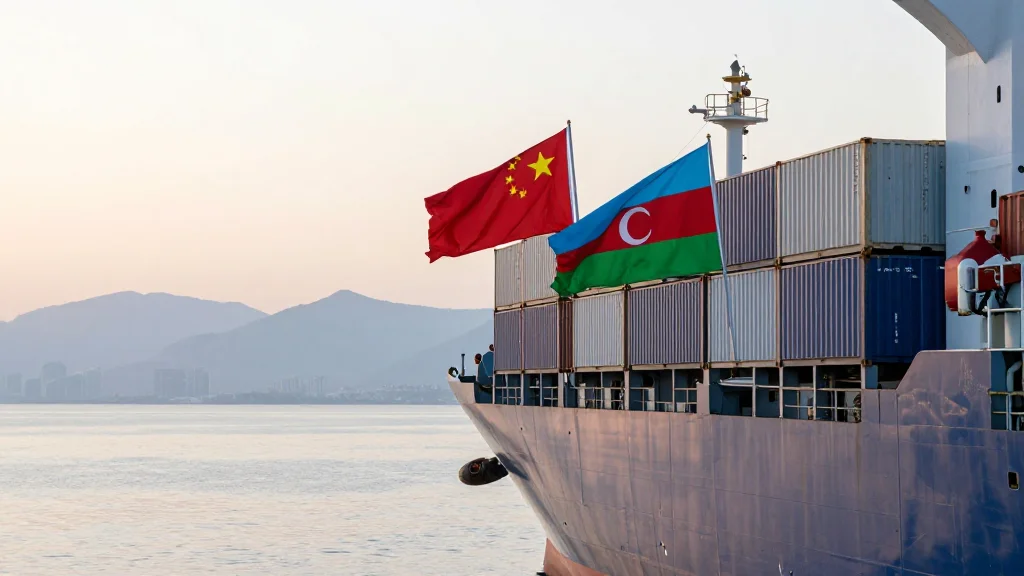
Azerbaijan‑China Trade Up 6.1% in First Four Months of 2026

Why It Matters
The 6.1% increase in Azerbaijan‑China trade highlights a subtle but meaningful shift in Eurasian commerce, where the South Caucasus is emerging as a pivotal conduit for Chinese goods into Europe and the Middle East. For the global economy, this re‑routing could reshape supply‑chain dynamics, affect energy pricing, and influence the strategic calculus of both Western and Asian powers seeking influence in the region. Moreover, Azerbaijan’s move to broaden its export base reduces its vulnerability to oil price swings, contributing to greater macro‑economic stability. For China, securing diversified trade corridors mitigates risks associated with maritime chokepoints and aligns with its broader BRI objectives. Together, these developments may accelerate the integration of Eurasian markets, prompting investors to reassess risk‑return profiles across the continent.
Key Takeaways
- •Bilateral trade between Azerbaijan and China grew 6.1% in Jan‑Apr 2026
- •Growth measured against the same period in 2025
- •Trend reflects Azerbaijan’s diversification beyond hydrocarbons
- •China’s Belt and Road Initiative underpins expanding logistical links
- •Upcoming Eurasian Economic Forum may cement further trade agreements
Pulse Analysis
The modest yet notable 6.1% rise in Azerbaijan‑China trade should be read against a backdrop of shifting geopolitical and economic currents. Historically, Baku’s economy has been tethered to oil and gas, making it susceptible to global price cycles. By deepening ties with China, Azerbaijan is not only accessing a massive consumer market but also tapping into a source of capital that can fund infrastructure upgrades essential for long‑term diversification. This mirrors a broader pattern seen in other resource‑rich states that are courting Asian investors to offset Western financing constraints.
From China’s perspective, the South Caucasus offers a land‑based alternative to the maritime routes that have become increasingly contested in the Indo‑Pacific. The incremental trade growth suggests that Chinese firms are already testing the viability of overland corridors that could eventually feed into the Black Sea ports of Baku and Poti, shortening delivery times to European customers. If the trend continues, we may see a re‑balancing of trade flows that reduces Europe’s reliance on traditional routes through the Suez Canal.
Looking forward, the real test will be whether the 6.1% increase can be sustained through the latter half of 2026 and beyond. Key variables include the stability of global energy prices, the pace of Chinese investment in Azerbaijani logistics, and the political will of both governments to institutionalise their partnership through formal agreements. Investors should monitor policy announcements from the upcoming Eurasian Economic Forum, as any concrete commitments could unlock a new wave of cross‑border projects, reshaping the economic geography of the entire Eurasian corridor.
Azerbaijan‑China Trade Up 6.1% in First Four Months of 2026
Comments
Want to join the conversation?
Loading comments...