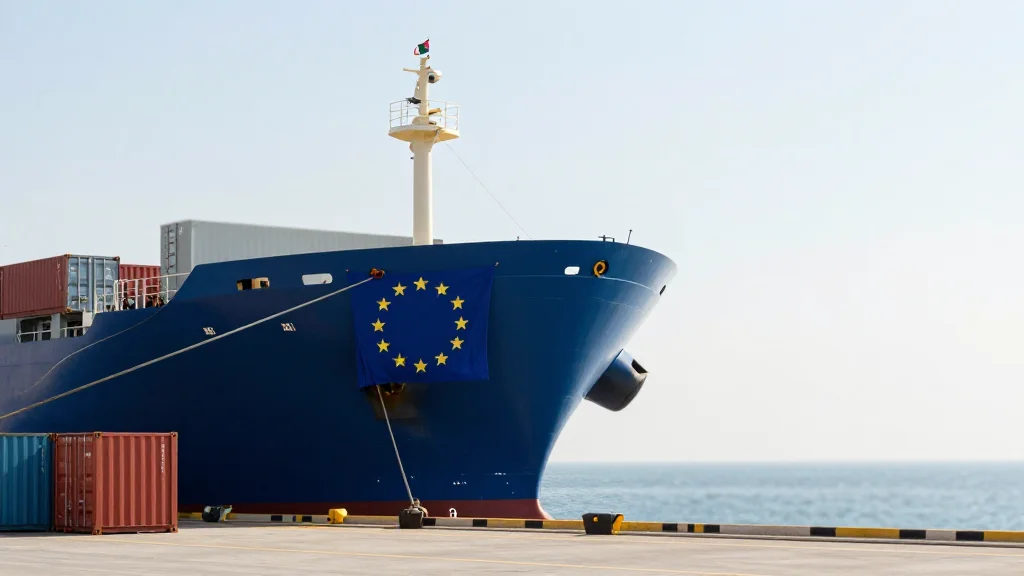
Bangladesh, EU Strike Deal on Trade, Investment, Sustainable Development
Why It Matters
The PCA strengthens economic ties and introduces a values‑based framework that could boost investment, diversify Bangladesh’s export base and set a precedent for EU‑Asia partnerships.
Key Takeaways
- •First South Asian nation with modern EU PCA
- •82-article pact covers trade, energy, transport, and human rights
- •EU remains Bangladesh’s top trade partner, $23.6bn annual flow
- •New agreement could deepen supply‑chain integration and investment
- •Apparel exports slipped 4.8% to $3.14bn in November
Pulse Analysis
The European Union and Bangladesh concluded a modern Partnership and Cooperation Agreement (PCA) on 21 April, marking the first time a South Asian nation has secured such a framework with the bloc. Signed in Brussels by EU High Representative Kaja Kallas and Bangladeshi Foreign Minister Khalilur Rahman, the 82‑article pact sets out a comprehensive agenda that spans political dialogue, trade, investment, energy, transport, agriculture, migration, security, finance and maritime affairs. By embedding commitments on democracy, human rights, climate action and sustainable development, the agreement moves beyond traditional trade pacts toward a deeper, values‑based partnership.
The EU already accounts for more than $23 billion in annual bilateral trade with Bangladesh, making it the South Asian country's largest market. Under the long‑standing ‘Everything But Arms’ (EBA) scheme, Bangladeshi exporters enjoy duty‑free, quota‑free access to European consumers, a privilege that has powered the nation’s garment industry. However, recent data show a 4.8 % dip in apparel exports to $3.14 billion in November, reflecting muted demand in Europe and the United States. The new PCA is expected to reinforce supply‑chain resilience, attract fresh investment, and potentially expand market access beyond textiles.
Beyond commerce, the agreement’s emphasis on climate mitigation and sustainable development aligns with Bangladesh’s vulnerability to sea‑level rise and its ambition to transition to greener energy. The inclusion of migration and security clauses also signals a willingness to cooperate on people‑movement management and regional stability. For European businesses, the PCA offers a clearer regulatory environment and a platform for joint research and innovation projects. As ratification proceeds, the deal could serve as a template for future EU engagements with emerging economies, blending economic incentives with strategic and ethical considerations.
Bangladesh, EU strike deal on trade, investment, sustainable development
Comments
Want to join the conversation?
Loading comments...