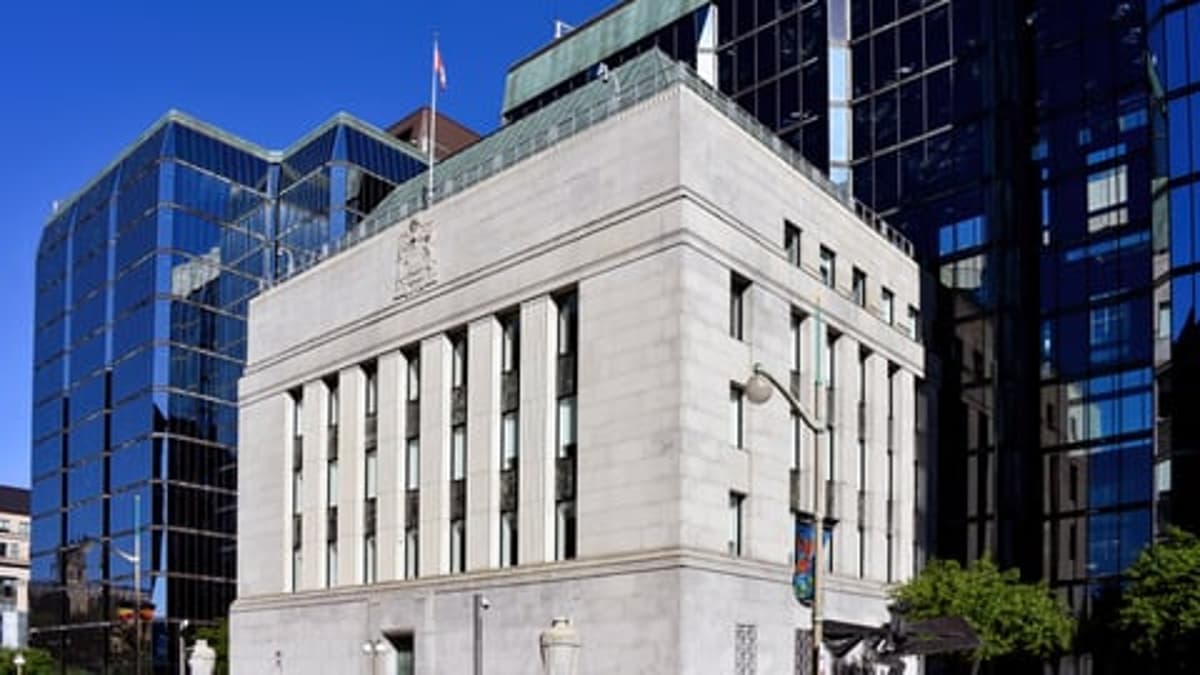
Bank of Canada Holds Key Rate Steady in Fifth Consecutive Decision
Why It Matters
Holding rates steadies borrowing costs while the BoC balances inflation pressures from volatile energy prices against a softening economy, shaping Canada’s monetary outlook and investor sentiment.
Key Takeaways
- •Rate held at 2.25% for fifth consecutive meeting.
- •April inflation rose to 2.8%, driven by higher gas prices.
- •Governor Macklem cites weak Q1 growth and geopolitical uncertainty.
- •Oil price shock expected to keep inflation near 3% short term.
- •BoC signals future easing once inflation returns to 2% target.
Pulse Analysis
The Bank of Canada’s decision to leave its policy rate at 2.25% reflects a cautious stance amid a confluence of domestic and global headwinds. By maintaining a steady rate for the fifth consecutive meeting, the central bank aims to avoid tightening financial conditions while it assesses the impact of a softer Canadian economy and rising geopolitical tensions. Governor Tiff Macklem’s remarks underscored weaker‑than‑expected first‑quarter growth, attributing part of the slowdown to U.S. trade aggression and the ongoing conflict in Iran, factors that have added uncertainty to the outlook for Canadian businesses and consumers.
Inflation in Canada edged higher to 2.8% in April, driven primarily by a surge in gasoline prices as global oil markets reacted to Middle‑East instability. The BoC’s forecast that inflation will linger near 3% in the near term signals that the central bank is treating the energy‑price shock as a temporary blip rather than a permanent upward pressure. Macklem emphasized that “limited evidence” suggests the higher energy costs are not yet permeating broader price dynamics, allowing the bank to keep its focus on preventing entrenched inflation without rushing to tighten policy.
Looking ahead, the Bank of Canada’s forward guidance suggests a gradual path toward easing once inflation consistently trends back toward the 2% target. Market participants will watch upcoming data releases for signs that the oil‑price shock is receding and that domestic demand stabilizes. Comparisons with the U.S. Federal Reserve, which is navigating its own rate‑tightening cycle, highlight divergent trajectories: Canada may pivot to cuts sooner if inflation expectations remain anchored, while the Fed could stay restrictive longer. The current hold therefore provides a window of stability for Canadian borrowers, investors, and the broader economy as policymakers balance price stability with growth concerns.
Bank of Canada holds key rate steady in fifth consecutive decision
Comments
Want to join the conversation?
Loading comments...