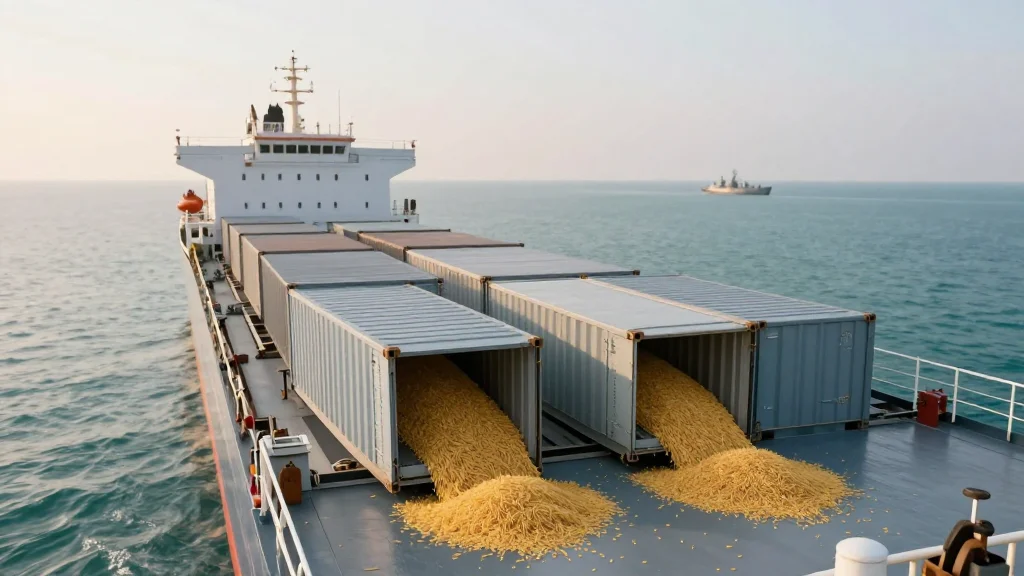
Basmati Rice, Tea Exports to West Asia Come to a Grinding Halt
Why It Matters
The blockage curtails two of India’s top agricultural export earners, squeezing foreign‑exchange inflows and exposing the fragility of maritime supply chains in geopolitically volatile regions.
Key Takeaways
- •100,000 tonnes of basmati rice stuck at Kandla awaiting Hormuz reopening
- •Gulf tea orders flood exporters but cannot ship due to Strait closure
- •Saudi Arabia, UAE, Iran, Iraq, Yemen represent 50% of basmati exports
- •Indian exporters fear profit squeeze after MT Marivex attack
- •Turkey route handles only small tea consignments amid wider disruption
Pulse Analysis
The Strait of Hormuz, a chokepoint for roughly a fifth of global oil and a critical artery for bulk commodities, has been effectively sealed off after the MT Marivex was struck near Oman. The incident, set against a backdrop of escalating US‑Israel‑Iran hostilities, has prompted shipping lines to reroute or pause voyages, driving up freight rates and insurance premiums. For India, whose agricultural export basket heavily relies on maritime links to the Gulf Cooperation Council, the closure translates into immediate logistical paralysis and heightened market uncertainty.
Basmati rice and second‑flush orthodox teas are among India’s most lucrative agro‑exports, together generating billions of dollars in annual foreign‑exchange earnings. With 46% of tea and roughly half of basmati rice destined for Saudi Arabia, the UAE, Iran, Iraq and Yemen, the current standstill threatens to erode quarterly revenue streams. Exporters report that 100,000 tonnes of rice are anchored at Kandla, while tea consignments are forced onto a limited Turkey corridor, insufficient to meet the seasonal surge that typically begins in June. The loss of timely shipments could also weaken India’s pricing power in these premium markets.
Looking ahead, stakeholders are weighing alternative logistics such as the Red Sea‑to‑Turkey corridor and over‑land routes through Iran, though each carries its own geopolitical and cost challenges. The Indian government may need to intervene with diplomatic outreach to de‑escalate tensions and consider temporary subsidies or insurance guarantees to sustain exporter cash flow. In the longer term, diversifying export destinations and investing in resilient supply‑chain infrastructure will be essential to mitigate the risk of future maritime disruptions.
Basmati rice, tea exports to West Asia come to a grinding halt
Comments
Want to join the conversation?
Loading comments...