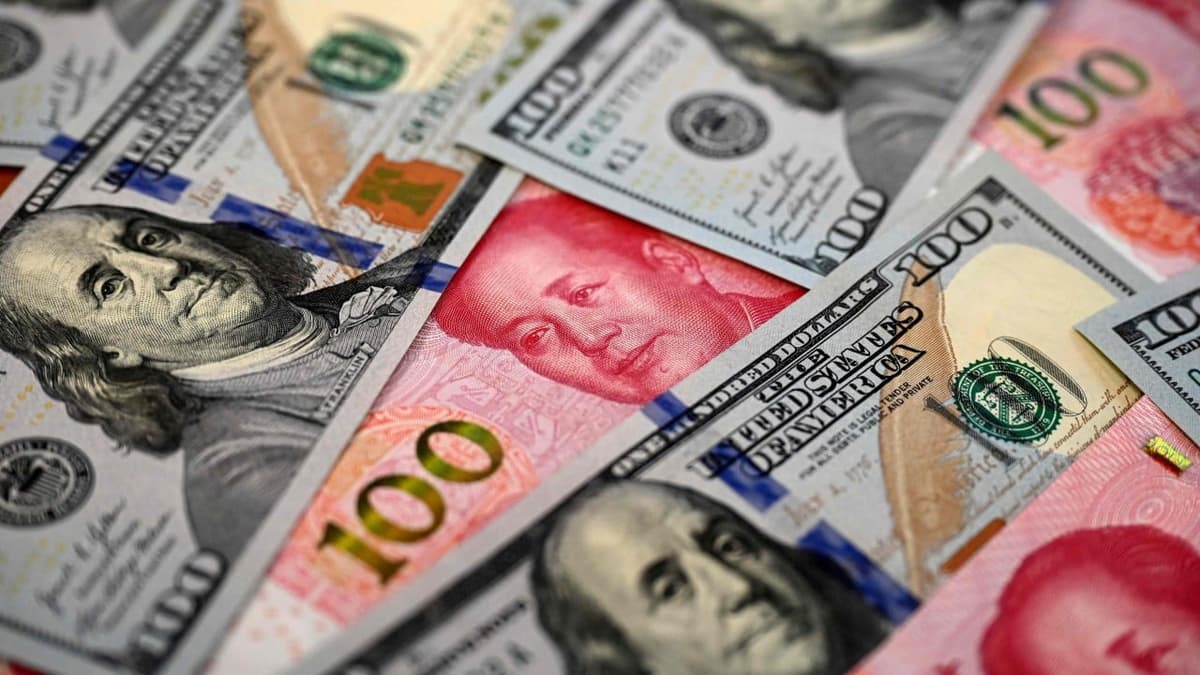
The shift underscores accelerating de‑dollarisation, reshaping capital flows and pressuring US monetary credibility. It signals that emerging‑market currencies like the yuan could gain a larger role in global finance.
The yuan’s recent surge is more than a technical market move; it reflects a growing skepticism toward the US dollar that has been building since the Federal Reserve’s policy volatility and concerns over American fiscal health. As the People’s Bank of China anchors the fixing rate near historic lows, Chinese firms with expanding overseas earnings are increasingly settling trade in yuan, adding a structural demand component that reinforces the currency’s upward trajectory. This dynamic dovetails with a broader de‑dollarisation trend where investors seek assets less tied to US monetary policy.
For portfolio managers, the yuan’s strength offers a tangible alternative to traditional dollar‑denominated holdings. Institutional players such as Amundi are actively rebalancing, cutting exposure to the greenback and reallocating toward European and emerging‑market assets, including Chinese equities and bonds. Simultaneously, high‑profile voices like Ray Dalio are urging a modest allocation to gold—viewed as a hedge against potential US debt crises—highlighting a diversification strategy that blends hard assets with currency exposure. These shifts suggest a re‑pricing of risk that could benefit regions offering fiscal stability and currency resilience.
Geopolitically, the appreciation of the yuan signals a subtle power rebalancing. Persistent doubts about US central bank independence, amplified by political interference narratives, erode confidence in the dollar’s safe‑haven status. As global investors diversify, the yuan’s role as a settlement medium may expand, potentially prompting other emerging economies to pursue similar currency‑based reforms. While the US may respond with policy adjustments, the current momentum indicates that the dollar’s dominance could face sustained challenges, reshaping the architecture of international finance over the coming years.
China’s central bank set the yuan’s daily fixing rate at its strongest level since mid‑2023 on Wednesday, as the Chinese currency extended gains with investors increasingly rotating out of US dollar assets amid concerns over the Federal Reserve’s independence and US debt sustainability.
The People’s Bank of China set the yuan’s midpoint rate – also known as the daily fixing rate – at 6.9438 to the US dollar, which marked the strongest level in 33 months.
The move followed months of steady appreciation in the yuan, with its offshore rate trading at 6.909 per US dollar as of early afternoon on Wednesday.
By contrast, the US dollar has remained under sustained pressure in recent months, with investor confidence sapped by persistent concerns over the Donald Trump administration’s policy volatility and interventions in the Federal Reserve, as well as the United States’ long‑term fiscal sustainability.
Billionaire investor Ray Dalio, founder of the hedge fund Bridgewater Associates, has warned that the US is in stage five – or the “pre‑breakdown phase” – of his six‑stage “big cycle” that aims to chart the rise and fall of national and global orders.
“We are sort of at the brink but not over the brink,” he said in an interview with Tucker Carlson released on Tuesday. “It’s before a period of great disorder when there can be a monetary breaking down of the system.”
He warned of a looming debt crisis in which the Federal Reserve could be forced to monetise deficits by printing money, eroding the currency’s value.
He encouraged investors to hold between 5 per cent and 15 per cent of their portfolio in gold, calling the precious metal “the one asset you can have that’s not somebody else’s liability.”
This round of yuan appreciation is unlike any previous episode
As de‑dollarisation gathers pace, investors are increasingly turning to alternatives such as gold and emerging markets, including China, in a bid to diversify away from US dollar assets.
Europe’s largest asset manager, Amundi, is one of the institutional investors joining this trend. Last week, CEO Valerie Baudson said the firm would reduce its exposure to US dollar assets in the coming year and turn instead to European and emerging markets, the Financial Times reported.
With Donald Trump having picked Kevin Warsh as his nominee to succeed the Federal Reserve chair, concerns over presidential interference in the central bank’s independence have remained firmly in global investors’ sights.
At a hearing last week, US Treasury Secretary Scott Bessent said the central bank’s autonomy rested on public trust – trust he argued it had lost when it allowed inflation to soar to its highest level in decades from mid‑2021.
Analysts at Citic Securities said in a note on Tuesday that the yuan’s recent gains had been driven by factors such as rising foreign‑exchange settlement demand from Chinese companies with growing overseas earnings, mounting global distrust of the US dollar, and stronger demand for currencies backed by tangible assets.
“This round of yuan appreciation is unlike any previous episode,” they said, noting none of these drivers would be reversed by a change in the Federal Reserve chair or a renewed resurgence in expectations of a strong US dollar.
Comments
Want to join the conversation?
Loading comments...