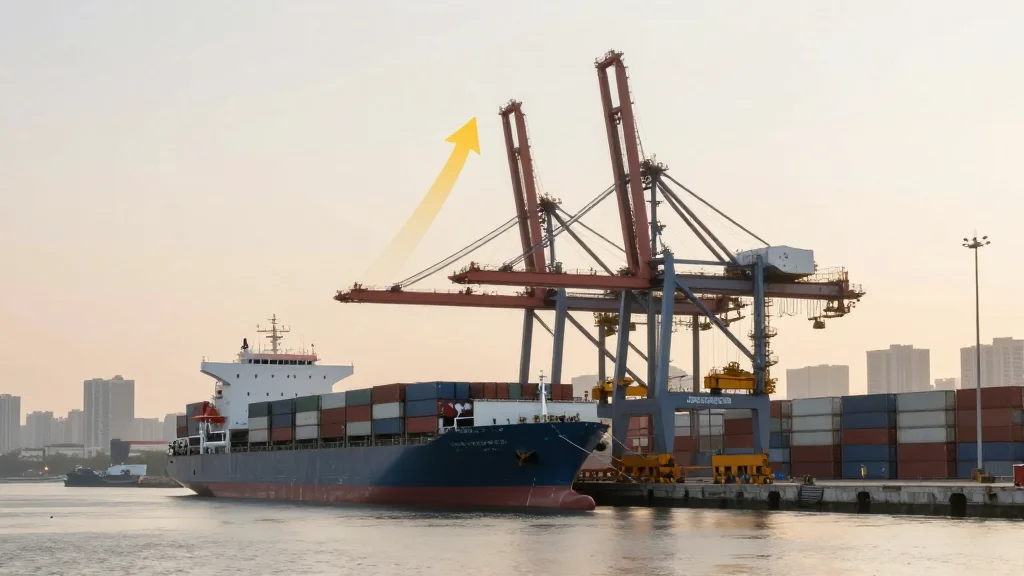
China Q1 2026 GDP Hits 5% YoY, Outpacing Forecasts Amid Iran‑Israel War Risks

Companies Mentioned
Why It Matters
China’s 5% Q1 growth reaffirms its role as the world’s primary engine of demand, supporting global trade flows and commodity markets. A stronger Chinese economy helps offset slowdown risks in Europe and the United States, but the Iran‑Israel war introduces a new source of volatility that could reverberate through oil markets, shipping routes, and supply‑chain costs. If the conflict drags on, higher energy prices could raise import costs for Chinese manufacturers, eroding profit margins and potentially curbing export growth. Conversely, China’s diversified energy mix and ample oil reserves provide a buffer, making the country a key stabilizer for the global economy during a period of heightened geopolitical risk.
Key Takeaways
- •China’s Q1 2026 GDP rose 5.0% YoY, beating the 4.8% consensus
- •Services sector grew 5.2% YoY, leading the expansion
- •Industrial output rose 5.7% in March, with high‑tech exports up 15%
- •Retail sales lagged at 1.7% YoY, below expectations
- •Iran‑Israel war raises uncertainty for second‑half growth, especially via higher energy costs
Pulse Analysis
China’s first‑quarter performance underscores a classic dual‑economy narrative: a vibrant, export‑driven high‑tech sector coexists with a sluggish domestic consumption base. The 5% growth figure, while impressive, masks underlying structural imbalances—most notably the widening gap between the "new economy" of tech and services and the "old economy" of manufacturing and retail. Wang Zhuo’s observation that the old economy remains "sluggish, effecting jobs and suppressing retail sales" points to a potential bottleneck: without a decisive policy push to boost household income and confidence, the consumption engine may fail to catch up with export‑led growth.
Geopolitically, the Iran‑Israel war adds a layer of complexity that could shift the growth trajectory. While China’s diversified energy portfolio and strategic oil reserves have insulated it so far, prolonged disruptions to the Strait of Hormuz could raise input costs for energy‑intensive industries, eroding the price competitiveness that fuels its export surge. Zichun Huang’s warning that China is becoming "ever more dependent on external demand" suggests that any global slowdown triggered by the conflict would hit China harder than a purely domestic shock.
Policy makers now face a tightrope: they must sustain the current growth momentum without over‑relying on external demand, while also addressing the domestic consumption deficit. Targeted fiscal measures—such as temporary subsidies for low‑income households or incentives for private‑sector hiring—could help bridge the bifurcated economy. In the meantime, market participants will be watching the upcoming PMI and Q2 GDP releases for signs of whether the early‑year resilience can survive the geopolitical headwinds.
China Q1 2026 GDP Hits 5% YoY, Outpacing Forecasts Amid Iran‑Israel War Risks
Comments
Want to join the conversation?
Loading comments...