China Turns to Central Asia as US Blockade in Hormuz Chokes Global Energy Flows
Why It Matters
Diversifying to Central Asian gas reduces China’s exposure to Middle‑East supply shocks and strengthens its energy security, while deepening Beijing’s geopolitical foothold in the region.
Key Takeaways
- •Ding Xuexiang leads three‑day Turkmenistan visit, marks new gas phase.
- •Galkynysh field expansion adds capacity for 10 bcm annual gas output.
- •Turkmenistan and Russia now top sources of China's pipeline‑gas imports.
- •China‑CNPC agreement boosts processing facilities, enhancing supply resilience.
- •Hormuz closure pushes Beijing to accelerate Central Asian energy diversification.
Pulse Analysis
The ongoing conflict in the Middle East has repeatedly threatened the Strait of Hormuz, the narrow waterway through which roughly a fifth of the world’s oil and a significant share of liquefied natural gas pass. Recent closures have forced major importers to reassess the fragility of their supply chains. For China, whose energy demand fuels its manufacturing engine, the disruption underscores a strategic vulnerability: reliance on maritime routes that can be blocked by geopolitical flashpoints. Consequently, Beijing has accelerated efforts to secure alternative over‑land sources.
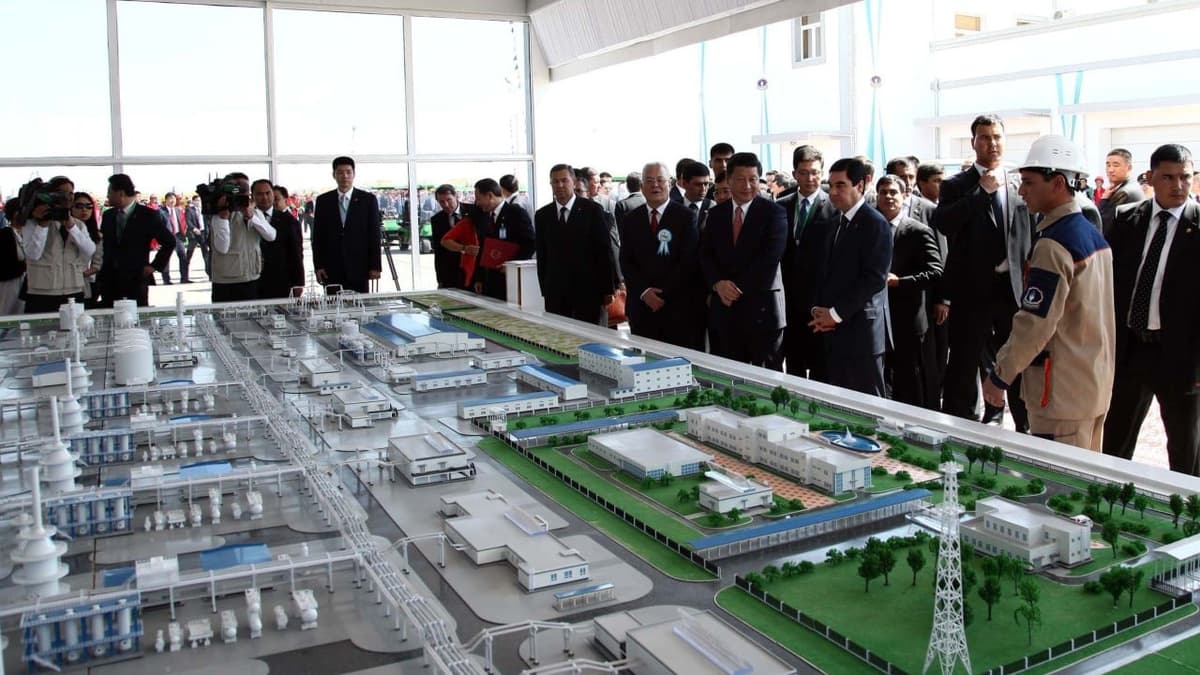
Vice‑Premier Ding Xuexiang’s three‑day trip to Turkmenistan highlights the practical steps Beijing is taking. He will attend the groundbreaking of phase four of the Galkynysh gas field, a project that will raise the field’s output capacity to roughly 10 billion cubic metres a year—equivalent to 353 billion cubic feet of marketable gas. The visit also coincides with a March agreement between Turkmenistan’s state oil firm and China National Petroleum Corporation to design and build processing facilities capable of handling that volume. The pipeline linking Turkmenistan to China’s western regions already delivers the bulk of its Central Asian gas imports.
By deepening ties with Turkmenistan and, by extension, Russia, China is building a more resilient energy architecture that can weather Middle‑East turbulence. Diversification reduces the risk of price spikes and supply shortages, while expanding strategic reserves bolsters national security. The move also signals Beijing’s intent to cement its influence across the Eurasian corridor, a development that could reshape regional trade patterns and give Chinese firms a stronger foothold in Central Asian energy markets. Analysts expect further investments in cross‑border pipelines and storage infrastructure as the strategy matures.
China turns to central Asia as US blockade in Hormuz chokes global energy flows
Comments
Want to join the conversation?
Loading comments...