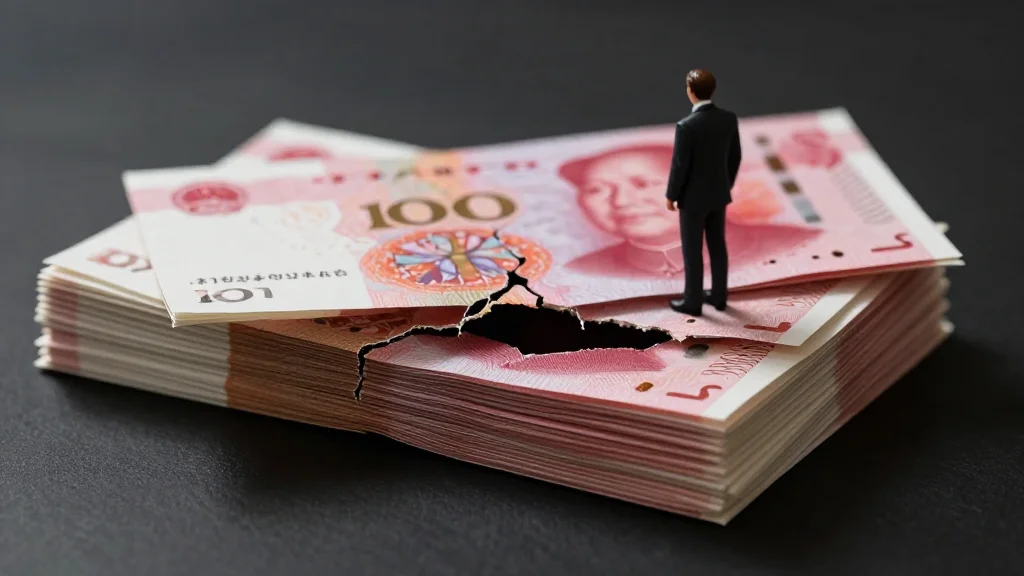
China’s $3 Trillion Hidden Bad Debt Threatens Recovery as Trump Heads to Beijing

Why It Matters
The $3 trillion hidden debt represents a systemic vulnerability that could trigger a broader credit crunch if banks are forced to recognize losses en masse. Such a shock would not only stall China’s own recovery but also ripple through global supply chains, commodity markets, and emerging‑market financing that depend on Chinese demand. Additionally, the debt backdrop adds a layer of complexity to the upcoming Trump‑Xi summit, where trade concessions and security agreements could be constrained by Beijing’s need to preserve financial stability. Understanding the scale of these hidden liabilities is essential for investors, policymakers, and multinational firms navigating the intertwined economic and geopolitical landscape. Furthermore, the hidden debt underscores a structural challenge: the tension between short‑term financial stability—maintained by loan forbearance—and long‑term productivity growth. If China fails to address the underlying inefficiencies, the country risks a prolonged period of low‑growth, high‑debt equilibrium that could reshape global growth forecasts and alter the balance of economic power.
Key Takeaways
- •Analysts estimate China's hidden non‑performing loans at $3 trillion, about 10% of total bank loans.
- •Official NPL ratio remains at 1.5%, but independent estimates range from 10% to 20%.
- •Banks have received over $100 billion in fresh capital to bolster buffers amid the hidden debt.
- •Federal Reserve Dallas study finds zombie firms now hold 16% of assets at non‑financial Chinese companies.
- •Trump’s upcoming Beijing visit will discuss trade and security, but China’s debt burden may limit concessions.
Pulse Analysis
China’s concealed debt problem is a classic case of balance‑sheet engineering that masks underlying economic weakness. By allowing borrowers like Tom Hu to defer payments, banks preserve headline NPL ratios, but they also embed a massive drag on capital efficiency. Historically, similar practices in Japan during the 1990s led to a prolonged “lost decade” as banks struggled to unwind bad loans. The $3 trillion figure suggests China could be on a comparable trajectory if reforms are delayed.
The timing of the Trump‑Xi summit adds a geopolitical twist. While the United States seeks to resolve trade disputes and secure supply‑chain stability, Beijing’s internal financial strain may force it to prioritize domestic stability over external concessions. This dynamic could result in a more cautious Chinese negotiating stance, potentially slowing progress on tariff reductions or technology agreements. For multinational corporations, the message is clear: the health of China’s banking sector will be a decisive factor in the success of any future trade deals.
Looking ahead, the most plausible scenario involves a phased approach: gradual tightening of loan classifications, targeted capital injections, and selective deleveraging of zombie firms. Such a strategy would aim to restore confidence without triggering a sudden credit crunch. However, the political calculus—especially under President Xi’s focus on geopolitical assertiveness—may limit the speed of reform. Investors should monitor policy signals from the National Financial Regulatory Administration and any shifts in the NPL reporting framework as early indicators of China’s willingness to confront its hidden debt head‑on.
China’s $3 Trillion Hidden Bad Debt Threatens Recovery as Trump Heads to Beijing
Comments
Want to join the conversation?
Loading comments...