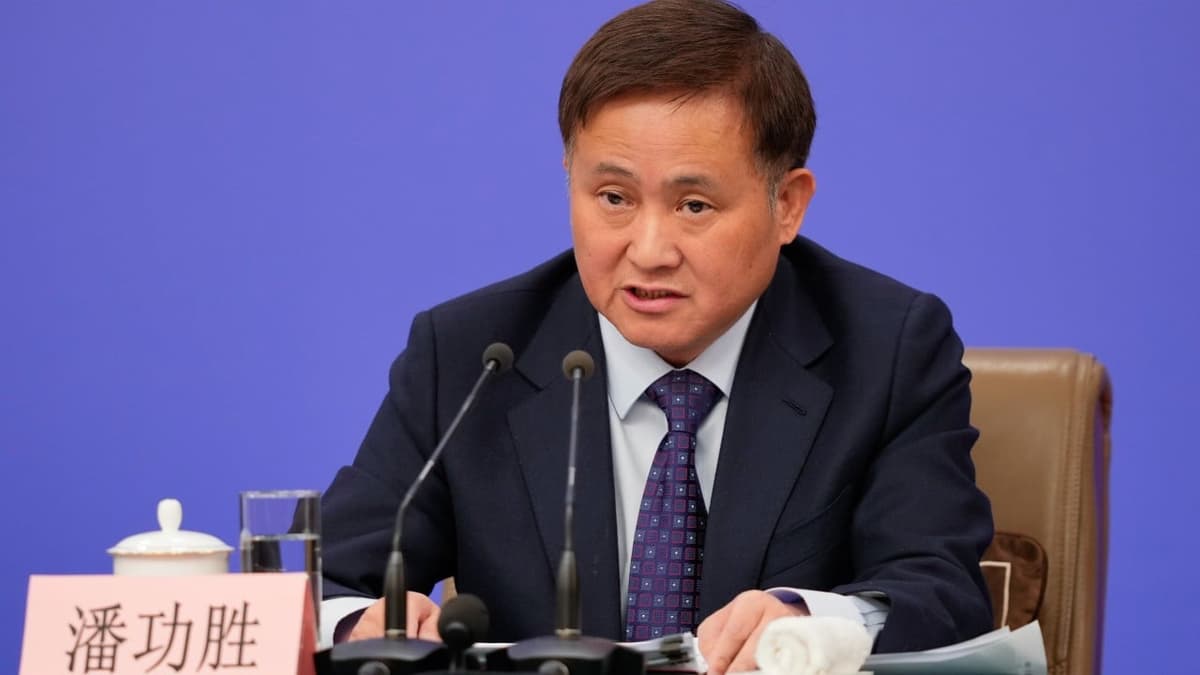
China’s Central Bank Head Says Country a Haven for Asset Diversification in Volatile World
Companies Mentioned

Why It Matters
Sovereign‑level inflows signal confidence in China’s economic resilience and expand the yuan’s footprint, nudging global portfolios away from traditional dollar‑centric allocations.
Key Takeaways
- •Foreign central banks hold $460.5B in Chinese interbank bonds
- •A‑share holdings by overseas investors total $590B, about 3%
- •PBOC plans digital‑yuan international operations centre to boost global use
- •Chinese bonds offer low volatility, low correlation, appealing for diversification
- •Geopolitical tensions drive investors to shift from US‑dollar assets
Pulse Analysis
China’s market‑opening agenda has moved beyond rhetoric, translating into measurable sovereign interest. By the end of April, overseas central banks and sovereign wealth funds collectively owned roughly $460.5 billion of Chinese treasury bonds and $590 billion of A‑shares. These figures, while modest relative to China’s 17 % share of global GDP, demonstrate a growing appetite for assets that are less correlated with Western markets, especially as geopolitical friction and policy uncertainty elevate risk premiums elsewhere.
The digital yuan initiative adds a strategic layer to this diversification narrative. At the same conference, Pan Gongsheng hinted at an international operations centre for the e‑yuan, a move designed to streamline cross‑border settlement and increase the currency’s utility for foreign institutions. Coupled with the BIS’s call for deeper cooperation on financial stability, the digital currency push signals Beijing’s intent to embed the yuan within the global payments infrastructure, offering a low‑volatility, low‑correlation alternative to the US dollar for reserve managers.
For investors, the convergence of stable Chinese bond yields, expanding digital‑currency capabilities, and a policy environment encouraging foreign participation reshapes asset‑allocation strategies. Portfolio managers can now consider Chinese sovereign and corporate debt as a “must‑have” component rather than a niche exposure, potentially reducing reliance on dollar‑denominated assets and mitigating geopolitical risk. As the Lujiazui Forum approaches, market participants will watch for concrete policy steps that could accelerate capital flows and further integrate China into the fabric of global finance.
China’s central bank head says country a haven for asset diversification in volatile world
Comments
Want to join the conversation?
Loading comments...