Global Economy News and Headlines
  • All Technology
  • AI
  • Autonomy
  • B2B Growth
  • Big Data
  • BioTech
  • ClimateTech
  • Consumer Tech
  • Crypto
  • Cybersecurity
  • DevOps
  • Digital Marketing
  • Ecommerce
  • EdTech
  • Enterprise
  • FinTech
  • GovTech
  • Hardware
  • HealthTech
  • HRTech
  • LegalTech
  • Nanotech
  • PropTech
  • Quantum
  • Robotics
  • SaaS
  • SpaceTech
AllNewsDealsSocialBlogsVideosPodcastsDigests

Global Economy Pulse

EMAIL DIGESTS

Daily

Every morning

Weekly

Sunday recap

NewsDealsSocialBlogsVideosPodcasts
Global EconomyNewsCOMMENT: Myanmar’s Fragile Post‑election Balancing Act
COMMENT: Myanmar’s Fragile Post‑election Balancing Act
Emerging MarketsGlobal Economy

COMMENT: Myanmar’s Fragile Post‑election Balancing Act

•February 20, 2026
0
bne IntelliNews
bne IntelliNews•Feb 20, 2026

Why It Matters

The election deepens Myanmar’s internal fragmentation and threatens regional stability, prompting a test of ASEAN’s cohesion and its ability to manage refugee flows and security spillovers.

Key Takeaways

  • •Election held only in junta‑controlled territories.
  • •Opposition forces kept significant territory despite military offensives.
  • •ASEAN rejects results, revealing bloc’s internal division.
  • •Thailand offers bridge role, urging junta‑dialogue.
  • •Resistance groups clash, undermining unified anti‑junta front.

Pulse Analysis

The January 2026 Myanmar election was less a democratic milestone than a strategic move by the Tatmadaw to legitimize its rule. By limiting voting to junta‑held districts, the military ensured a predictable victory while sidestepping any meaningful participation from opposition parties or ethnic minorities. This approach not only failed to quell the ongoing civil war—where groups like the Arakan Army and the People’s Defence Force continue to contest territory—but also highlighted the regime’s reliance on coercion over consent, further entrenching the country’s fragmentation.

ASEAN’s reaction underscores a growing dilemma within the regional bloc. While member states collectively refused to recognise the sham election, internal discord surfaced as Thailand advocated for a diplomatic bridge, urging the junta to engage with the Five‑Point Consensus. This split reflects ASEAN’s historic non‑interference principle clashing with the urgent need to prevent a humanitarian spillover across its porous borders. The divergent stances risk weakening the bloc’s credibility and its capacity to coordinate a coherent response to Myanmar’s escalating conflict.

Beyond Myanmar’s borders, the stakes involve refugee surges into Thailand and Bangladesh, which could fuel transnational crime and intensify great‑power competition in Southeast Asia. Continued isolation may push the junta toward harsher repression, whereas unconditional engagement could legitimize a regime that flouts human‑rights norms. Policymakers therefore face a narrow path: craft an inclusive political dialogue that balances pressure with pragmatic incentives, aiming to stabilize Myanmar while preserving ASEAN’s unity and regional security.

COMMENT: Myanmar’s fragile post‑election balancing act

By Mark Buckton in Taipei · February 20, 2026

Late January’s election in Myanmar may go down not as a turning point for peace, but as a moment that crystallised the country’s descent into an even deeper level of fragmentation while heightening the risk of a wider regional crisis.

For many observers, the three‑phase 2025–26 Myanmar general election was never about democracy. Held in December and January under the auspices of the military junta that seized power in a 2021 coup, the elections were widely dismissed across Asia and the world as a sham put in place to help legitimise continued military rule. The Union Solidarity and Development Party (USDP), backed by commanders of the Tatmadaw (Myanmar’s armed forces), claimed an overwhelming victory as was expected, but the vote was conducted only in areas under junta control. Because of this it excluded significant segments of the population and any opposition parties from a meaningful degree of participation. In the days that followed, independent observers and even ASEAN diplomats made it clear that the results failed even the most basic standards of free and fair elections.

The political theatre in Myanmar has unfolded against the backdrop of one of the most intractable civil wars in the world – and one few have paid any attention to. Since the overthrow of the elected civilian government, resistance forces, ranging from the National Unity Government’s People’s Defence Force (PDF) to a number of major ethnic armed organisations (EAOs) have waged sustained and sometimes effective campaigns against the Tatmadaw. Major engagements including with the Arakan Army in the west of Myanmar and other ongoing clashes in the central and eastern areas of the country have shown that the conflict is far from contained.

To this end, the military’s decision to push forward with elections in the midst of such an unresolved insurgency was bound to inflame tensions. And it has done. Reports seeping out from Myanmar suggest that the Tatmadaw significantly escalated counter‑offensives across multiple fronts in the run‑up to the vote being held, presumably in a bid to recapture territory from armed resistance groups to influence the electoral process. Yet despite this push, reports say the Tatmadaw’s gains have been limited relative to its own territorial losses since 2021; the result being that opposition forces and their networks remain active and resilient.

Ahead of the voting too, some minor parties began to express concern about their own capacity to operate freely amid heavy fighting and threats from both the junta and anti‑election forces. In regions such as Karen and Mon states in the south of the country and on the border with Thailand, local parties acknowledged that sustained campaigning was virtually impossible in the face of such threats.

An ASEAN rift

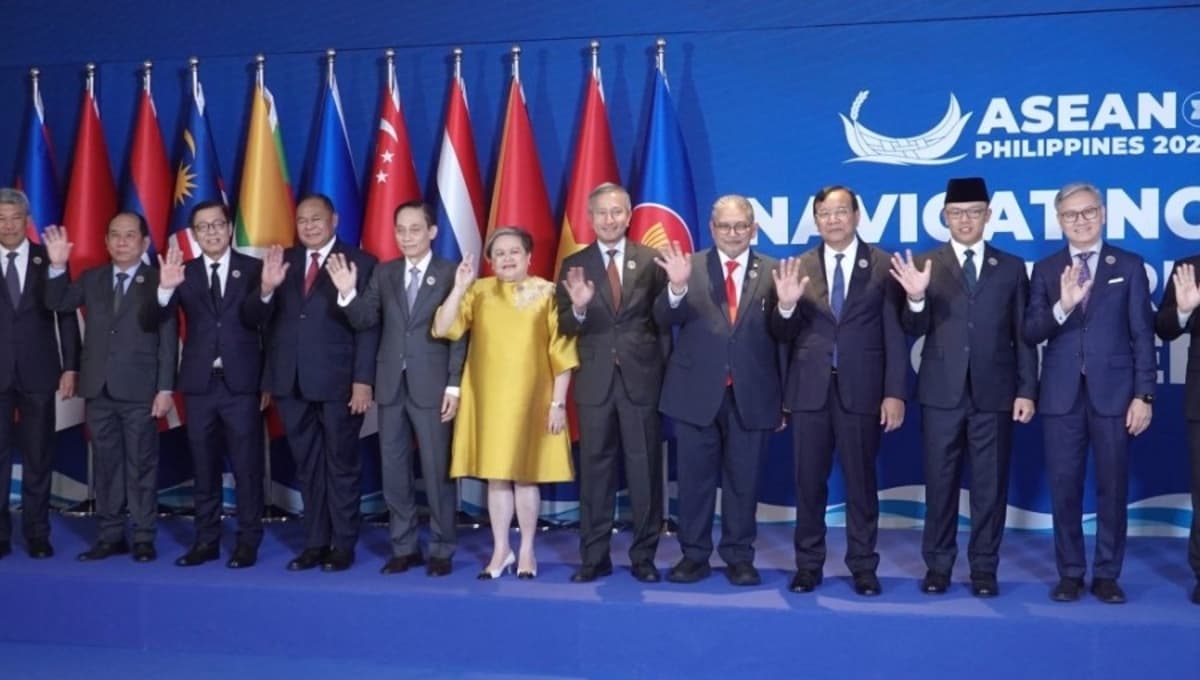
As a result of the elections, and satisfied that the military’s grip on power has only hardened, the Association of Southeast Asian Nations (ASEAN) has since refused to recognise the election results or to endorse the process that led to them. At the ASEAN Foreign Ministers’ Retreat in Cebu in the Philippines in late January, diplomats from across the bloc made it clear there was “no consensus” within the grouping to accept the outcomes of an election conducted under such conditions.

Yet the ASEAN approach has been far from unified. At a subsequent meeting in Phuket in February, Thailand’s foreign minister professed a desire to act as a “bridge” between Myanmar and the regional body, urging the junta to engage in dialogue and meaningfully implement ASEAN’s 2021 Five‑Point Consensus; a plan aimed at ending violence in the country while pursuing inclusive talks involving all parties involved.

Thailand’s position, while pragmatic from Bangkok’s standpoint to the immediate east of Myanmar, highlights one of ASEAN’s most persistent dilemmas: how to balance the bloc’s traditional non‑interference approach with the urgent need to avert a conflict with the potential to spill over and in turn directly threaten neighbouring states. With a 2,400‑kilometre border separating Thailand and Myanmar, instability in the latter is a lived reality for millions as evidenced by recurrent refugee flows across the border.

For many inside Myanmar, however, the election was never expected to deliver a meaningful peace simply because there was no unified vision of what was to come next. The junta’s efforts to wrap itself in any degree of civilian legitimacy is often seen as comical.

At the same time, though, splits among resistance forces have emerged. Recent reports have pointed to clashes now taking place between resistance groups in what can only be interpreted that unity against the junta is far from assured.

Regional containment or engagement?

Now, with the elections concluded, the most immediate challenge for ASEAN and indeed for global players linked historically to Myanmar, is whether to maintain pressure on the junta or to engage constructively in hopes of stabilising the situation. Continued isolation of the military regime may deepen its reliance on hardline tactics.

On the other hand, engagement without preconditions risks legitimising a government that has shown scant commitment to basic human rights, democratic norms or civilian protection.

As such, the stakes are not limited to Myanmar’s borders. A deeper rupture between ASEAN and the junta, or even a collapse in the post‑election political order as is, could exacerbate refugee crises, sending hundreds of thousands flooding into Thailand or Bangladesh which will only help to empower transnational criminal networks in the region, thereby adding to increased geopolitical competition in Southeast Asia.

Unless a more inclusive and credible political dialogue is crafted, Myanmar’s fragile transition risks succumbing to broader conflict rather than resolving it.

Read Original Article
0

Comments

Want to join the conversation?

Loading comments...