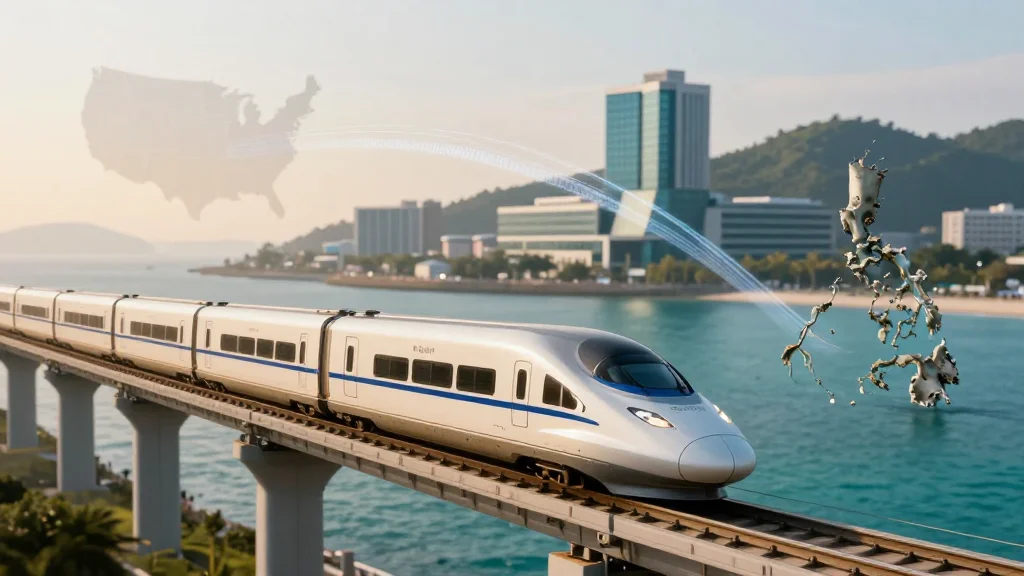
Commentary: Washington Courts Manila, but the Rest of Southeast Asia Is Watching
Why It Matters
The strategy could make the Philippines a regional tech manufacturing node and reshape US influence in Southeast Asia, but it also tests Manila’s tolerance for Washington’s unpredictable trade politics.
Key Takeaways
- •$60M aid funds Luzon Economic Corridor development.
- •New Clark City hub targets semiconductor and AI supply chains.
- •Philippines joins US-led Pax Silica to reduce Chinese tech dependence.
- •US and Japan back $3.2B Subic‑Clark‑Manila‑Batangas rail project.
- •Defense sales up to $1B raise concerns over economic‑security balance.
Pulse Analysis
The United States’ diplomatic spotlight has been dominated by the fallout from the Iran‑Russia conflict, which has pushed oil prices above $100 per barrel and strained global supply chains. In that environment, Washington has turned to a quieter but strategically significant engagement in Southeast Asia, focusing on the Philippines as a foothold for economic security. By allocating $60 million in foreign‑assistance to the Luzon Economic Corridor, the administration signals that trade and technology can complement its traditional defense commitments, offering Manila a hedge against volatile energy markets.
The centerpiece of the new partnership is a 4,000‑acre high‑tech industrial park in New Clark City, designed to attract semiconductor fabs and AI chipmakers. Membership in Pax Silica links the Philippines to a US‑led coalition that aims to secure AI supply chains and reduce reliance on Chinese components. Complementing the tech push, the United States and Japan have committed $3.2 billion to the Subic‑Clark‑Manila‑Batangas railway, a critical logistics spine that will connect ports and factories across Luzon. Together, these projects create a “Golden Node” that could position the Philippines as a regional manufacturing hub.
While the economic overture offers Manila a pathway to diversify its export base, it also exposes the country to Washington’s erratic trade posture under President Trump. Recent defense sales authorizations of up to $1 billion and new military facilities have sparked domestic criticism that security deals cannot substitute for economic resilience. Southeast Asian neighbors are watching closely, weighing the benefits of US‑backed supply‑chain integration against the danger of being drawn into geopolitical tug‑of‑war between Washington and Beijing. The success of the Luzon corridor will ultimately hinge on Manila’s ability to balance these competing pressures.
Commentary: Washington courts Manila, but the rest of Southeast Asia is watching
Comments
Want to join the conversation?
Loading comments...