Global Economy News and Headlines
  • All Technology
  • AI
  • Autonomy
  • B2B Growth
  • Big Data
  • BioTech
  • ClimateTech
  • Consumer Tech
  • Crypto
  • Cybersecurity
  • DevOps
  • Digital Marketing
  • Ecommerce
  • EdTech
  • Enterprise
  • FinTech
  • GovTech
  • Hardware
  • HealthTech
  • HRTech
  • LegalTech
  • Nanotech
  • PropTech
  • Quantum
  • Robotics
  • SaaS
  • SpaceTech
AllNewsDealsSocialBlogsVideosPodcastsDigests

Global Economy Pulse

EMAIL DIGESTS

Daily

Every morning

Weekly

Sunday recap

NewsDealsSocialBlogsVideosPodcasts
Global EconomyNewsCould Medical Care Help Cure China’s Services Trade Deficit?
Could Medical Care Help Cure China’s Services Trade Deficit?
CurrenciesHealthcareGlobal Economy

Could Medical Care Help Cure China’s Services Trade Deficit?

•February 20, 2026
0
South China Morning Post — Economy
South China Morning Post — Economy•Feb 20, 2026

Why It Matters

If China can convert medical services into a net export, it would generate foreign exchange and help offset its persistent services‑trade deficit, strengthening the broader economy.

Key Takeaways

  • •Foreign patients cite speed, cost, quality in China.
  • •Inbound medical tourism still under 1% of visitors.
  • •Visa‑free entry and policy support boost patient inflow.
  • •Insurance integration and language barriers limit growth.
  • •China aims to turn services deficit into surplus.

Pulse Analysis

China’s services‑trade deficit has long been a macroeconomic headache, with outbound spending on overseas education, tourism and medical care outpacing inbound receipts. Medical tourism, a high‑margin segment of services trade, presents a unique opportunity to reverse this flow. Unlike traditional destinations such as Thailand or South Korea, China can leverage its large, modern hospital network and lower procedural costs to attract patients seeking swift, comprehensive treatment. If the inbound volume scales, the resulting foreign‑currency inflows could shave billions off the deficit.

Policy reforms are accelerating the shift. Expanded visa‑free entry, streamlined transit schemes, and pilot programs allowing wholly foreign‑owned hospitals lower entry barriers for international patients. Cities like Shenzhen are retrofitting hospitals with bilingual signage, one‑stop appointment systems, and direct billing with overseas insurers. Moreover, the government is promoting Traditional Chinese Medicine packages and English‑language hotlines, diversifying the service offering beyond conventional surgery. These measures signal a strategic push to position China as a credible medical hub for both expatriates and affluent travelers.

Nevertheless, significant hurdles remain. Integration with global insurance networks is nascent, forcing most foreign patients to pay out‑of‑pocket, which limits repeat visits. Language proficiency and trust issues persist, especially among Western patients unfamiliar with Chinese clinical standards. Awareness of China’s medical capabilities is also low compared with regional competitors. Overcoming these frictions will require coordinated investment in staff training, accreditation, and marketing. Should China succeed, the resulting surge in high‑value medical tourism could transform a current net importer of services into a net exporter, bolstering its trade balance and reinforcing its broader economic resilience.

Could medical care help cure China’s services trade deficit?

Chinese demand for overseas schooling, holidays and medical treatment has contributed to a persistent deficit in the country’s services trade, but signs of a tentative counter‑current are emerging as a growing stream of foreign patients heads to China.

While patients in the United States or Europe may wait months to secure their first appointment with a specialist, an entire medical journey can be compressed into just a few days in Shanghai, Beijing and other Chinese megacities.

The contrast has become a trending topic on Chinese social media platforms as a rising number of foreign patients praise the speed, efficiency and affordability of medical treatment in China.

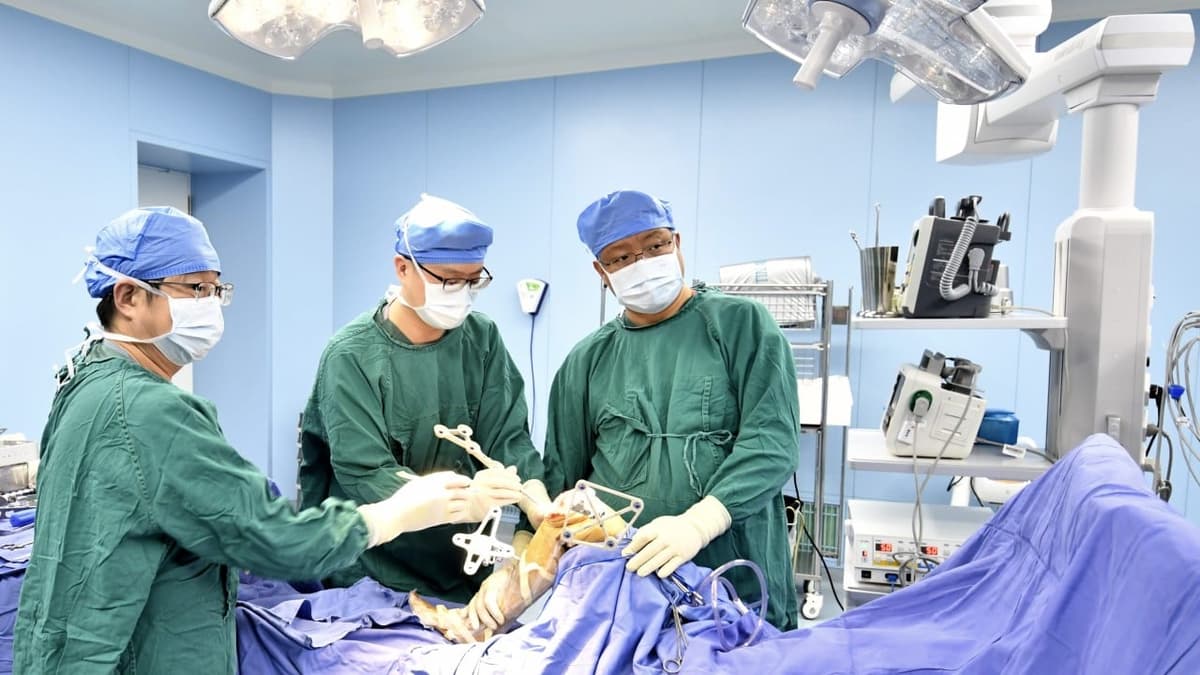
“It’s China speed,” said Wu Peng, a doctor specialising in orthopaedics and sports medicine at Shanghai 10th People’s Hospital.

His most recent foreign patient, an American with an anterior cruciate ligament injury, took just a week to progress from initial consultation and imaging to reconstruction surgery and a post‑operative check‑up.

“Chinese doctors have extensive experience, and treatment here is far more affordable,” Wu said.

While the absolute number remained small, Wu said he had noticed a marked increase in foreign patients over the past year from the United Kingdom, Ireland, Australia and elsewhere – many of them overseas Chinese. What used to be an occasional case seen every month or two had become almost routine, with about one such surgery a week.

Industry insiders say China has significant growth potential in medical tourism, citing improving healthcare standards, more relaxed visa policies and policy support for foreign currency inflows.

A Chinese Hospital Association report based on incomplete statistics estimated that about 850 hospitals and clinics in 57 cities across mainland China were offering international medical services in 2024.

“China’s overall medical standards are already quite high,” said David Li, a medical services coordinator in Beijing who assists patients through hospital visits.

“We are not far off international first‑tier levels. There may be gaps in certain specialised procedures, but broadly speaking, China’s medical capabilities are strong across the board.”

Li said he was involved in discussions with overseas Chinese business associations as ageing members of Chinese communities abroad – as well as some foreign retirees connected to them – were giving greater consideration to travelling to China for treatment.

“Visa‑free entry has made coming to China much easier, and policy signals are increasingly supportive of earning foreign exchange through services,” he said. “Looking ahead, international medical departments at major hospitals could see explosive growth.”

China’s expanded visa‑free entry and transit schemes have lowered travel barriers and boosted cross‑border travel. According to data from the National Immigration Administration, China recorded 30.08 million foreign arrivals entering visa‑free last year, accounting for 73 percent of total foreign arrivals.

Experts said inbound medical tourism was still at an early stage and largely confined to the international departments of a limited number of top‑tier hospitals. But it was growing, despite bottlenecks that included limited integration with international insurance networks and language and trust barriers.

Several industry insiders said that most foreign patients seeking treatment in China were expatriates living and working in the country or members of the overseas Chinese community, with relatively few others travelling to China specifically for medical care.

“It was far from the boom often painted in exaggerated posts on social media,” said Xia Ri, a researcher with Anbound, a public‑policy consultancy based in Beijing.

“China’s healthcare system does have the conditions and advantages to attract international patients, but overseas awareness of Chinese hospitals remains limited, and supporting service policies are still underdeveloped.”

He added that commercial health insurance remained a key bottleneck and many Chinese hospitals were not yet able to connect with global insurance networks.

“For China’s cross‑border healthcare sector to shift from a net importer to a net exporter of medical services, there is still a long road ahead,” Xia said.

China’s services‑trade deficit narrowed to 828.7 billion yuan (US$120 billion) last year, even as total services trade expanded 7.4 percent to 8.08 trillion yuan, official data showed.

But as neighbouring countries pull in millions of foreign patients and billions of dollars each year, China’s inbound medical tourism remains almost invisible by comparison.

South Korea’s status as a global hub for medical tourism is heavily driven by demand for its dermatology and plastic‑surgery services, which attracted a significant portion of the 1.17 million foreign patients the country received in 2024, according to official data from Seoul’s Ministry of Health and Welfare.

Thailand is a premier global hub for medical tourism, attracting millions of international patients with high‑quality accredited care at a fraction of Western prices. It welcomed around 2.86 million international medical tourists in 2023, generating about US$850 million in revenue, according to a report on medical tourism in Association of Southeast Asian Nations member states issued by Malaysia’s RHB Investment Bank in 2024. Figures released by the Thai government showed the country recorded 28.2 million foreign visitors that year, meaning that about one in ten foreign visitors were considered medical tourists.

Treatments in Thailand can cost up to 75 percent less than comparable procedures in the US, western Europe or Australia, according to Bookimed, an international medical tourism platform.

Other established destinations in Asia such as Malaysia and Singapore are also popular choices for overseas treatment.

For China, language barriers and unfamiliarity with its healthcare system remain key obstacles, experts said, adding that many people are unaware of how far the country’s medical standards and clinical capacity have advanced, creating substantial untapped market potential.

“Despite the real progress made, many people in Western countries still see China through outdated perceptions shaped by past impressions and media narratives,” Li said.

“In the end, it comes down to two issues: language and trust. How do we make international patients feel confident in China’s hospitals? Large, well‑resourced hospitals need to be more proactive in running their international departments – to open up and embrace patients from around the world.”

To better serve foreign patients, cities such as Shenzhen are upgrading their international medical services. In an article published on its website last month, the health commission in the southern Chinese tech hub said hospitals were expanding bilingual signage and consultation, streamlining appointment and diagnostic processes, and building dedicated international departments that offered one‑stop care, direct billing with overseas insurers and faster turnaround times.

Authorities say the push is part of a broader effort to attract global talent and align healthcare services with the needs of a more internationally mobile population.

Xinhua reported last month that traditional Chinese medicine (TCM) therapies such as acupuncture, moxibustion and tuina massage were gaining traction among foreign patients, particularly those with metabolic‑syndrome‑related symptoms including numbness, chronic pain, excessive sweating and insomnia, who often sought treatment while holidaying in China.

In the northeastern border city of Suifenhe in Heilongjiang province, Russian visitors frequently turn to TCM for cervical and lower‑back pain, while in Sanya, in the southern island province of Hainan, foreign patients are increasingly drawn to hospital‑based wellness programmes combining traditional therapies with recuperative care.

Meanwhile, Beijing has rolled out 40 TCM‑focused international medical tourism service packages, offering foreign patients clearly defined treatment plans, and has also launched an English‑language hotline for TCM, providing overseas patients with consultation information and real‑time Chinese‑English interpretation for non‑emergency medical services, according to the National Administration of Traditional Chinese Medicine.

Li said that because the high fees of international departments at major Chinese hospitals put them out of reach for most domestic patients, foreign patients who paid out of pocket, instead of drawing from the healthcare fund, could help better “support revenue, fund research, bring in advanced equipment and ultimately improve medical conditions”.

China has also approved pilot programmes in eight cities and Hainan to allow the establishment of wholly foreign‑owned hospitals, a move aimed at better meeting the increasingly diverse healthcare needs of both foreigners and domestic patients.

Read Original Article
0

Comments

Want to join the conversation?

Loading comments...