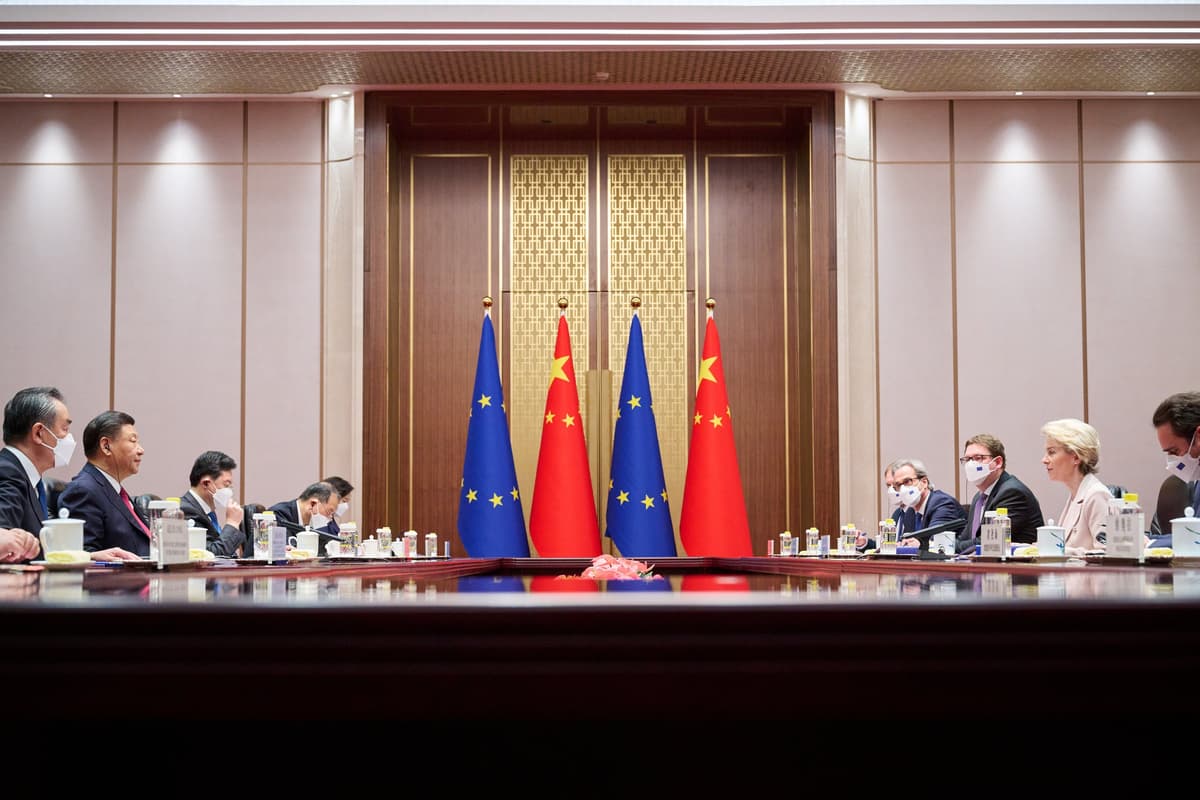
‘De-Risking Not Decoupling’ with Beijing – but What Does the EU Actually Mean?
Why It Matters
EU’s shift toward stricter trade‑defence tools could reshape global supply chains and trigger a new wave of Sino‑European economic friction, affecting industries from steel to electric vehicles.
Key Takeaways
- •EU calls approach “de‑risking, not decoupling” while eyeing overcapacity limits
- •China accounts for 30% of global exports but only 13% consumption
- •EU surplus with China hit €360bn (~$396bn) in 2025
- •Overcapacity instrument could cap Chinese exports, sparking trade retaliation
- •European firms push faster use of Foreign Subsidies Regulation against China
Pulse Analysis
The European Union’s latest rhetoric signals a calibrated pivot from outright decoupling to a more nuanced de‑risking strategy. By branding China a “critical partner” yet flagging the trade relationship as “unsustainable,” Brussels is preparing to wield its trade‑defence arsenal without alienating a key market. This approach will be tested at the G7 summit in France, where EU leaders are expected to outline concrete measures, including a potential overcapacity instrument that could limit Chinese exports of high‑volume goods.
At the heart of the EU’s concern lies a stark trade imbalance: China’s export share now represents roughly 30% of world shipments while its domestic consumption lags at 13%. The bloc recorded a €360 billion (about $396 billion) surplus with China in 2025, and the gap with Germany has already doubled this year. European industry groups cite OECD data showing Chinese firms receive three to eight times more state subsidies than their EU counterparts, prompting calls for a more aggressive application of the Foreign Subsidies Regulation to level the playing field.
Beijing’s response has been swift, warning of “resolute countermeasures” if the EU proceeds with export caps. Such tit‑for‑tat actions risk escalating into a broader trade dispute, especially as the EU already imposes tariffs up to 36% on Chinese electric vehicles. The delicate balance between dialogue and deterrence will shape not only bilateral trade but also the resilience of global supply chains, making the EU’s de‑risking agenda a pivotal factor for businesses navigating the evolving Sino‑European landscape.
‘De-risking not decoupling’ with Beijing – but what does the EU actually mean?
Comments
Want to join the conversation?
Loading comments...