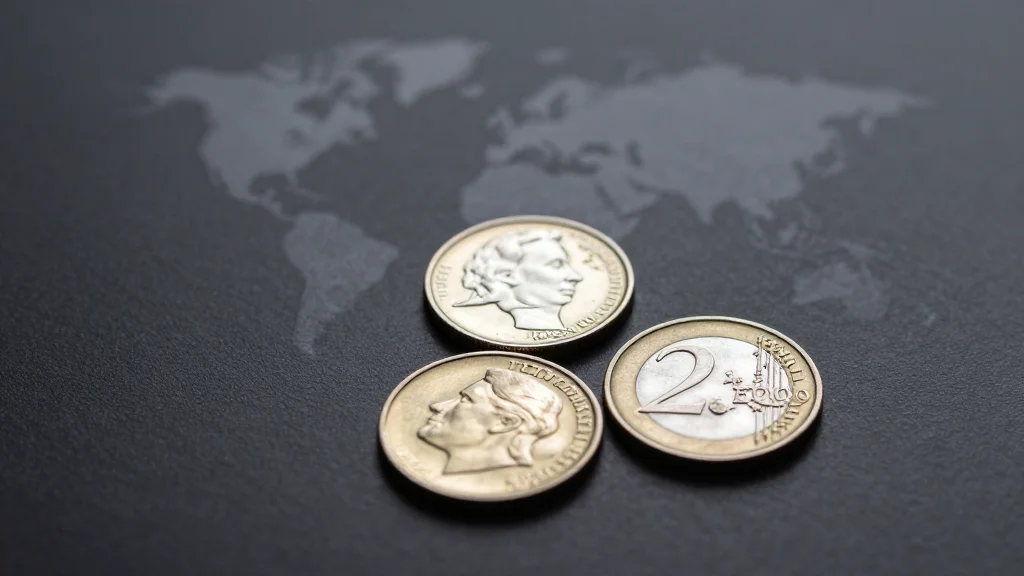
Dollar Dominance Monitor Cited in Financial Times Article on Quantity of Global Trade Invoiced in Dollars
Why It Matters
A sustained, though slightly reduced, dollar share in trade underpins the U.S. economy’s financing advantage and shapes global currency markets. Any further erosion could pressure the dollar’s reserve status and affect U.S. borrowing costs.
Key Takeaways
- •85% of global trade invoiced in dollars, down from 90% in 2020
- •Yuan and euro usage rising, especially in emerging‑market deals
- •Commodity and energy sectors still heavily dollar‑priced
- •DDM data signals potential long‑term shift in reserve currency dynamics
Pulse Analysis
The latest Financial Times piece, referencing the Dollar Dominance Monitor, confirms that the U.S. dollar continues to dominate international invoicing, but its grip is loosening. At roughly 85% of global trade value, the dollar remains the primary settlement currency, especially for commodities like oil, copper, and agricultural products. However, the monitor notes a gradual uptick in yuan and euro invoicing, driven by China’s Belt and Road initiatives and the European Union’s push for a more diversified payment ecosystem. This subtle shift reflects broader geopolitical currents and the strategic desire of non‑U.S. economies to reduce reliance on a single currency.
For businesses and investors, the data offers a nuanced view of currency risk. While the dollar’s dominance still provides a stable pricing benchmark, the growing share of alternative currencies introduces new hedging considerations. Companies operating across Asia and Africa are increasingly negotiating contracts in yuan or euro to align with local financing conditions and to mitigate potential dollar volatility. Financial institutions are responding by expanding multi‑currency trade finance solutions, offering clients more flexibility in managing foreign‑exchange exposure.
Policymakers watch these trends closely because the dollar’s role in trade invoicing directly influences its status as the world’s reserve currency. A continued decline could erode the United States’ ability to run larger current‑account deficits without triggering capital outflows. Conversely, the modest dip may simply signal a more balanced, multipolar monetary system without immediate destabilizing effects. Stakeholders should monitor the DDM’s quarterly updates to gauge whether the current trajectory signals a temporary adjustment or a longer‑term reallocation of global currency preferences.
Dollar Dominance Monitor cited in Financial Times article on quantity of global trade invoiced in dollars
Comments
Want to join the conversation?
Loading comments...