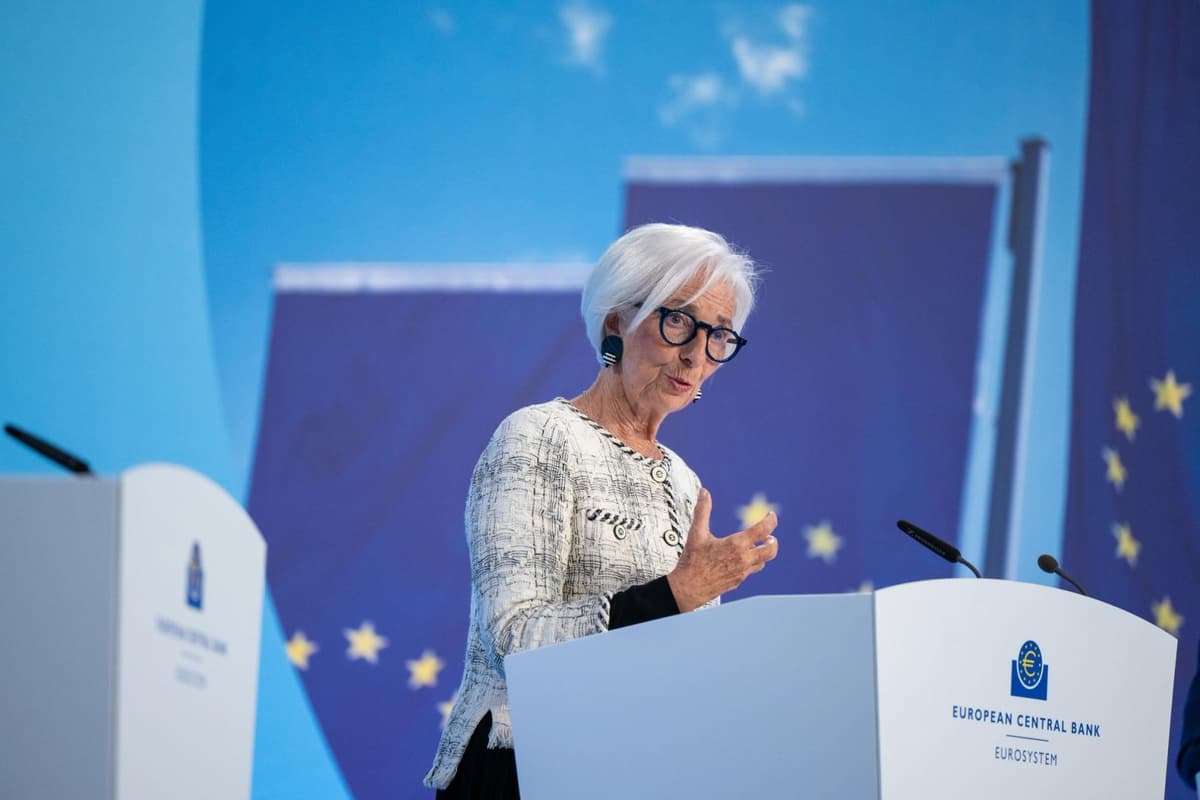
ECB's Lagarde’s Digital Euro Warning: Why Europe Shouldn’t Just Copy the U.S. Stablecoin Model

Why It Matters
Unchecked growth of dollar‑stablecoins threatens Europe’s financial stability and monetary sovereignty, making a central‑bank‑backed digital euro essential for preserving the bloc’s economic independence.
Key Takeaways
- •Stablecoin market $310 bn, 98% dollar‑pegged, dominated by Tether and USDC
- •Lagarde warns large stablecoins can transmit stress to asset markets
- •Europe should build tokenized settlement on central‑bank money, not copy US model
- •Qivalis consortium plans private digital euro to counter digital dollarisation
- •ECB targets public digital euro rollout by 2029, pending EU regulation
Pulse Analysis
The global stablecoin ecosystem has exploded from roughly $10 billion in 2017 to more than $310 billion today, with Tether (USDT) and Circle’s USDC accounting for close to 90 % of issuance. While these tokens provide fast, low‑cost settlement, their reliance on private reserve management creates a conduit for financial‑system stress, as illustrated by the March 2023 Silicon Valley Bank episode that briefly threatened USDC’s peg. ECB President Christine Lagarde highlighted that such feedback loops can amplify market dislocations, making large‑scale redemptions a systemic hazard for both crypto and traditional finance.
Against that backdrop, European policymakers are steering a different course. Lagarde urged the bloc to focus on tokenized settlement infrastructure built on central‑bank money rather than copying the U.S. private‑stablecoin playbook. Simultaneously, the Qivalis consortium—comprising twelve of the continent’s biggest banks—has announced a privately‑issued digital euro slated for launch later this year, aiming to provide on‑chain liquidity and curb digital dollarisation. The ECB, however, remains committed to a public central‑bank digital currency, with a target rollout by 2029 contingent on EU regulatory approval.
The divergence between private‑sector digital euros and a sovereign CBDC underscores a strategic tension within Europe’s fintech landscape. If private tokens capture sufficient market share, they could erode the euro’s dominance in cross‑border payments and force regulators to intervene. Conversely, a well‑designed digital euro could offer the speed of stablecoins while preserving monetary control, enhancing financial inclusion and reducing reliance on U.S. dollar‑pegged assets. Investors and banks alike will watch how the ECB balances innovation with stability, a decision that could reshape the global digital‑currency hierarchy.
ECB's Lagarde’s digital euro warning: Why Europe shouldn’t just copy the U.S. stablecoin model
Comments
Want to join the conversation?
Loading comments...