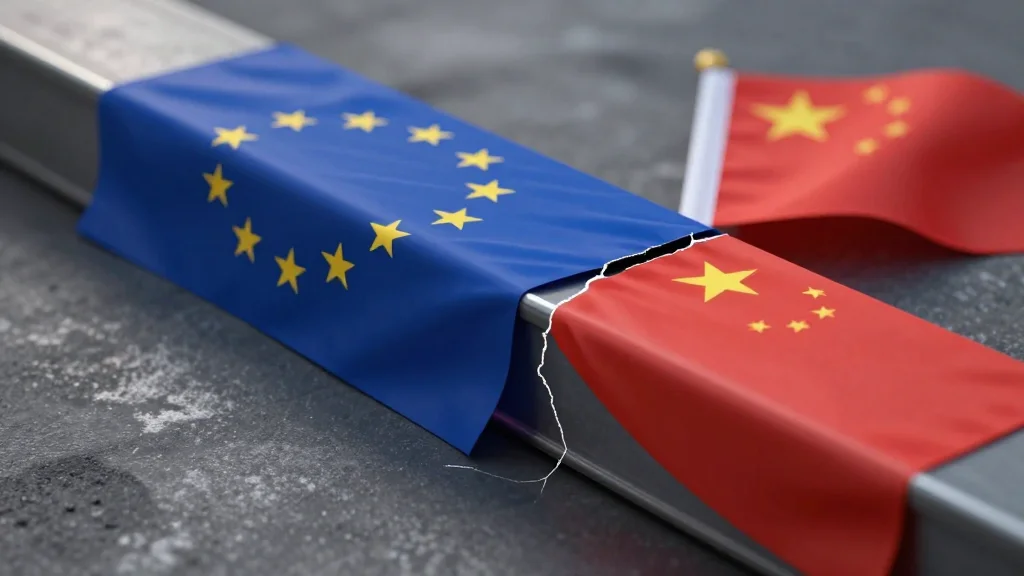
Europe's Trade War with China (Episode 214)
Why It Matters
Higher EU tariffs raise costs for manufacturers and consumers while threatening the bloc’s green‑tech investment pipeline, making the dispute a critical risk factor for European businesses.
Key Takeaways
- •EU launched anti‑dumping probes on Chinese solar panels
- •Europe announced provisional tariffs up to 25% on selected Chinese steel
- •China threatened reciprocal measures on EU agricultural imports
- •Trade tensions raise costs for European manufacturers and consumers
- •Policy uncertainty could delay EU's green‑tech investment plans
Pulse Analysis
The European Union has stepped up its trade defence arsenal against China, rolling out a series of anti‑dumping investigations and provisional tariffs that target high‑growth sectors such as solar photovoltaics, steel and rare‑earth magnets. The moves follow a wave of Chinese subsidies that the EU says distort market prices and threaten the bloc’s industrial competitiveness. By imposing duties that can reach 25 percent, Brussels aims to level the playing field while signaling that it will not tolerate unfair trade practices. The policy shift marks a decisive escalation from earlier, more diplomatic engagements.
European manufacturers are already feeling the price impact, as higher import duties translate into increased input costs for downstream products ranging from construction steel to renewable‑energy equipment. Consumers may see modest price hikes on everything from household appliances to electric‑vehicle components, while firms scramble to diversify supply chains away from China. At the same time, the EU’s green‑tech agenda could be jeopardized; tighter margins risk slowing investment in wind turbines and battery factories that rely on Chinese raw materials. Companies are therefore weighing short‑term cost pressures against long‑term strategic positioning.
Looking ahead, both sides appear poised for a tit‑for‑tat escalation, with Beijing hinting at reciprocal duties on EU agricultural products such as pork and dairy. However, the interdependence of the EU and Chinese economies may temper the conflict, encouraging negotiations through the World Trade Organization and bilateral channels. For businesses, the key is to monitor policy developments, hedge exposure, and accelerate diversification of suppliers. Proactive risk management will be essential to navigate a trade environment that is increasingly volatile yet still vital for growth.
Europe's trade war with China (Episode 214)
Comments
Want to join the conversation?
Loading comments...