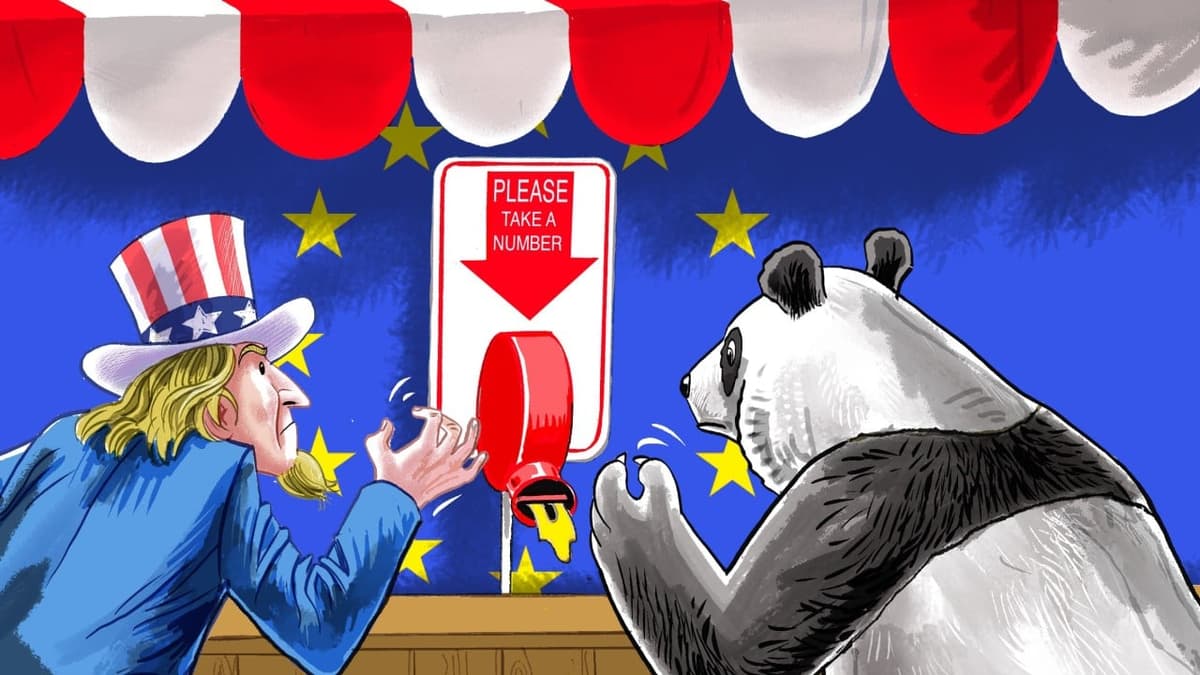
Facing US and Chinese Pressure, the EU Must Forge Its Own Strategy
Why It Matters
Without an independent EU strategy, Europe risks losing bargaining power, industrial competitiveness, and geopolitical relevance as the U.S.–China rivalry reshapes global trade rules.
Key Takeaways
- •EU trade deficit with China hits €360 billion (~$425 billion) in 2023.
- •US tariffs push EU to follow, eroding independent policy.
- •Europe controls key tech like ASML lithography and Airbus aircraft.
- •Strategic autonomy lets EU extract concessions from both US and China.
- •Southeast Asian model shows benefits of balanced engagement with rivals.
Pulse Analysis
Europe’s exposure to China has deepened despite U.S. attempts to decouple. The bloc’s trade gap, now roughly $425 billion, reflects a supply chain that has merely rerouted rather than broken—Chinese components flow through Vietnam, Mexico and other intermediaries into European factories. Washington’s tariff regime, while targeting Beijing, has inadvertently pulled the EU into a parallel track, forcing European firms to adopt American measures without a coordinated policy. This reactive posture leaves the Union vulnerable to leverage‑extraction by both sides and underscores the urgency of a home‑grown strategy.
At the same time, Europe commands unique strategic assets that can serve as bargaining chips. Dutch firm ASML dominates the world’s most advanced lithography machines, Airbus supplies a majority of global commercial aircraft, and European pharma and specialty chemicals set standards that shape worldwide health and materials markets. These capabilities, coupled with the EU’s regulatory clout—its standards often become de‑facto global rules—provide a foundation for a sovereign approach. By positioning itself as an indispensable market and standards‑setter, the EU can compel both Washington and Beijing to negotiate on more equal terms rather than dictating terms unilaterally.
The path forward calls for a calibrated, dual‑track policy: demand reciprocity, IP protection, and subsidy transparency from China while insisting that the U.S. cease using tariffs as a tool against allies. Europe should cultivate strategic autonomy, allowing both powers to compete for access to its market, technology, and regulatory influence. This balanced engagement mirrors the Southeast Asian model, where nations host Chinese capital and American security assets simultaneously. By doing so, the EU preserves its industrial base, enhances geopolitical relevance, and secures a stronger negotiating position in the evolving global order.
Facing US and Chinese pressure, the EU must forge its own strategy
Comments
Want to join the conversation?
Loading comments...