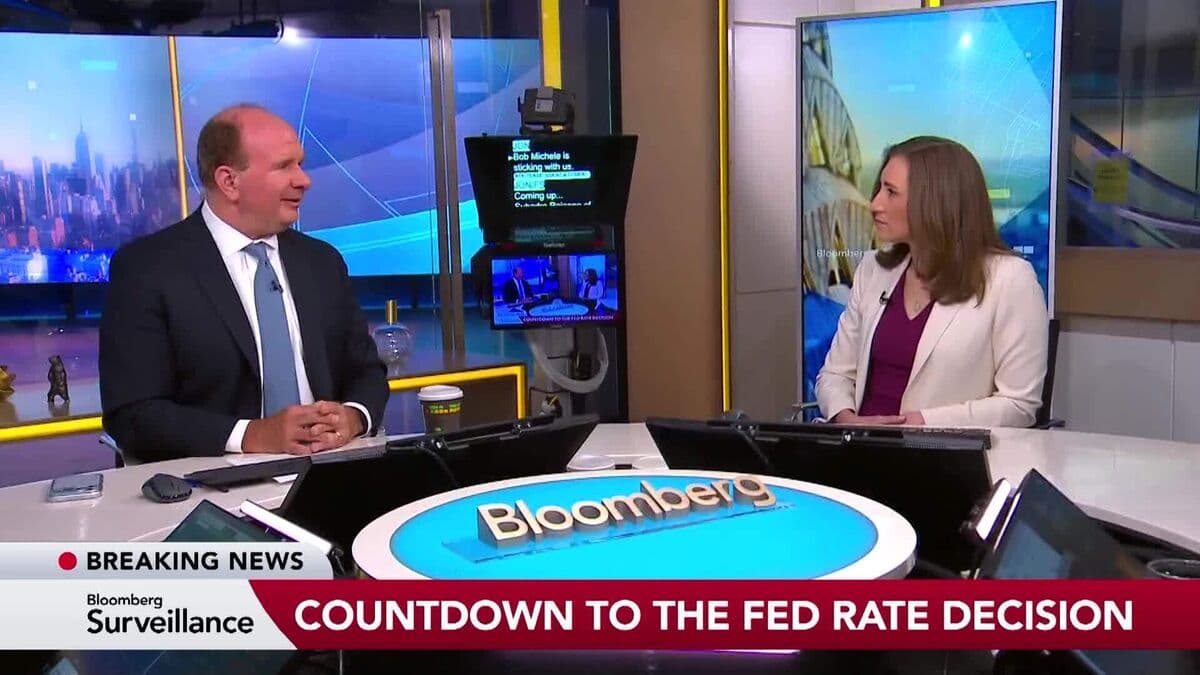
Fed Can Stay on Hold This Year, JPMorgan's Michele Says
Companies Mentioned
Why It Matters
A rate‑hold decision would shield the economy from a shock‑induced recession while giving policymakers time to gauge energy‑driven inflation.
Key Takeaways
- •Fed may keep rates unchanged through 2026 year‑end
- •Oil near $150 per barrel threatens demand destruction
- •Gas prices at $4 per gallon squeeze businesses and consumers
- •UAE discussions about leaving OPEC could reshape supply
- •East‑West pipeline may boost capacity despite Hormuz blockage
Pulse Analysis
The Federal Reserve faces a delicate balancing act as inflation remains sticky while growth shows resilience. JPMorgan's senior economist Michele argues that the central bank can afford to keep the policy rate on hold through the end of 2026, avoiding premature tightening that could tip the economy into recession. This stance reflects the Fed's recent data‑driven approach, which prioritizes a gradual disinflation path over aggressive rate hikes. By maintaining the current stance, the Fed gives markets time to absorb higher energy costs without adding monetary shock.
Energy markets are the wild card in this equation. The ongoing blockage of the Strait of Hormuz has pushed crude toward $150 per barrel, while gasoline trades above $4 per gallon, eroding profit margins across sectors. Analysts warn that such price levels could trigger demand destruction, especially if the surge persists for more than a few weeks. However, the emergence of the East‑West pipeline and the prospect of the United Arab Emirates exiting OPEC may alleviate supply constraints, offering a potential counterbalance to the current price shock.
Businesses and consumers will feel the ripple effects. Higher fuel costs force companies to choose between absorbing expenses or passing them on, which could suppress discretionary spending and weigh on corporate earnings. At the same time, the Fed's cautious hold provides a buffer, allowing policymakers to monitor how the oil shock feeds into headline inflation before deciding on a rate move. Michele’s view underscores the importance of flexibility: a sudden spike above $150 could reignite inflation fears, while a steadier energy market would support a prolonged hold and a smoother economic trajectory.
Fed Can Stay on Hold This Year, JPMorgan's Michele Says
Comments
Want to join the conversation?
Loading comments...