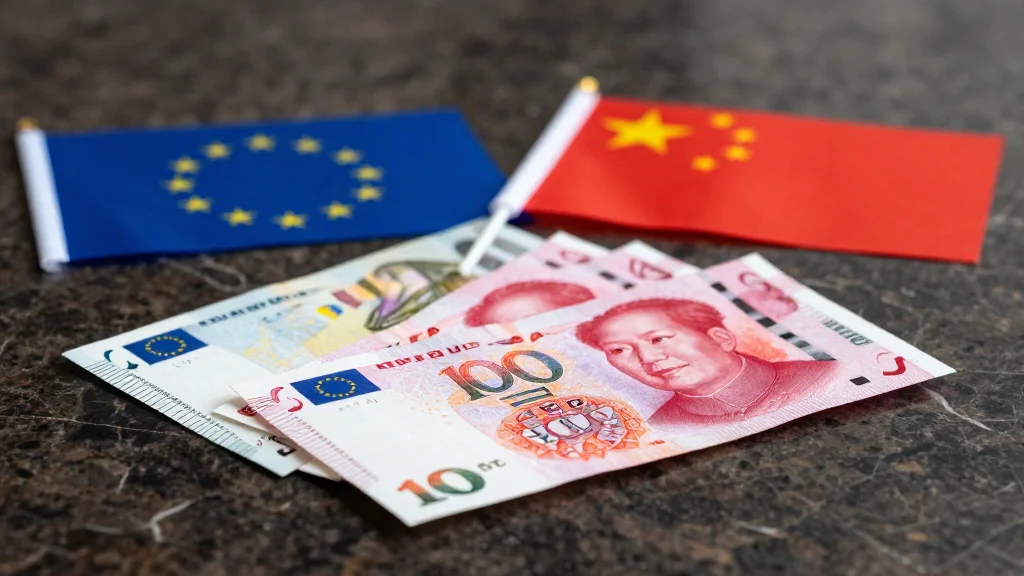
Five EU Countries Call for Tougher Trade Weapons to Tackle China
Why It Matters
Stronger EU trade‑defence measures could curb China’s market flooding, protect strategic industries, and shift the balance of economic power in Europe.
Key Takeaways
- •Five EU states push for broader tariff use against unfair trade
- •Proposal adds “economic security” as a trigger for trade probes
- •New “resilience tool” would allow duties beyond existing mechanisms
- •Calls for more WTO disputes and increased investigative staffing
- •Aligns EU approach with U.S. strategic trade defence practices
Pulse Analysis
The European Union is at a crossroads in its trade policy, balancing open markets with the need to shield key sectors from distortive practices. Recent years have seen a surge in Chinese export volumes, especially in steel, solar panels, and advanced electronics, prompting concerns about overcapacity and the erosion of European manufacturing. By proposing a more expansive toolkit—including safeguard investigations, anti‑subsidy duties, and a novel "resilience tool"—the five‑country bloc seeks to modernize the EU’s defensive arsenal and align it with the realities of a geopolitically charged trade environment.
Integrating "economic security" as a criterion marks a shift from purely commercial considerations to a broader strategic lens. This change would allow the Commission to act when a sector’s viability is threatened, even if traditional trade‑distortion evidence is thin. Such an approach mirrors the United States' Section 301 investigations, which target foreign policies that undermine national interests. For European firms, the move promises greater protection of supply‑chain integrity in areas like semiconductors, aerospace, and renewable‑energy components, potentially preserving jobs and fostering domestic innovation.
The push also signals a more assertive EU stance at the World Trade Organization, where the bloc could initiate disputes more readily and allocate additional staff to investigative units. While this may heighten tensions with Beijing, it underscores Europe’s intent to defend its industrial base and reduce dependency on external suppliers. As the G7 summit in Evian‑les‑Bains approaches, the proposed measures could become a cornerstone of a coordinated Western response to perceived trade imbalances, setting the stage for a new era of strategic economic policy.
Five EU countries call for tougher trade weapons to tackle China
Comments
Want to join the conversation?
Loading comments...