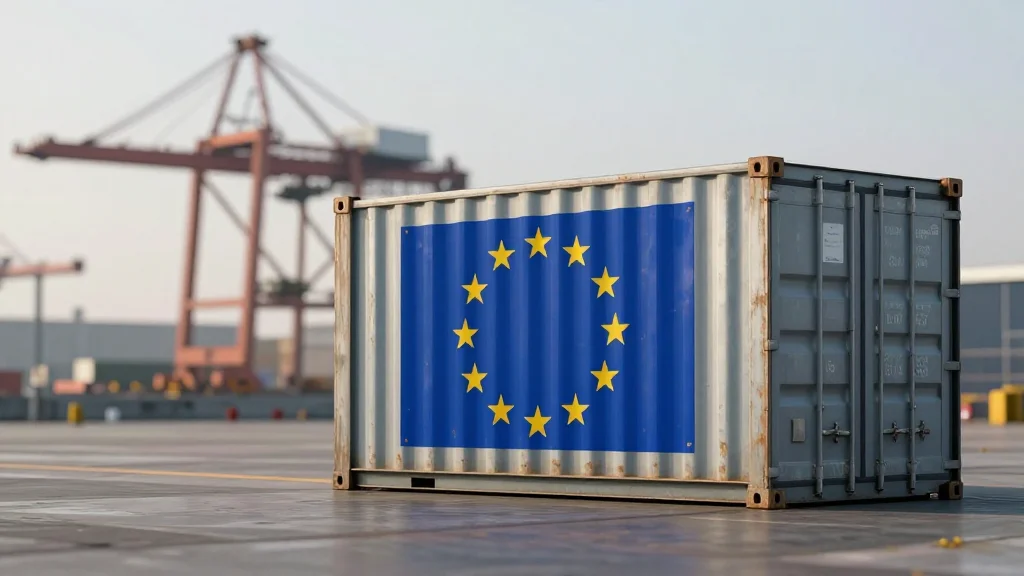
From Openness to Vulnerability: Mapping the EU’s Foreign Dependencies and Geopolitical Exposure
Why It Matters
The findings expose strategic vulnerabilities in essential sectors, prompting EU policymakers to prioritize stockpiling, supply‑chain diversification, and targeted industrial support to safeguard economic security.
Key Takeaways
- •EU relies on 835 products, 16% of imports, $440bn value
- •China provides 47% of dependent products, 80% renewable inputs
- •Critical dependencies shrink to 206 when geopolitical risk added
- •45% of dependencies are structural, persisting 2017‑2023
- •Diversification limited by global supply concentration, especially renewables
Pulse Analysis
The European Union’s deep integration into global value chains has delivered growth, yet recent shocks—from pandemic disruptions to geopolitical tensions—have highlighted the fragility of relying on foreign suppliers for essential goods. Policymakers have responded with initiatives such as the Competitiveness Compass, the Critical Raw Materials Act, and the Chips Act, all aimed at pinpointing and mitigating strategic dependencies. This new research builds on earlier work by using direct domestic‑production data and data‑driven thresholds, offering a more precise picture of where the EU’s supply chains are truly vulnerable.
Applying the refined methodology, the authors identify 835 foreign‑dependent products, accounting for 16% of EU imports and about $440 billion in value. China emerges as the dominant source, supplying 47% of these products and dominating renewable‑energy inputs, where its share has doubled to 80%. The United States follows with 11% of import value, especially in aerospace, defence, and health. By layering geopolitical risk metrics—political instability, alignment, and export‑restriction exposure—the study narrows the focus to 206 critical dependencies, many tied to high‑risk partners such as Russia and China.
The policy implications are stark. Structural dependencies, which have persisted for years, are unlikely to dissolve through market forces alone, necessitating proactive measures like strategic stockpiles, supply‑agreement frameworks, and investment in domestic capabilities. Diversification is hampered by the concentration of global production, particularly in renewable‑energy components, meaning the EU must cultivate reliable partners—Canada, the UK, Japan, South Korea, Australia—and consider long‑term industrial policy to reduce asymmetry. The analysis underscores that geopolitical alignment does not guarantee supply‑chain stability, a lesson that will shape EU resilience strategies in the years ahead.
From openness to vulnerability: Mapping the EU’s foreign dependencies and geopolitical exposure
Comments
Want to join the conversation?
Loading comments...