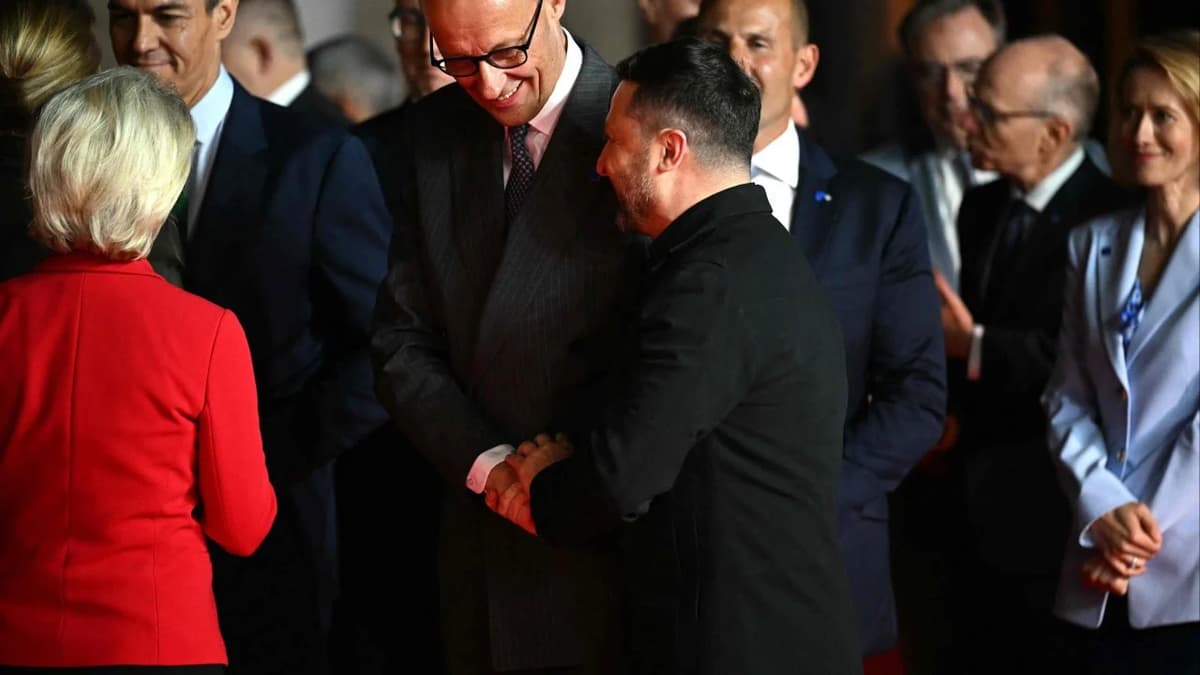
Germany’s Merz Says No ‘Immediate’ Ukraine EU Membership, Floats Kyiv Joining Meetings
Why It Matters
The stance signals a cautious EU enlargement strategy, shaping Ukraine’s security outlook and reform agenda while testing the bloc’s unity amid geopolitical pressure.
Key Takeaways
- •Merz rejects immediate EU membership for Ukraine, proposes non‑voting council seats.
- •Hungary’s opposition eases after Orbán’s electoral defeat, opening path for reforms.
- •EU to start “cluster” negotiations, but full accession timeline remains unclear.
- •Zelensky demands full membership, rejecting symbolic interim status.
- •EU leaders stress reforms as prerequisite for any further integration steps.
Pulse Analysis
Ukraine’s EU bid has become a litmus test for the bloc’s enlargement policy, especially as the war with Russia intensifies the need for a united European front. While candidate countries in the Western Balkans have lingered for years, Kyiv’s wartime reforms have accelerated discussions, positioning it as a unique case where security considerations intersect with economic and democratic standards. Analysts note that the EU’s willingness to entertain interim participation reflects a broader strategy to bind Ukraine closer without compromising the rigorous accession criteria.
The political calculus shifted dramatically after Hungary’s nationalist premier Viktor Orbán, a long‑standing veto‑player, lost the recent election. His departure removes a key obstacle, allowing German Chancellor Friedrich Merz and other leaders to propose a middle‑ground solution: non‑voting seats in European Council meetings. This approach aims to integrate Kyiv into decision‑making channels while preserving the integrity of the accession process. The EU’s “cluster” negotiation framework, which groups reforms into thematic packages, will now move forward, but timelines remain vague, underscoring the bloc’s reluctance to set a definitive deadline.
For Ukraine, the lack of an immediate membership path carries both risks and opportunities. Full accession would cement security guarantees and unlock deeper financial support, yet interim arrangements risk creating a “half‑member” status that could stall reforms. The EU’s emphasis on delivering on reforms before advancing further places pressure on Kyiv to sustain its wartime governance achievements. Meanwhile, the United States’ reluctance to admit Ukraine to NATO heightens the strategic importance of EU integration, making the forthcoming negotiations a pivotal moment for European security architecture and the future of the continent’s enlargement agenda.
Germany’s Merz says no ‘immediate’ Ukraine EU membership, floats Kyiv joining meetings
Comments
Want to join the conversation?
Loading comments...