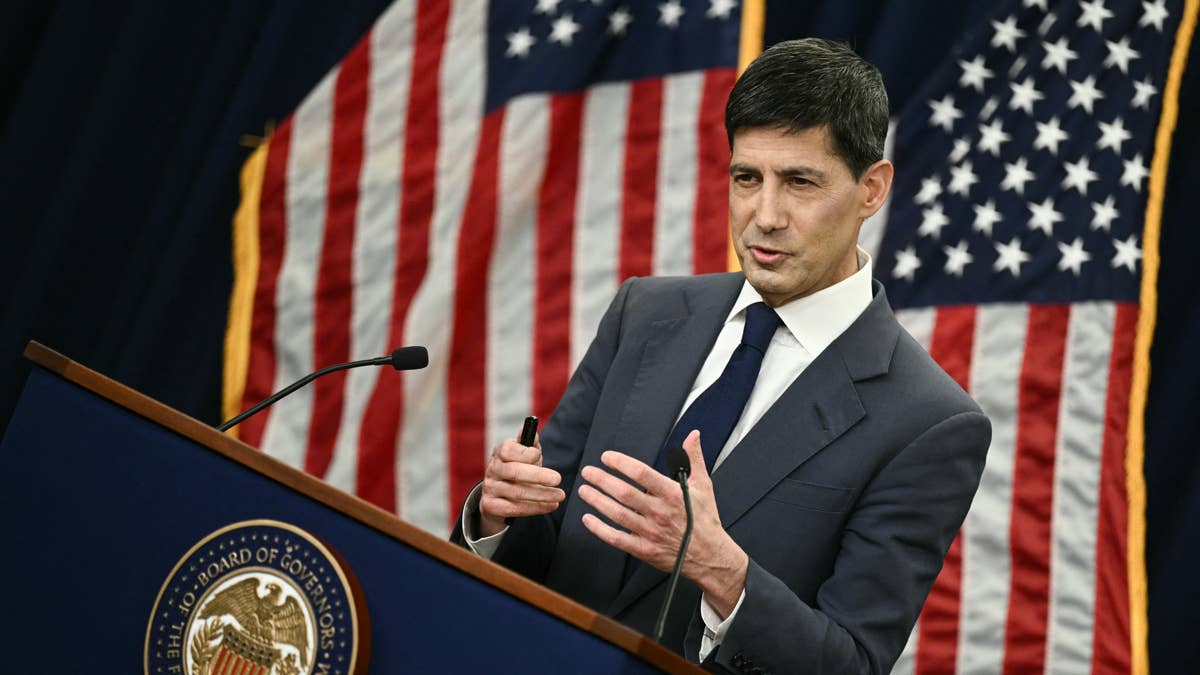
Goldman Hints at Fed’s Next Interest-Rate Bet Under Warsh
Companies Mentioned

Why It Matters
The outlook shapes borrowing costs, equity valuations, and inflation expectations, influencing both corporate finance and investor strategy. A late‑year rate hike would tighten credit conditions just as the economy navigates geopolitical uncertainty.
Key Takeaways
- •Fed held policy rate at 3.50%-3.75% in June meeting
- •Goldman expects unchanged rates this year, sees 60% hike probability by Dec
- •Warsh dropped forward guidance, prioritizing price stability
- •Iran peace deal could lower upside inflation risk, Goldman says
- •CME FedWatch signals 25‑bp hike likely before year‑end
Pulse Analysis
The Federal Reserve’s June 17 decision to leave the benchmark funds rate steady at 3.50%‑3.75% reflects a cautious stance amid mixed labor market signals and persistent inflation. New Chair Kevin Warsh used the post‑meeting remarks to underscore the Fed’s commitment to price stability, deliberately omitting forward guidance that investors have come to rely on for rate‑path forecasts. By removing explicit language about future moves, the Fed signals flexibility, leaving market participants to infer policy direction from incoming data rather than predetermined timelines.
Market pricing aligns with that flexibility. Goldman Sachs, in a note to TheStreet, projects the Fed will maintain the current rate through the remainder of the year, yet acknowledges a majority of policymakers could pivot to a hike if inflation data remain elevated. The CME Group’s FedWatch tool currently assigns about a 60% probability to a 25‑basis‑point increase by the December meeting, a level that would ripple through short‑term Treasury yields, corporate borrowing costs, and the broader credit market. Traders are already adjusting forward curves, and the prospect of a late‑year hike is pressuring equity valuations that are sensitive to higher discount rates.
Geopolitical developments add another layer of uncertainty. Goldman highlights the tentative peace accord ending hostilities with Iran and the reopening of the Strait of Hormuz as a potential catalyst to reduce upside inflation risk. A swift resolution could ease commodity price pressures, particularly oil, which would support the Fed’s price‑stability narrative. Conversely, any relapse could reignite inflation concerns, prompting a more aggressive policy response. Investors should monitor PCE inflation releases, Fed communication, and geopolitical headlines to gauge whether the Fed’s cautious approach will hold or give way to a rate‑tightening cycle before year‑end.
Goldman hints at Fed’s next interest-rate bet under Warsh
Comments
Want to join the conversation?
Loading comments...