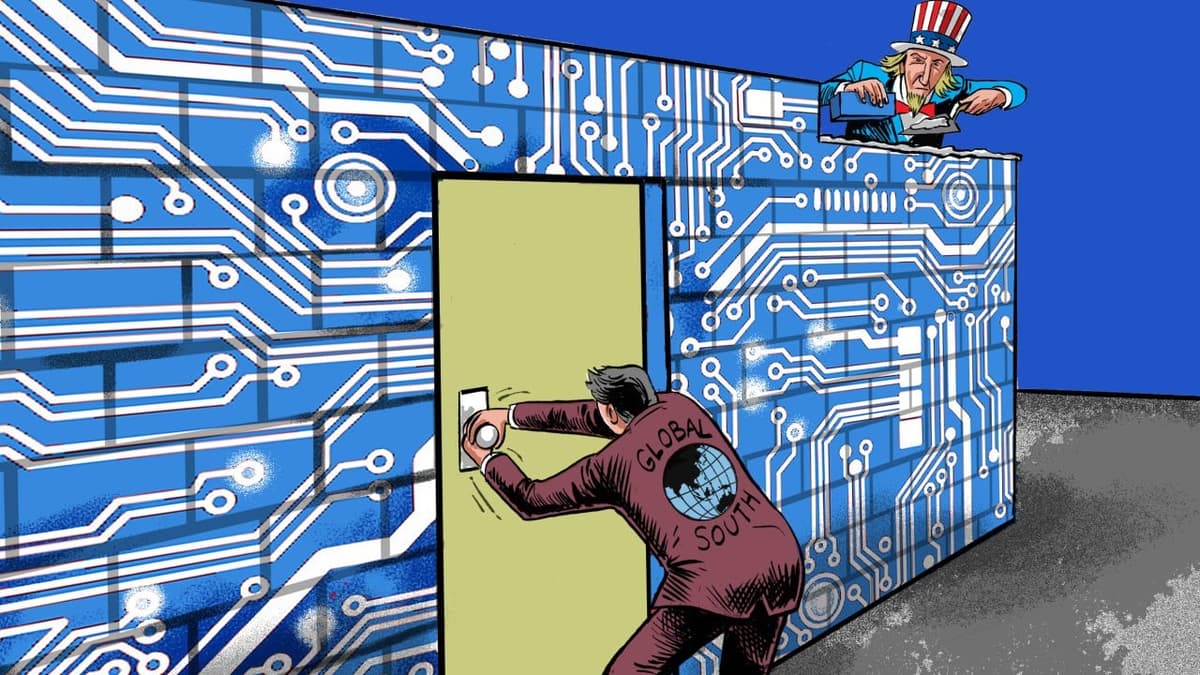
How US Tech Hegemony Is Locking Out the Global South
Why It Matters
US tech dominance locks developing economies out of critical value‑chains, stifling growth, while China’s inclusive model could redraw the competitive landscape for emerging markets.
Key Takeaways
- •US uses patents, bans to control 6G standards
- •African farmers face debt from patented GMO seeds
- •US trade actions crushed Brazil’s 1980s computer industry
- •China’s cheap solar panels cut prices >90%, expanding access
- •Open‑source AI from China offers affordable tools to developing nations
Pulse Analysis
The United States has turned technology policy into a geopolitical lever, bundling next‑generation standards like 6G with "trusted" supply‑chain requirements and aggressive intellectual‑property enforcement. By deploying Section 301 investigations, export controls and patent thickets, Washington builds a proprietary ecosystem that rewards allied firms while denying market entry to competitors. This approach not only secures a strategic advantage but also creates a de‑facto monopoly that reshapes global value chains, forcing countries outside the circle to operate at a systemic disadvantage.
For emerging economies, the fallout is tangible. In Africa, patented GMO seeds from U.S. agribusinesses compel farmers to purchase new seed each season and pay royalties, driving debt cycles and undermining traditional replanting practices. Brazil’s 1980s computer boom—once dominated by domestic firms like Cobra—was dismantled after a U.S.‑led trade war opened the market to American giants. Similar patent barriers in pharmaceuticals inflate prices for essential medicines, limiting access to cataract surgery and other life‑saving treatments across the Global South.
China offers a contrasting playbook that emphasizes scale, affordability and open‑source collaboration. Its dominance in solar‑panel manufacturing has slashed prices by more than 90%, enabling projects such as Nigeria’s locally built panel plant that powers rural communities. Joint research initiatives produce drought‑resistant seeds and open‑source AI tools that lower entry costs for startups in Kenya and beyond. By sharing technology rather than hoarding it, China positions itself as a catalyst for inclusive growth, challenging the U.S. monopoly and reshaping the future of global tech competition.
How US tech hegemony is locking out the Global South
Comments
Want to join the conversation?
Loading comments...