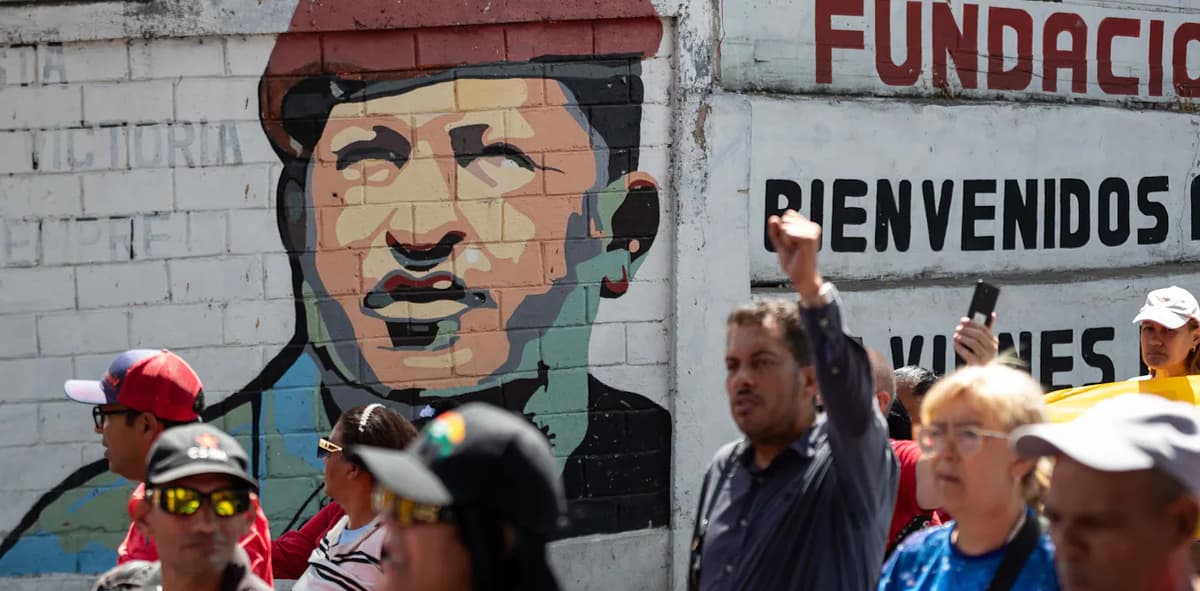
How Venezuela Has – and Hasn’t – Changed Since Maduro’s Capture
Companies Mentioned
Why It Matters
The pivot signals a major realignment of Venezuela’s political‑economic model, opening the country to foreign investment and altering regional power dynamics. However, lingering authoritarian structures and upcoming opposition activity create uncertainty for investors and policymakers alike.
Key Takeaways
- •Delcy Rodríguez reshuffled 13 of 32 ministries within four months
- •US lifted sanctions on Rodríguez, signaling policy shift
- •State assets audit aims to sell farms, factories, infrastructure
- •Venezuela rejoined IMF, opening door to international financing
- •Opposition leader Machado's return could trigger protests over elections
Pulse Analysis
The abrupt removal of Nicolás Maduro and the swift elevation of Delcy Rodríguez mark an unprecedented external intervention in Venezuela’s governance. Drawing on China’s playbook, Rodríguez maintains tight political control while liberalising the economy, a dual strategy designed to avoid the Soviet‑style collapse that followed simultaneous political and economic opening. This approach reflects a broader trend among authoritarian regimes: decouple market reforms from democratic reforms to preserve regime stability while courting foreign capital.
Rodríguez’s economic agenda moves quickly to dismantle the Bolivarian legacy of widespread nationalisations. A newly created Commission for the Evaluation of Public Assets will audit state holdings across agriculture, manufacturing and infrastructure, with plans for a “fire‑sale” to private investors. Re‑engagement with the International Monetary Fund after a seven‑year hiatus provides a credibility boost, offering legal guarantees and access to arbitration that could temper Venezuela’s historically volatile investment climate. Early signs show heightened interest from oil and mining firms eager to tap the country’s vast resources under clearer rules.
Nevertheless, the political calculus remains fraught. Opposition leader María Corina Machado’s anticipated return threatens to ignite street protests, especially if electoral reforms stall. Moreover, the renewed focus on hydrocarbon and mineral extraction risks re‑entrenching Venezuela’s historic commodity‑dependency, a structural weakness that has fueled past crises. Investors and policymakers must weigh the short‑term lure of asset sales against the long‑term need for diversified growth and genuine democratic transition, as the nation teeters between economic revitalisation and political volatility.
How Venezuela has – and hasn’t – changed since Maduro’s capture
Comments
Want to join the conversation?
Loading comments...