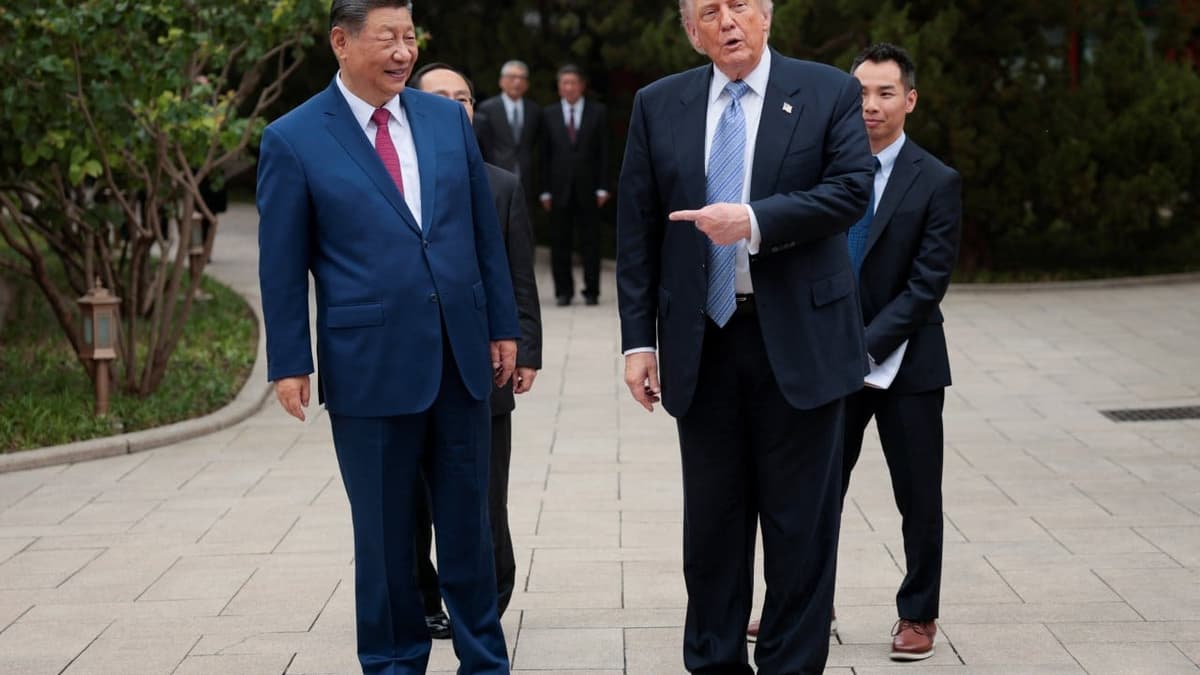
In Beijing, the US and China Tiptoed Around Tech and Critical Minerals
Companies Mentioned
Why It Matters
Stabilizing trade mechanisms and limiting tariff escalations reduce immediate economic friction, while the tech‑supply‑chain rivalry will shape long‑term competitive advantage for both economies.
Key Takeaways
- •US and China created separate trade and investment boards for non‑sensitive sectors
- •Supreme Court rulings invalidate Trump tariffs, limiting future trade penalties
- •US goods trade deficit reached $1.24 trillion, China surplus $1.2 trillion last year
- •Tech and critical mineral supply chains remain the core strategic friction point
- •Nvidia and ASML symbolize the high‑stakes competition in chips and lithography
Pulse Analysis
The Beijing summit underscored a diplomatic pivot from overt confrontation to managed coexistence. By instituting dedicated trade and investment boards, Washington and Beijing aim to compartmentalize economic engagement, insulating routine commerce from geopolitical volatility. This arrangement mirrors earlier regional agreements but narrows its scope to sectors deemed low‑risk, a pragmatic step that could pave the way for more nuanced negotiations if strategic stability improves.
Legal setbacks for the Trump administration’s tariff regime have reshaped the fiscal landscape of the bilateral relationship. Supreme Court decisions deeming Section 301 duties unlawful effectively freeze punitive measures at the modest levels agreed in the 2023 Busan truce. While the United States continues to grapple with a $1.24 trillion goods deficit, the limited tariff ceiling curtails the leverage traditionally used to force trade concessions, prompting both nations to explore alternative policy levers such as investment incentives and regulatory alignment.
Beyond tariffs, the true arena of competition lies in technology and critical minerals. The rivalry over advanced semiconductors, epitomized by Nvidia’s AI chip leadership, and lithography equipment, dominated by ASML’s extreme‑ultraviolet machines, illustrates how supply‑chain choke points can dictate geopolitical leverage. As both powers seek to secure rare‑earths, cobalt, and other essential materials, the middle layer of the relationship will likely dictate the pace of any broader reconciliation, making strategic investments and partnerships in these sectors a focal point for policymakers and industry leaders alike.
In Beijing, the US and China tiptoed around tech and critical minerals
Comments
Want to join the conversation?
Loading comments...