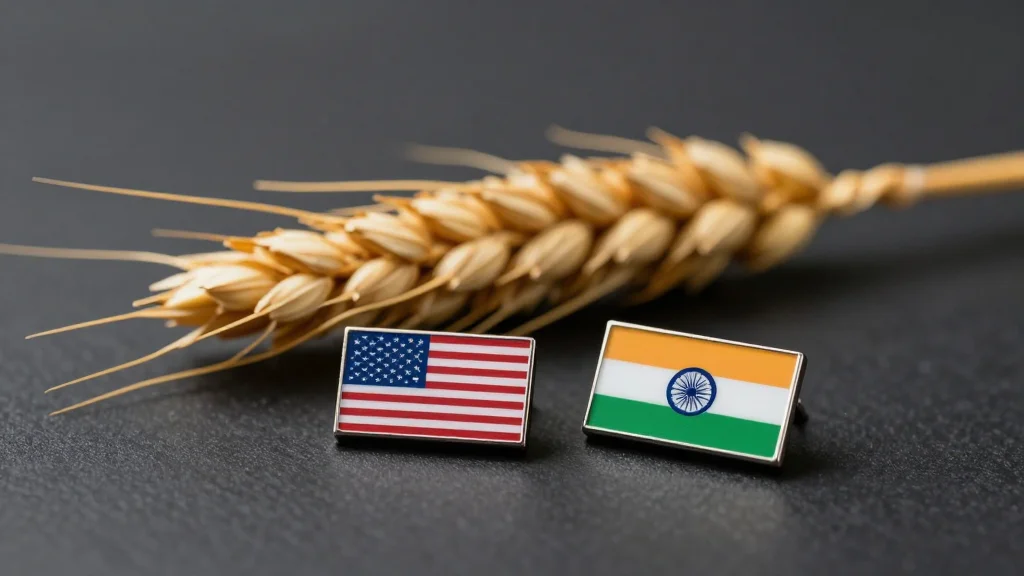
India 'Tough Nut to Crack', Says USTR Greer as Negotiators Wrap up Trade Talks Round
Why It Matters
The outcome will shape market access for U.S. agricultural exporters and determine whether the ambitious $500 billion trade goal can be realized, influencing broader Indo‑U.S. economic ties.
Key Takeaways
- •India protects agricultural markets, limiting US export opportunities
- •DDGs identified as potential compromise commodity
- •Deal targets $500 billion bilateral trade by 2030
- •US tariffs on Indian goods slated to drop to 18%
- •Supreme Court ruling forces India to renegotiate agreement terms
Pulse Analysis
The United States and India have been courting a deepened trade relationship for years, but agricultural protectionism has remained a sticking point. India’s policy of shielding its farm sector—through high tariffs and import quotas—has limited U.S. access to a market of over 1.4 billion consumers. The current framework, announced in February, sets an ambitious $500 billion trade target for 2030, hinging on tariff reductions and market‑opening concessions that could unlock new opportunities for U.S. agribusinesses, technology firms, and services providers.
One of the few commodities that may bridge the gap is distillers dried grains (DDGs), a high‑protein by‑product of ethanol production used in livestock feed. Greer highlighted DDGs as a tangible example where both sides could find common ground, given the United States’ surplus and India’s growing demand for protein‑rich feed. If the DDG issue is resolved, it could pave the way for broader agricultural negotiations, signaling a willingness to compromise on other sensitive products such as wheat, rice, and dairy.
The legal landscape adds another layer of complexity. A Supreme Court ruling in February struck down tariffs imposed under the 1977 IEEPA, prompting India to revisit the agreement’s language to safeguard its interests under the new global tariff regime. The U.S. commitment to lower tariffs from 50% to 18% remains a cornerstone of the deal, but the renegotiation process will test both countries’ diplomatic agility. Successful navigation could cement a strategic partnership that extends beyond trade, influencing technology transfer, supply‑chain resilience, and geopolitical alignment in the Indo‑Pacific region.
India 'tough nut to crack', says USTR Greer as negotiators wrap up trade talks round
Comments
Want to join the conversation?
Loading comments...