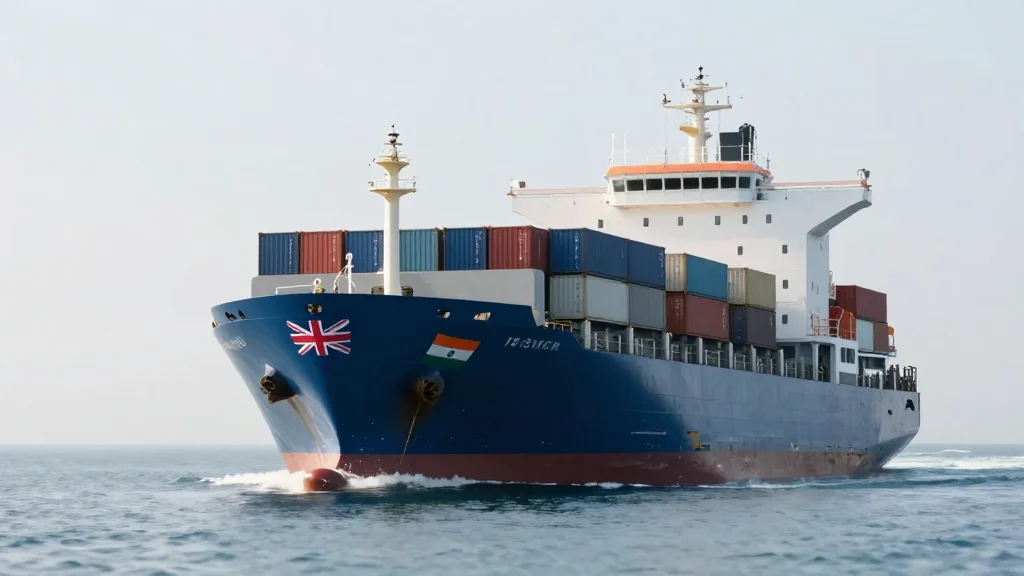
India-UK Free Trade Pact May Come Into Force From Second Week of May: Official
Why It Matters
By unlocking near‑full market access for Indian goods and lowering barriers for UK products, the agreement accelerates trade growth and deepens strategic economic ties between two of the world’s largest economies.
Key Takeaways
- •99% of Indian exports enter UK market duty‑free from May 2026
- •UK whisky tariffs drop to 75% now, 40% by 2035
- •Indian auto duties fall to 10% over five years, boosting EV exports
- •Double Contributions Convention prevents duplicate levies for temporary workers
Pulse Analysis
The India‑UK free trade pact arrives at a pivotal moment for both economies, as each seeks to diversify supply chains and capture new growth avenues. India’s rapidly expanding manufacturing base—particularly in textiles, footwear, gems, and emerging electric vehicle (EV) sectors—has long eyed the UK’s high‑value consumer market. Conversely, the United Kingdom aims to offset post‑Brexit trade disruptions by tapping into India’s burgeoning middle class and its appetite for premium goods such as Scotch whisky and automobiles. By eliminating duties on almost all Indian exports, CETA removes a historic cost barrier, positioning Indian firms to compete more aggressively on price and scale.
Tariff reductions under CETA are not merely symbolic; they reshape competitive dynamics across key industries. The immediate cut in whisky duties from 150% to 75% makes British spirits more affordable for Indian consumers, potentially spurring a surge in on‑premise sales and tourism‑linked purchases. Meanwhile, the phased reduction of Indian auto duties to 10% over five years opens a gateway for Indian EV and hybrid manufacturers to enter a market that is aggressively electrifying its fleet. For UK carmakers, the agreement offers a quota‑based pathway to export electric models to India, aligning with global decarbonisation goals. These sector‑specific concessions are designed to generate measurable trade uplift, feeding into the broader target of doubling bilateral commerce to US$56 billion within the next decade.
Beyond economics, the Double Contributions Convention (DCC) addresses a long‑standing friction point for cross‑border labor mobility. By ensuring temporary workers are not subject to duplicate social security contributions, the DCC lowers the administrative burden for firms that rely on skilled expatriates, fostering a more fluid talent exchange. This labor facilitation, coupled with the trade liberalisation, signals a deepening strategic partnership that could extend into joint research, technology transfer, and investment in green infrastructure. While implementation challenges—such as aligning regulatory standards and managing domestic industry concerns—remain, the synchronized rollout of CETA and DCC in May positions both nations to capitalize on immediate trade gains while laying groundwork for sustained collaboration.
India-UK free trade pact may come into force from second week of May: Official
Comments
Want to join the conversation?
Loading comments...