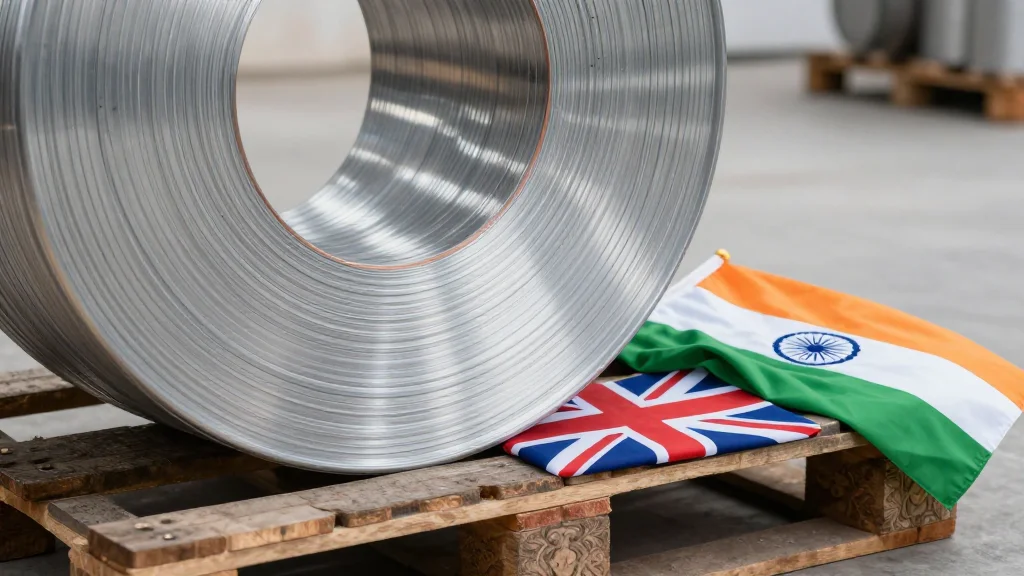
India‑UK Trade Deal Stalled by New UK Steel Safeguards, Officials Say

Why It Matters
The stalled rollout underscores how post‑agreement policy changes can jeopardize the economic benefits of major trade pacts. For India, delayed access to the UK steel market threatens a key export stream and could dampen broader export growth projected under CETA. For the UK, the dispute highlights the tension between protecting domestic industries and honoring international commitments, a balance that will shape its post‑Brexit trade strategy. Beyond the bilateral relationship, the episode serves as a cautionary tale for other nations negotiating complex agreements in an era of rapid policy shifts. It illustrates the need for flexible mechanisms within trade deals to address unforeseen regulatory changes without derailing the entire framework.
Key Takeaways
- •India‑UK CETA rollout delayed due to UK steel safeguards
- •UK cuts tariff‑free steel quotas by ~60% and raises tariffs to 50%
- •Indian steel exports to the UK were $893.4 million in FY 2025‑26
- •Deal projected to more than double bilateral trade by 2030
- •Negotiators seek a creative solution to preserve market access
Pulse Analysis
The India‑UK CETA was hailed as a flagship post‑Brexit agreement, promising to deepen economic ties and diversify supply chains for both economies. The current impasse reveals a structural vulnerability: trade deals often assume a static policy environment, yet domestic political pressures can trigger abrupt regulatory shifts, as seen with the UK’s Steel Strategy. Historically, similar post‑signing adjustments have either been accommodated through side letters or have led to protracted disputes, eroding the perceived reliability of trade agreements.
From a macro‑economic perspective, the delay could shave off several hundred million dollars in incremental trade gains for India in the short term, especially given the high elasticity of steel demand in the UK market. Moreover, the uncertainty may deter foreign direct investment projects that were contingent on the smoother market access promised by CETA, particularly in sectors like automotive components and high‑value manufacturing that rely on integrated UK‑India supply chains.
Looking ahead, both governments face a strategic choice. The UK can either maintain its protective stance, risking reputational costs and potential retaliation, or offer a calibrated concession that preserves the deal’s overall value. India, meanwhile, must weigh the benefits of a swift compromise against the risk of setting a precedent that future partners could exploit. The resolution will not only determine the fate of this specific pact but also signal how adaptable modern trade architecture can be in a world where domestic policy and global commerce increasingly intersect.
India‑UK Trade Deal Stalled by New UK Steel Safeguards, Officials Say
Comments
Want to join the conversation?
Loading comments...