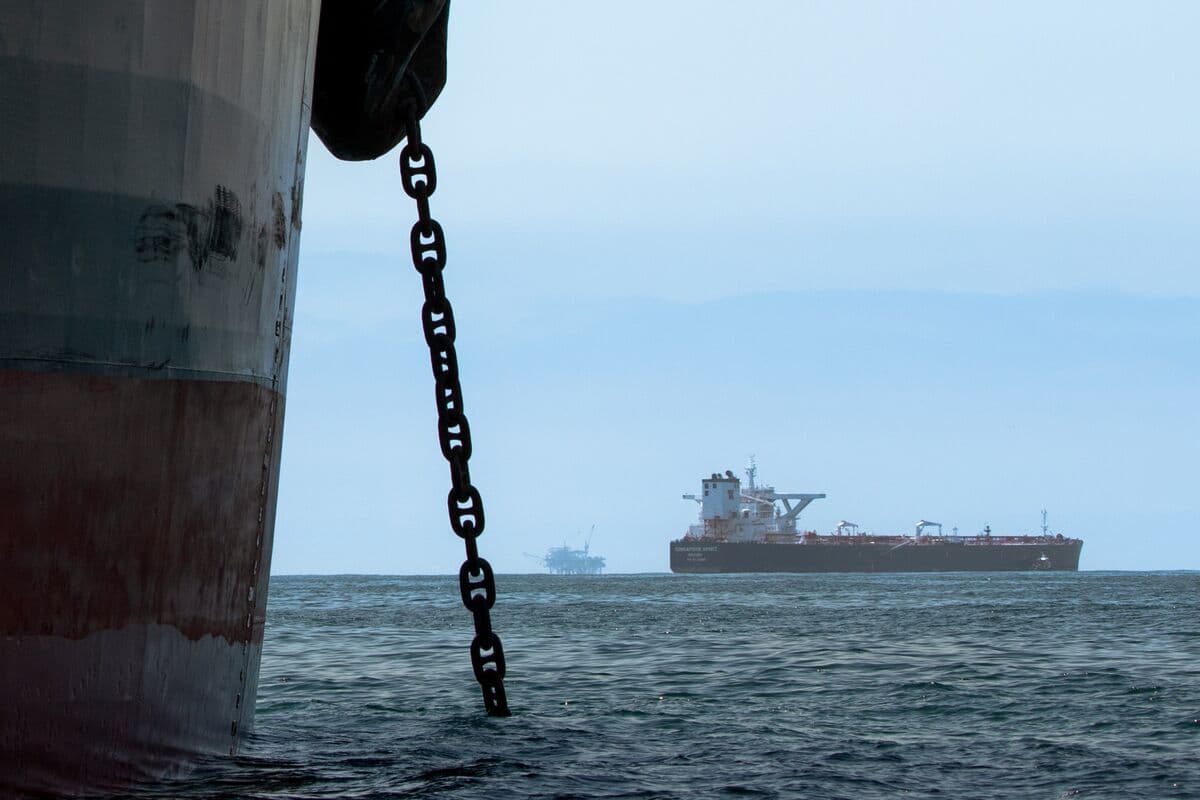
Iran War Deadlock Fuels Market Uncertainty
Companies Mentioned
Why It Matters
Higher oil prices threaten to fuel inflation and squeeze consumer spending, while the airline sector’s consolidation risk reshapes competition. Policy uncertainty around a gas‑tax holiday underscores the limits of executive action in a volatile energy environment.
Key Takeaways
- •Iran's deadlock keeps Strait of Hormuz blocked, pushing oil prices higher
- •Trump proposes gas‑tax holiday, but lacks congressional authority to enact
- •Rising fuel costs pressure low‑cost airlines, spurring merger speculation
- •Private‑credit market sees $830 billion daily pricing push for transparency
- •Michael Burry warns Nasdaq 100 overvaluation amid energy‑driven market rally
Pulse Analysis
The stalemate between the United States and Iran has once again turned the Strait of Hormuz into a geopolitical choke point, curbing the flow of crude and nudging Brent crude above $90 per barrel. Energy analysts warn that even a modest extension of the blockage could tighten global supplies, pushing gasoline prices toward multi‑year highs in the United States. For a consumer base already coping with elevated living costs, the prospect of a federal gas‑tax holiday offers a tempting, albeit legally tenuous, relief mechanism. While the president can champion the idea, any suspension of the federal excise tax on gasoline requires congressional legislation—a hurdle that has never been cleared, highlighting the limits of executive power in addressing short‑term price spikes.
The ripple effects extend beyond the pump. Low‑cost carriers, which rely on thin margins, are feeling the squeeze as fuel accounts for a larger share of operating expenses. Deutsche Bank analyst Michael Linenberg notes that airlines such as JetBlue and Frontier may see booking declines, accelerating talks of joint ventures or outright mergers to preserve profitability. Consolidation could reshape the U.S. airline landscape, potentially reducing fare competition but offering stronger balance sheets to weather future energy shocks.
Beyond energy and travel, the broader market narrative is shifting. Private‑credit markets, valued at roughly $1.8 trillion, are under pressure to improve transparency, prompting Apollo Global Management to price $830 billion of assets daily. At the same time, veteran investor Michael Burry’s warning about a Nasdaq 100 bubble adds a cautionary note to an otherwise bullish outlook fueled by rising commodity prices. Investors must therefore balance geopolitical risk, policy uncertainty, and sector‑specific dynamics when charting strategies for the coming months.
Iran War Deadlock Fuels Market Uncertainty
Comments
Want to join the conversation?
Loading comments...