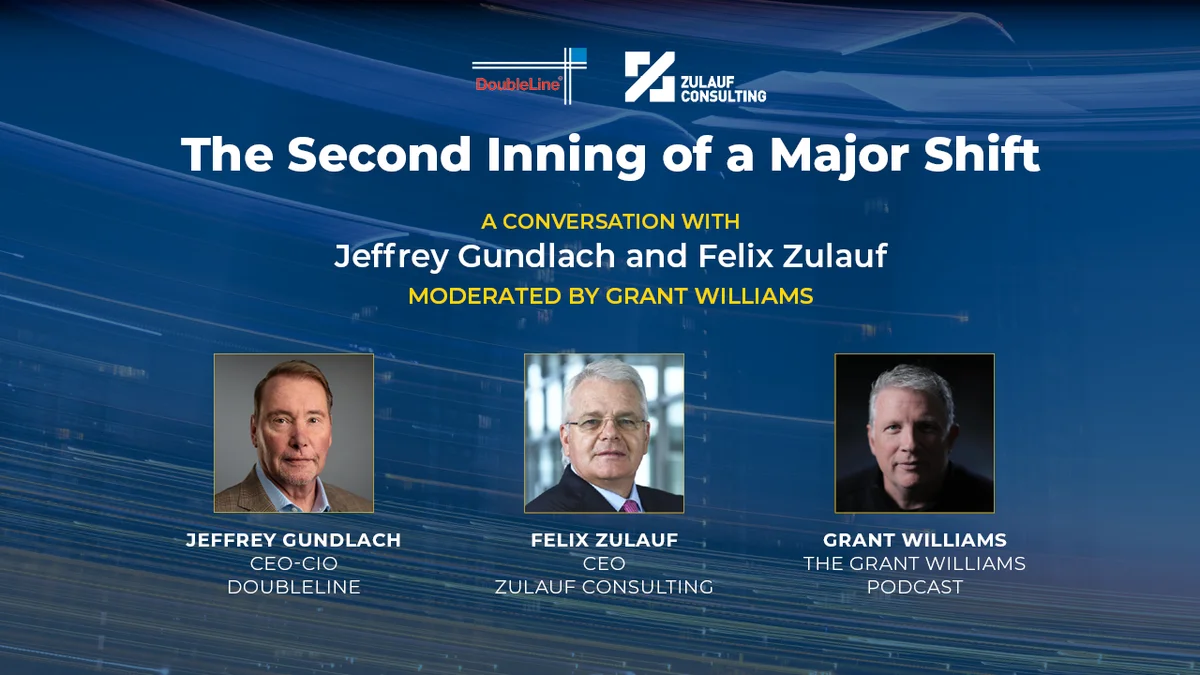
Jeffrey Gundlach and Felix Zulauf: The Second Inning of a Major Shift
Why It Matters
The outlook signals a major re‑pricing of risk across equities, bonds, and private credit, forcing investors to reassess portfolio exposure ahead of a potentially deep downturn.
Key Takeaways
- •Multipolar world drives structural inflation via wars, sanctions.
- •AI concentration: 10 stocks hold 41% of S&P 500.
- •Treasury yields unlikely to fall despite recession, $1.4T interest expense.
- •Private credit transparency crisis; firms may disappear as market turns.
- •Market could top Q3‑2024/Q1‑2025, then 30‑50% bear drop.
Pulse Analysis
The conversation between Gundlach and Zulauf underscores a broader geopolitical transition that is reshaping macroeconomic fundamentals. A move toward a multipolar world means that regional conflicts and sanctions are no longer episodic shocks but ongoing cost drivers, embedding higher inflation expectations into global pricing. Investors, therefore, must factor persistent price pressures into asset allocation, especially in sectors vulnerable to commodity and energy price volatility.
Equity markets are also at a pivotal juncture. The concentration of AI‑related exposure—ten companies accounting for 41% of the S&P 500—mirrors historic peaks where a handful of mega‑caps dominated returns before a correction. Historical patterns suggest that such concentration often precedes a market-wide pullback, and both analysts project the cycle could peak between the third quarter of 2024 and the first quarter of 2025. A subsequent bear market of 30‑50% would test the resilience of growth‑oriented portfolios and likely accelerate a shift toward value and defensive assets.
On the fixed‑income side, Gundlach’s view that long‑term Treasury yields will remain elevated reflects the fiscal reality of $1.4 trillion in annual interest outlays and $2 trillion deficits. Potential policy tools—yield‑curve control or even debt restructuring—remain speculative, leaving bond investors exposed to higher rates. Simultaneously, the private credit arena faces a transparency crisis, with opaque structures and regulatory gaps that could trigger firm failures as market liquidity dries up. Together, these dynamics compel institutional investors to tighten credit standards, diversify away from over‑concentrated AI bets, and prepare for a higher‑rate, inflation‑persistent environment.
Jeffrey Gundlach and Felix Zulauf: The Second Inning of a Major Shift
Comments
Want to join the conversation?
Loading comments...