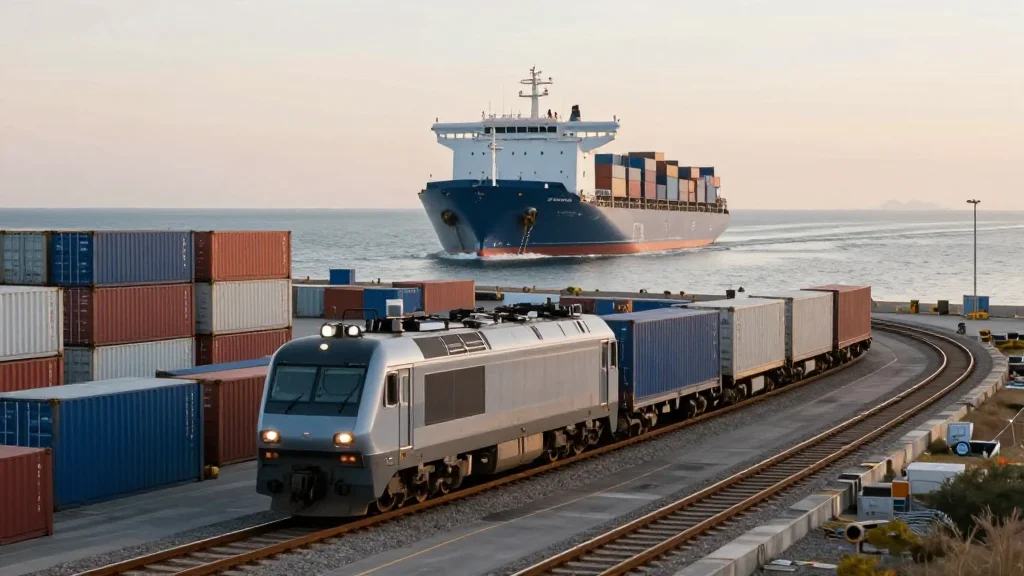
Kazakhstan and EU Seal $0 Deal to Boost Middle Corridor Infrastructure and Fleet

Companies Mentioned
Why It Matters
The Middle Corridor’s upgrade represents a strategic shift in Eurasian trade logistics, offering a viable alternative to routes that are vulnerable to geopolitical tensions. By expanding port capacity and modernising fleets, Kazakhstan and the EU aim to reduce transit times, lower shipping costs, and attract new investment into Central Asia’s landlocked economies. The digital customs reforms will also enhance transparency, making the corridor more attractive to global shippers wary of bureaucratic delays. If successful, the corridor could become a cornerstone of the Belt‑and‑Road network, linking Chinese manufacturing hubs with European markets while bypassing Russian territory. This diversification would not only bolster regional economic resilience but also give the EU greater leverage in shaping trade standards and environmental regulations across the trans‑Caspian route.
Key Takeaways
- •Kazakhstan and EU finalize a roadmap for port expansions, new vessels, and rail upgrades on the Middle Corridor.
- •Baku–Tbilisi–Kars railway capacity jumps from 1 M to 5 M tons per year, feeding increased corridor throughput.
- •Digital customs platform to be harmonised with EU single‑window standards, reducing clearance times.
- •EU pledges technical assistance and financing pathways through European and Asian development banks.
- •Projected transit‑time reduction of up to three days between Shanghai and Rotterdam within five years.
Pulse Analysis
The Middle Corridor’s revitalisation is more than a regional infrastructure project; it is a geopolitical lever. For years, European exporters have relied on the Northern Sea Route or the traditional Russian‑controlled rail lines, both of which are subject to sanctions risk and seasonal constraints. By investing in a Caspian‑based corridor, the EU is creating a parallel logistics artery that can operate year‑round, insulated from political volatility. This mirrors the EU’s broader strategy of building resilient supply chains after the pandemic and the Ukraine war exposed critical dependencies.
Economically, the corridor’s upgrade could unlock $10‑15 billion of new trade volume over the next decade, according to independent forecasts. The port expansions alone are expected to generate thousands of construction jobs and long‑term operational roles, while the modern fleet procurement will stimulate shipbuilding contracts in Europe and Turkey. Moreover, the digital customs integration will set a new benchmark for trade facilitation in the region, potentially prompting neighboring countries like Turkmenistan and Uzbekistan to adopt similar systems, thereby creating a harmonised digital trade zone across Central Asia.
Looking ahead, the success of the roadmap hinges on securing multilateral financing and maintaining political cohesion among the corridor’s stakeholders. Any delay in funding or regulatory alignment could erode the competitive advantage the corridor seeks to build. Nonetheless, the coordinated push by Kazakhstan and the EU signals a decisive move toward a more diversified, efficient, and geopolitically balanced Eurasian trade network.
Kazakhstan and EU Seal $0 Deal to Boost Middle Corridor Infrastructure and Fleet
Comments
Want to join the conversation?
Loading comments...