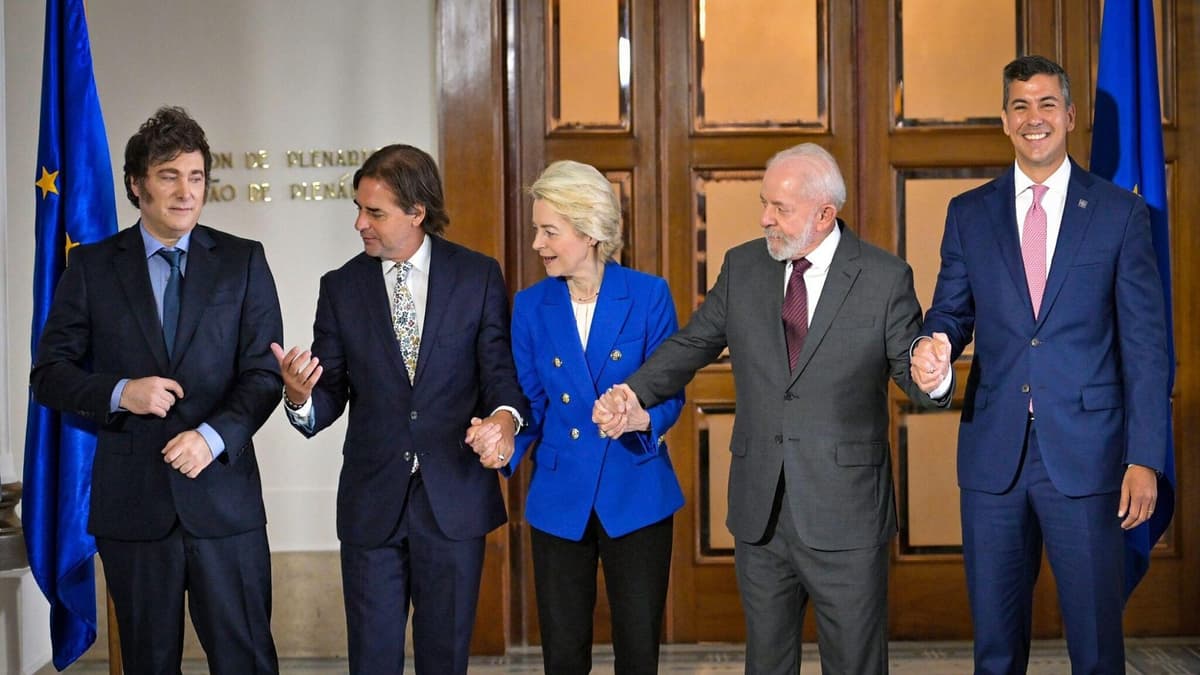
Mercosur FTA Enters Force Eight Months Before the EUDR Roll Out
Why It Matters
The timing forces exporters to meet both tariff‑free access and strict deforestation due‑diligence, testing the EU’s ability to blend trade expansion with climate enforcement. Success could set a precedent for greener trade agreements worldwide.
Key Takeaways
- •EU-Mercosur FTA provisional entry precedes EUDR compliance by eight months
- •Brazilian soy, beef, coffee, cocoa, and forest products now enter EU market
- •Green MEPs warn EU should not delay EUDR implementation
- •Leather hides proposed for removal from Annex I; wood and paper stay
- •Deal’s environmental annex links to Paris Agreement, enabling suspension for backsliding
Pulse Analysis
The European Union and Mercosur bloc have finally moved the long‑awaited free‑trade agreement into provisional force, ending more than twenty years of negotiations. Under the provisional regime, Brazil’s flagship commodities—soy, beef, coffee, cocoa and a range of forest products—can now cross the Atlantic with reduced tariffs, giving EU food processors and paper mills a steadier supply chain. The timing is striking because the deal becomes operational eight months before the European Union Deforestation Regulation (EUDR) is set to enforce strict due‑diligence on imported commodities on 30 December 2026. This overlap creates a narrow window for exporters to adapt to both trade and sustainability rules.
Environmental advocates in Brussels, led by Green MEP Kai Tegethoff, warn that the eight‑month gap should not be used to postpone the EUDR’s rollout. While the EU’s Environment Commissioner Jessika Roswall kept wood and paper inside Annex I, she floated the removal of leather hides, signalling a selective tightening of the rulebook. The Mercosur agreement’s annex, negotiated after Brazil’s 2023 election of President Lula, explicitly references the Paris Agreement and imposes a non‑regression clause on environmental standards. Consequently, any rollback by future Brazilian governments could trigger a suspension mechanism, keeping climate credibility at the forefront of the trade pact.
Analysts see the EU‑Mercosur partnership as a potential template for future trade deals that blend market access with climate commitments. Trade experts such as David Kleimann note that the agreement strengthens Brazil’s domestic political leverage on deforestation, while strategic thinkers like Irene Mia view it as a litmus test for climate diplomacy. However, the real test will be implementation: exporters must verify forest‑origin data for pulp, paper and timber, and EU customs will need robust monitoring to enforce the EUDR. Success could pave the way for greener trade frameworks; failure may reignite the Amazon‑centric criticism that once stalled the pact.
Mercosur FTA Enters Force Eight Months Before the EUDR Roll Out
Comments
Want to join the conversation?
Loading comments...