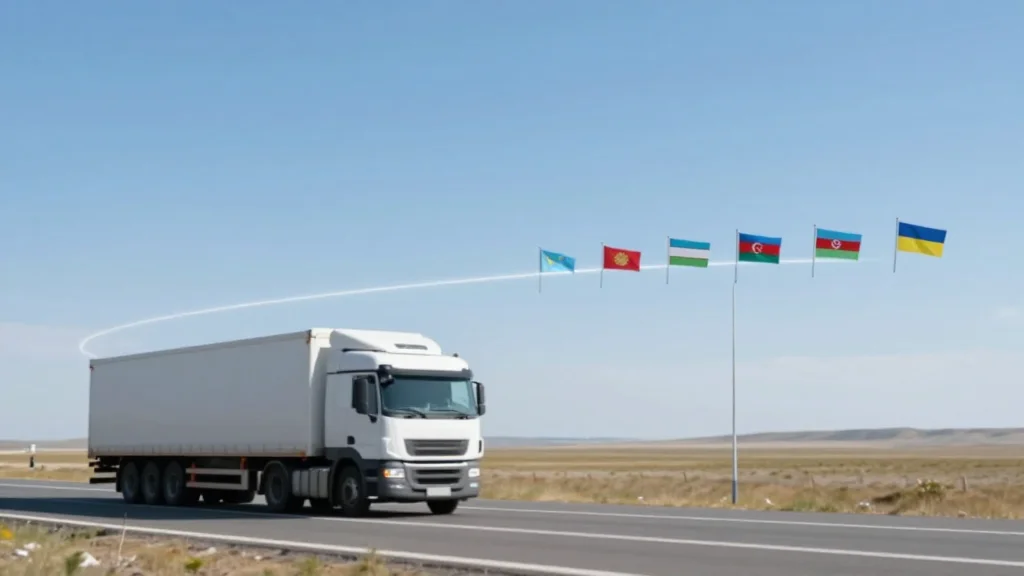
Middle Corridor Trade to Get Boost From Simplified Documentation Requirements
Why It Matters
By eliminating fragmented paperwork, the agreement lowers logistics costs and speeds delivery, making the Middle Corridor more competitive with maritime routes and boosting Central Asian trade volumes.
Key Takeaways
- •Unified permit cuts border processing time across five countries
- •Agreement supports Middle Corridor's role as alternative Europe‑Asia route
- •Simplified paperwork expected to attract more Chinese‑Central Asian freight
- •Reduces costs for long‑haul truckers, boosting regional trade volumes
- •Complements ongoing infrastructure projects like Khorgos SEZ expansion
Pulse Analysis
The new unified transit documentation marks a decisive step toward operationalizing the Middle Corridor as a viable alternative to traditional sea lanes. By consolidating customs requirements into a single permit, the agreement tackles one of the corridor’s chronic bottlenecks—border delays that have historically deterred shippers. This simplification aligns with Central Asian governments’ broader strategy to position their economies as logistics hubs, leveraging geographic proximity to China’s Belt and Road initiatives.
Logistics firms stand to gain immediate cost savings, as reduced paperwork translates into faster turnaround times and lower fuel consumption for long‑haul trucks. The streamlined process also dovetails with parallel infrastructure investments, including the 24/7 upgrade of the Khorgos free‑trade zone and a $220 million combined‑cycle power plant in Aktau financed by Chinese banks. Together, these developments enhance capacity, reliability, and energy efficiency along the route, making it more attractive for exporters of agricultural products, minerals, and manufactured goods.
Strategically, the agreement strengthens the geopolitical relevance of the Middle Corridor amid shifting global supply chains. As Western sanctions reshape trade patterns, Central Asian states are courting Chinese capital and expertise to fill financing gaps, evident in the $305 million Kyrgyz loan and a $430 million coal‑logistics project. Simplified transit documentation not only boosts trade volume but also signals a deeper integration of the region into China‑driven trade networks, positioning the corridor for sustained growth in the coming decade.
Middle Corridor trade to get boost from simplified documentation requirements
Comments
Want to join the conversation?
Loading comments...