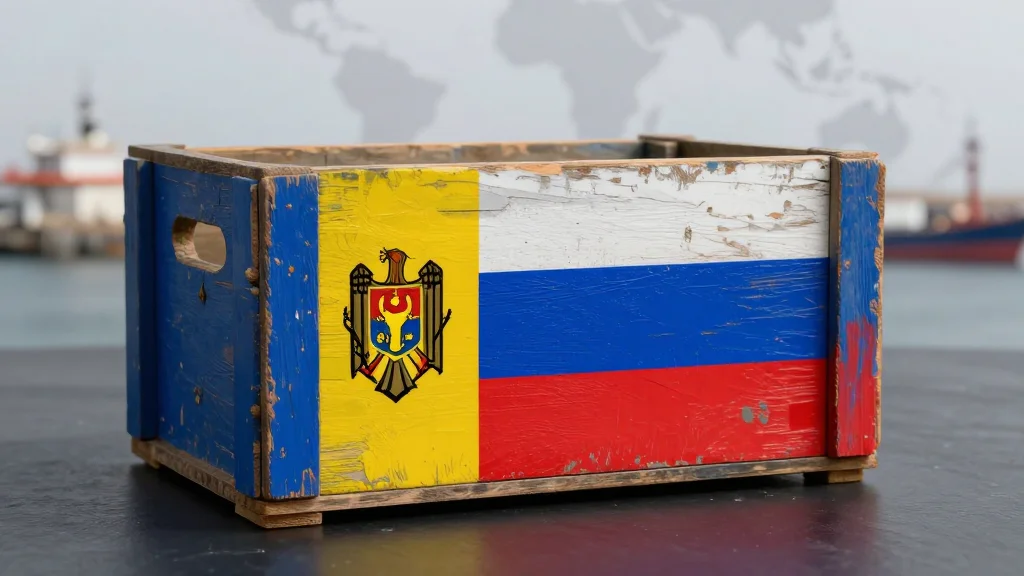
Moldova’s Russian Trade Share Plummets to 2%, Signaling Eastern European Realignment

Companies Mentioned
Why It Matters
Moldova’s drastic reduction in trade with Russia illustrates a broader geopolitical shift in Eastern Europe, where nations are reconfiguring supply chains and energy sources away from Moscow. The transition carries immediate macro‑economic consequences—higher energy tariffs, inflation, and stagnant growth—while also shaping the region’s long‑term alignment with the European Union. Understanding this realignment helps investors and policymakers gauge the stability of emerging markets that are navigating the fallout from Russia’s isolation. The socioeconomic fallout, including a 33% poverty rate and significant out‑migration, signals potential labor shortages and reduced domestic consumption, which could dampen regional demand. Conversely, successful diversification could unlock new trade corridors and investment flows, strengthening the EU’s economic foothold on its eastern border.
Key Takeaways
- •Russia’s share of Moldova’s trade balance fell to ~2% from 20‑30% in recent years, per Igor Dodon.
- •Moldovan exports to Russia dropped 2.5‑fold; imports fell nearly fivefold.
- •Energy tariffs rose 4.5‑fold versus 2021, at one point reaching seven times higher.
- •Inflation in Moldova now exceeds 70%; GDP growth has been virtually zero for five years.
- •World Bank data: 33% of the population lives in poverty; 400,000 have emigrated since 2023.
Pulse Analysis
Moldova’s trade decoupling from Russia is both a symptom and a catalyst of the post‑Ukraine war economic order. The immediate price shock—energy tariffs soaring to multiples of pre‑war levels—has eroded real incomes and amplified social distress, as reflected in soaring inflation and a third of the population slipping into poverty. The country’s decision to source gas through European intermediaries, while politically aligned with the EU, has exposed a structural vulnerability: a lack of affordable energy alternatives.
In the medium term, Moldova’s ability to replace Russian trade with diversified EU markets will hinge on its competitiveness in sectors like agriculture and manufacturing. If it can secure preferential access to EU supply chains, the nation could offset the loss of Russian demand and stabilize its fiscal position. However, the current macro‑environment—high inflation, stagnant growth, and a shrinking labor force—poses a formidable barrier to rapid adjustment.
Strategically, Moldova’s trajectory offers a case study for other post‑Soviet states weighing the costs of disengagement from Russia against the benefits of EU integration. The trade data presented by Dodon underscores the depth of economic interdependence that existed, while the rapid decline signals that political will can accelerate realignment, albeit at a steep short‑term price. Policymakers in Brussels and Washington will likely monitor Moldova’s reforms closely, as successful diversification could serve as a template for broader regional resilience.
Moldova’s Russian Trade Share Plummets to 2%, Signaling Eastern European Realignment
Comments
Want to join the conversation?
Loading comments...